Church of the Assumption
1816; narthex 1833; domes 1887
Dating stated in the sources: 1816
Your visit at a glance
- Address
- Town center, 110 m from Velbazhd Square, in the old Gradets (Varosh) quarter
- Approximate time at the site
- about 30 minutes
- Opening hours
- No verified information found
- Admission
- No verified information found
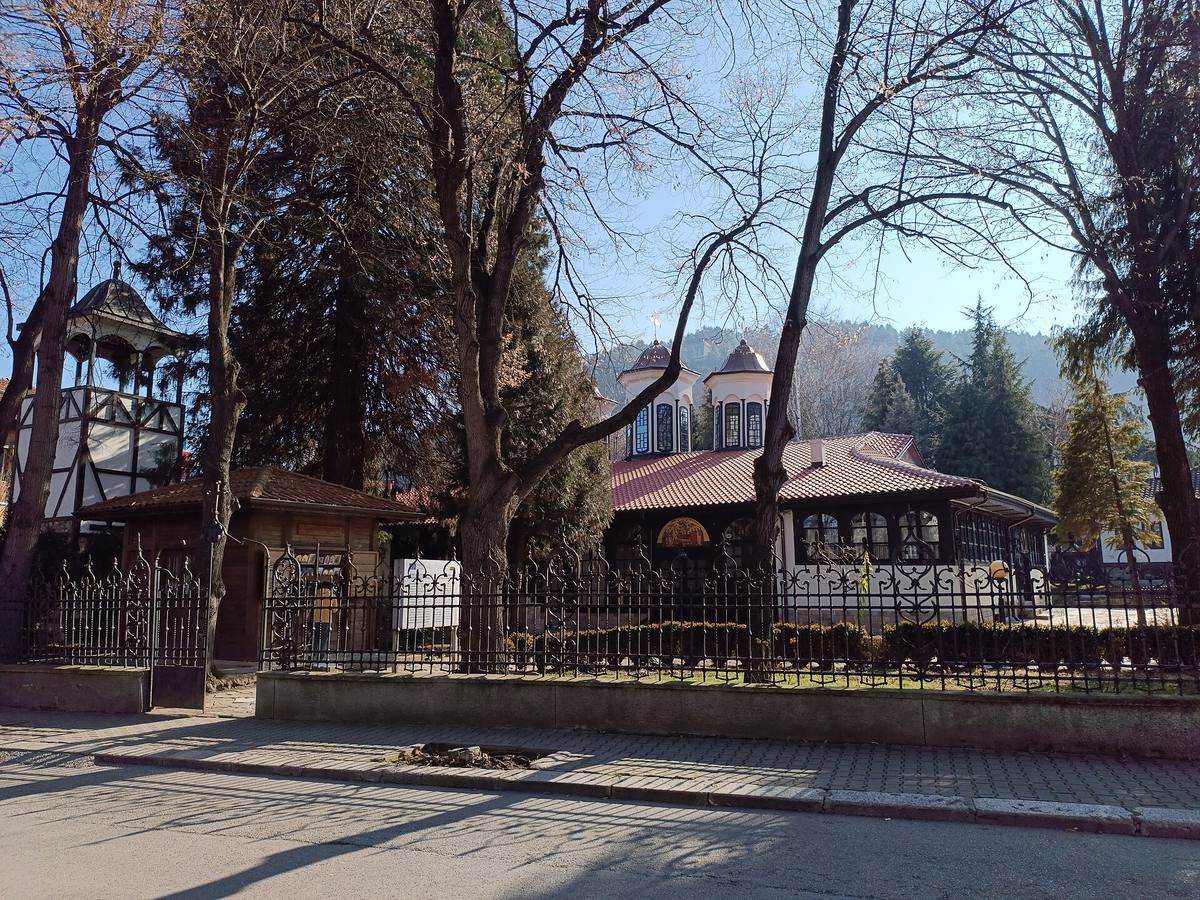
The image could not load. Its caption and source remain available.

Kyustendil’s first Revival-era church, built in 1816 and sunk about 3 m into the ground. Local church tradition identifies a medieval St. Nicholas as its predecessor. For many years it was the town’s cathedral; its courtyard held the first traditional church school, and Metropolitan Illarion of Lovech is buried inside. It keeps royal doors from the 16th-17th centuries, and during repairs in 2021 five layers of murals were found in its altar.
Hours, admission, and directions ↓
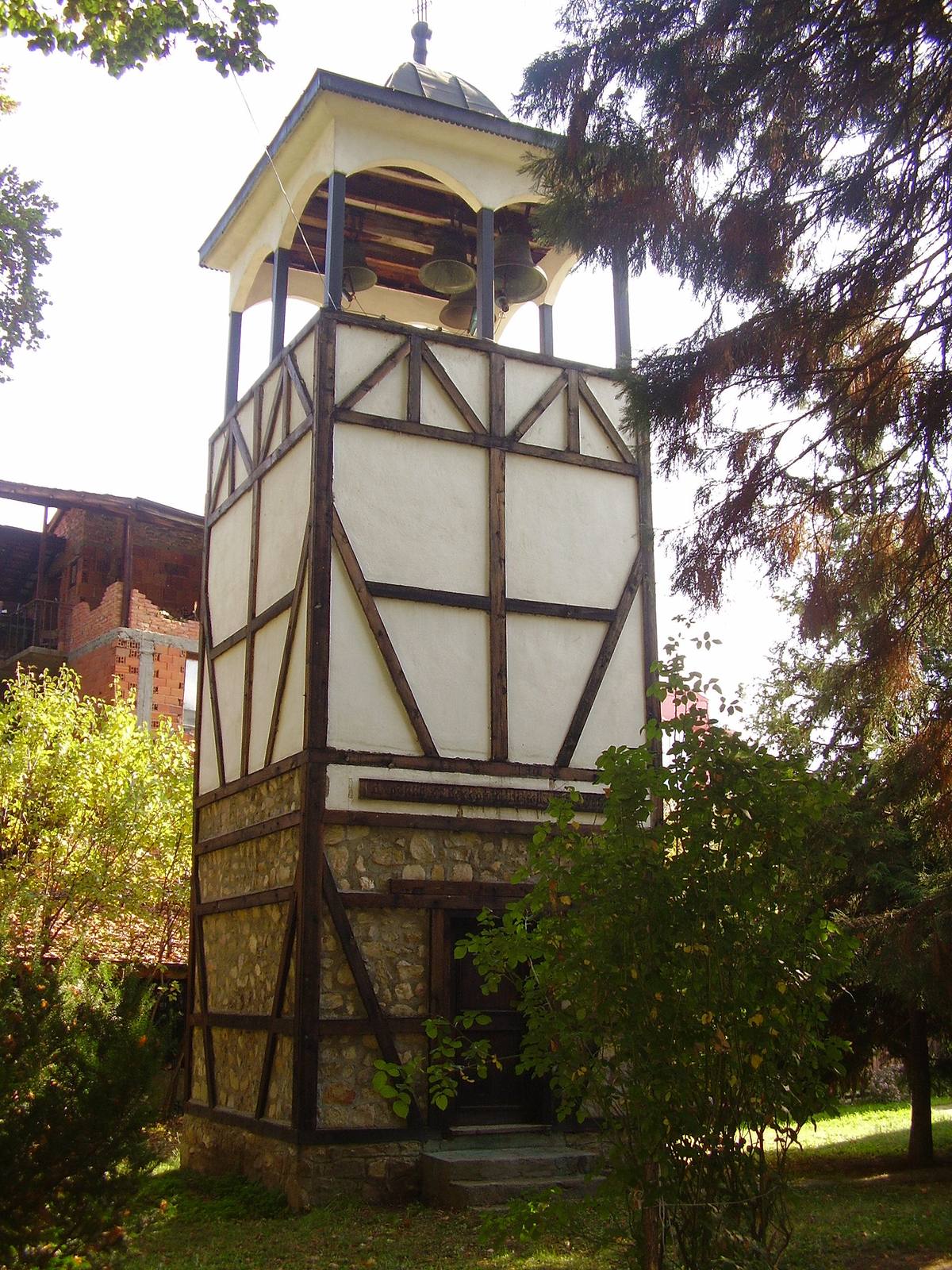
The church stands two minutes from the central square: low, with three domes above the roof and a timber-framed bell tower in front. From outside it looks modest, because it is sunk into the ground. Inside, almost the whole story of the Bulgarian Revival in Kyustendil is gathered.
On the site of St. Nicholas
↗According to local church tradition, the church was built on the site of the medieval St. Nicholas, a dependency of Rila Monastery. The surviving royal doors from the 16th-17th centuries are associated with the older church. During the 2021 repairs, Bulgarian National Radio relayed the local ecclesiastical authorities’ suggestion that the foundations and parts of the walls might belong to the medieval church. The report does not give a conclusive dating. Archimandrite Isaak, today Bishop of Velbazhd, said: “We know the church was built in 1816, but there was a medieval church on this spot.”
Scholars disagree on which St. Nicholas this was. The Ottomanist Machiel Kiel writes in the TDV İslâm Ansiklopedisi (2002) that from the 10th to the 14th century a small open settlement stood at the foot of the fortress, around the buildings of the small monastery of St. Nicholas mentioned in a document of 1277, and that the cathedral church of the Virgin later took its place. The art historian Lilyana Mavrodinova (2008), however, identifies the St. Nicholas of the medieval charters with the church in Kolusha, today’s St. George. [2]
The building
↗In 1816 the town’s first Revival-era church was built, becoming its cathedral. The art historian Desislava Strahilova writes that it was “the result of the united efforts of all the Bulgarians in the town.” Tradition adds that it was built “by stealth,” only at night, by Bulgarians from every neighborhood. [1]
The church is a sunken single-apse pseudo-basilica with three aisles, measuring 23.6 by 14.4 m. The nave floor lies about 3 m below street level. The walls are of rough stone with timber lacing, under a heavy “wolf’s tooth” cornice.
Building went on in stages:
- 1833: under Metropolitan Artemiy, a narthex was added on the north and west, along with a candle workshop and an ossuary. Upstairs, two chapels were made, St. Haralambos and St. Nicholas of Myra, each with its own iconostasis. New royal doors were ordered from the carvers Stoycho Fandakov and his son Dimitar.
- 1883: north of the church, on the site of the traditional church school, the masters Rizo Petrov and Tone Petrev built a square bell tower 11 m tall.
- 1887: master Rizo Dyulger built the three domes on drums over the central aisle, “for light.” Ivan Dospevski painted them.
- 1914: the choir gallery was enlarged.
Icons and painters
↗- Hristo Dimitrov, a first-generation painter of the Samokov school, painted six icons, “most likely from the late 18th or early 19th century.”
- Lazar Zograf of the Epirus village of Ano Studena painted the icons of St. Theodore Tyron and St. Theodore Stratelates in 1818. A 2022 study speaks of two Epirus masters, Lazar and Lazo.
- Ivan Dospevski painted icons in 1872-1874, among them Jesus Christ for the iconostasis, and in 1887 he painted the domes. After the Liberation he became the first mayor of Samokov and a member of the Constituent Assembly.
- Evstati Popdimitrov of Osoy, a painter of the Debar school, painted the murals and some of the icons in 1886.
It is often written that the church holds the icon Dormition of St. John of Rila by Toma Vishanov-Molera, founder of the Bansko school of painting. Strahilova, however, found it in the Vladimir Dimitrov-Maystora art gallery, under inventory No. 2084. She calls it “the only surviving (after the fire in the Cemetery Church in Bansko) easel church work” by Molera. On how it came to Kyustendil, she writes that “there is no information at all.”
The royal doors
↗The church’s greatest treasure is its royal doors from the 16th-17th centuries, brought from the old church of St. Nicholas. They “stand out for their openwork technique”: carving pierced right through, with plant and geometric motifs and animal figures. Two small panels at the top show the Annunciation.
The art historian Mirjana Mašnić links them to the so-called Prilep-Slepče school of carving. She compares them with the almost identical doors at Kratovo, Rankovce, and the Karpino monastery. Today they are in the upstairs chapel of St. Nicholas.
The schools in the courtyard
↗The churchyard was the cradle of education in Kyustendil:
- 1821: the first Bulgarian traditional church school;
- 1846-1849: a new monitorial (Bell-Lancaster) school;
- 1850: Nikola Tondzhorov opened the first graded school;
- 1851-1858: Averkiy Popstoyanov of Dupnitsa taught in Kyustendil, bringing the monitorial teaching method to the schools where he worked (Dimitar Tsanev, Kyustendil Readings, Sofia University, 2006);
- 1860: the girls’ school;
- 1869: the Kyustendil chitalishte, the town’s reading room and cultural center, was founded in the mutual-school building. Its first chairman was Georgi Angelov, who later wrote a history of the town (1900), Tsanev writes.
“During the Revival the church became a center of culture and education, and the heart of the townspeople’s struggle for an independent Bulgarian church.”
Metropolitan Illarion
↗Buried in the church, under a marble slab by a local craftsman, is Metropolitan Illarion of Lovech and Kyustendil (1800-1884), one of the leaders of the church struggle:
- January 31, 1860: he celebrated the liturgy in Bulgarian in Vidin.
- February 12, 1872: he was elected Bulgarian Exarch, but stepped down “five days later under pressure from the Sublime Porte.”
- July 1872: he became Metropolitan of Kyustendil.
- Later: he sat in the Constituent Assembly.
- February 2, 1884: he died in Kyustendil.
In 2005 a memorial plaque was placed on the bell tower.
In 1854 the future Metropolitan Sinesiy of Skopje was also ordained a hierodeacon here.
Curiosities
↗- The meeting in the gallery. On February 16, 1919, almost all 350 members of the Orthodox brotherhood of St. John of Rila met in the church’s gallery for its first annual meeting, Yordanka Yancheva writes in Kyustendil Readings (2011).
- The Church Tavern. Among the taverns around the Kapana, the covered grain market, was the “Church Tavern,” so called because the property belonged to the church.
- “Ama blago.” Opposite the old post office and the church, the confectioner Save, a refugee from Macedonia, kept a sweetshop until about 1915 with the sign “Ama blago,” “Oh, so sweet,” above the door.
- The Dragoman. In 1886 the town’s first modern hotel opened not far from the church.
- The year without a summer. In 2010 the restoration architect Yuliy Farkov published an article titled “The Year Without a Summer, 1816, Leaves Its Mark on the Kyustendil Church.” 1816 was the “year without a summer” that followed the eruption of Tambora. How exactly the cold year marked the church, we haven’t yet been able to read.
The overhaul
↗The 200th anniversary of the consecration was due in 2016, but the celebration was postponed: “the columns sank at their foundations, and parts began to crumble.” For years the church was held up with metal props “so it wouldn’t collapse.”
In February 2021 the government granted 1,036,552 leva for the repairs:
- the failing roof structure was replaced;
- the domes were renewed;
- the old wooden columns were replaced with steel tubes, insulated and clad;
- a stone fragment from Roman times was cleaned and put on display;
- the murals were restored.
In October 2021 “five layers of murals” were found in the altar; they are still waiting to be dated. On August 15, 2022, the church was presented renewed.
The Dormition feast
↗August 15 is Kyustendil’s biggest church feast, and since 2025 an official holiday of the municipality. In 2024-2026 Patriarch Daniil celebrated the liturgy here. Afterward there is a blessing of the waters on the central square and the local Panagia rite, the blessing of the bread in honor of the Mother of God. In 2024 the children of the town’s kindergartens prepared 500 small loaves to give out.
Around the feast the town holds the cultural forum Panagia: Raising of the Bread, which in 2026 took place for the nineteenth time. In 2026, for the church’s 210th anniversary, exhibitions of documents, photographs, and early printed books were set up in the courtyard.
Photos and related images
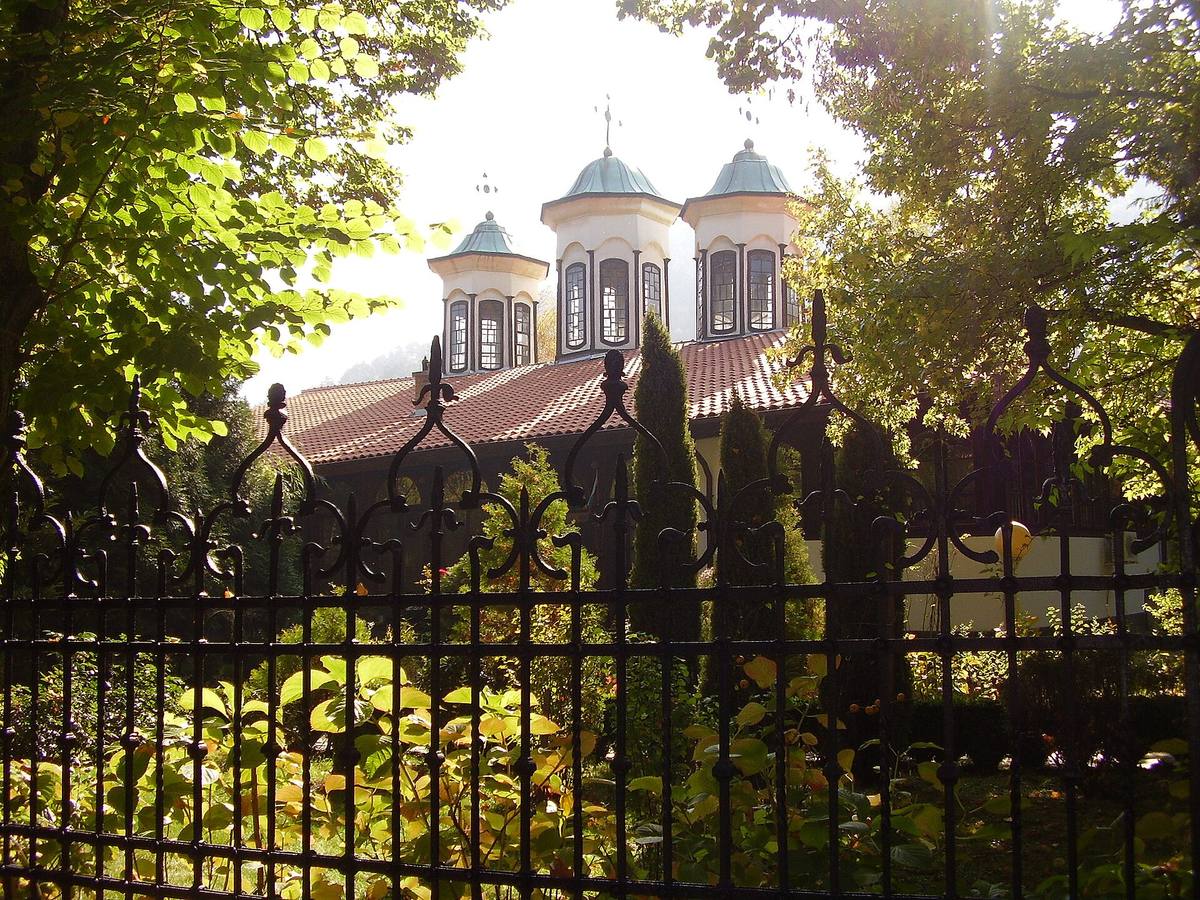
The image could not load. Its caption and source remain available.

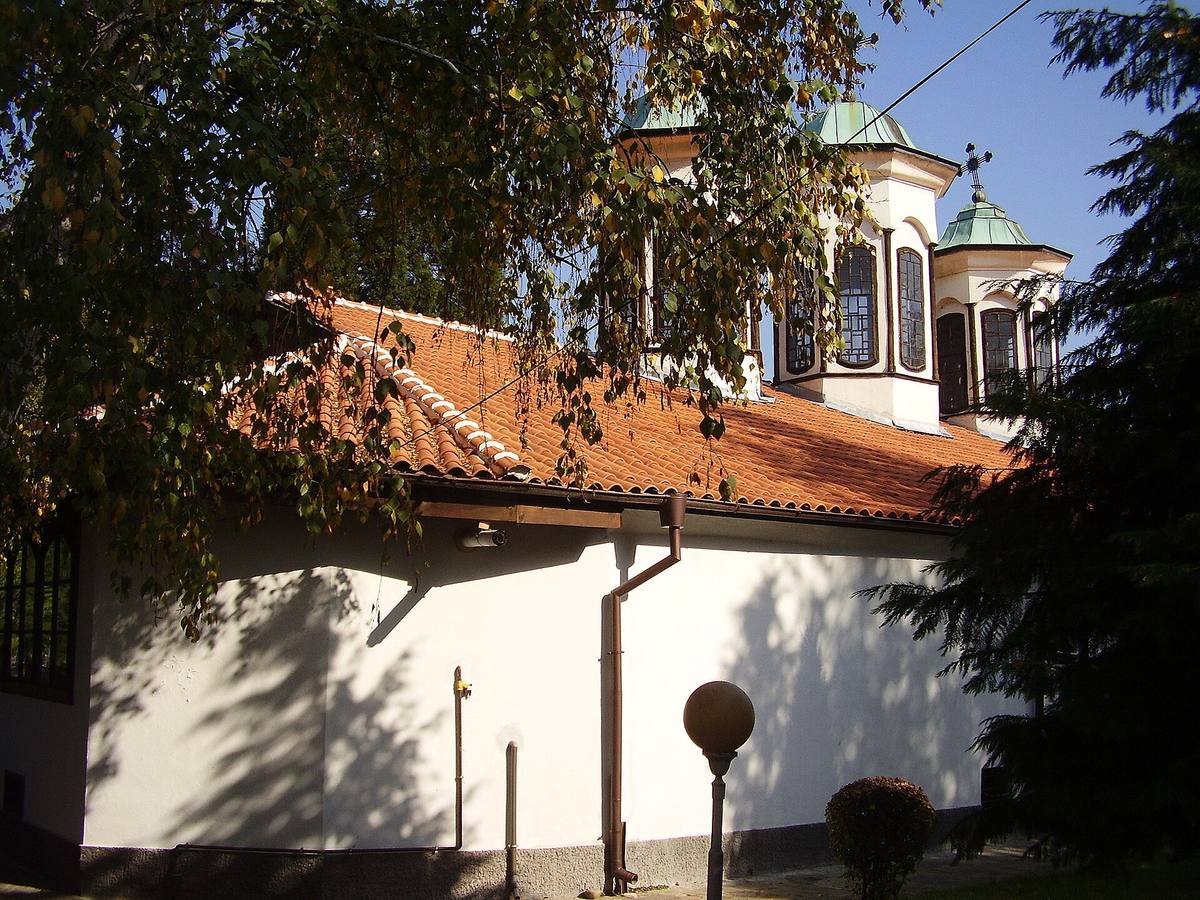
The image could not load. Its caption and source remain available.

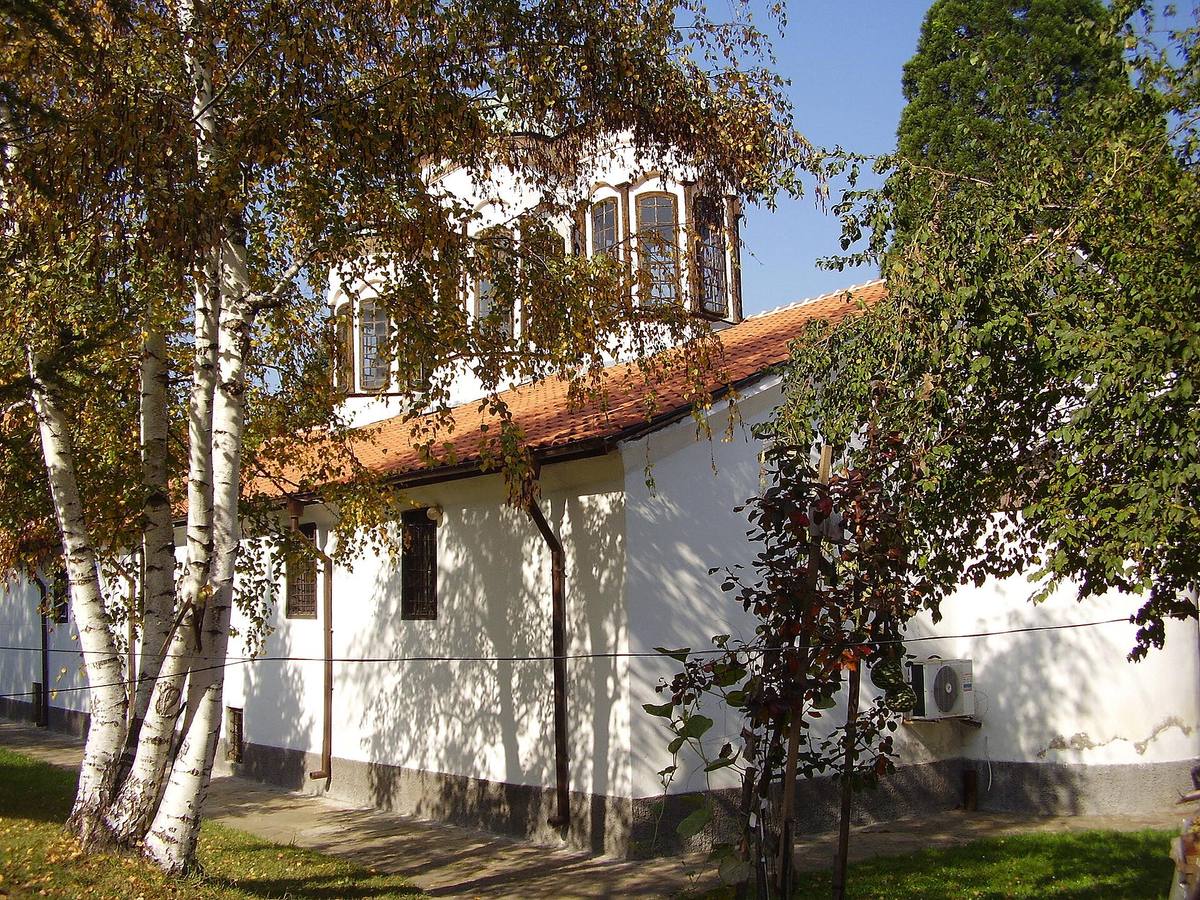
The image could not load. Its caption and source remain available.

The image could not load. Its caption and source remain available.

The image could not load. Its caption and source remain available.

Sources
(20)
A date may refer to construction, renewal, or another stated stage. Legends are accounts recorded in sources, rather than established events. Bibliography links help locate the named author; no automatic reference is added where the match is ambiguous.
- Десислава Страхилова. За някои особености на църковната живопис в Кюстендил през Възраждането, LiterNet, 2007Online source · Bulgarian · liternet.bg↑1
Source address
https://liternet.bg/publish20/d_strahilova/za_niakoi.htm
If a link does not open, use its title, author, and address to search, or consult another listed source.
- Machiel Kiel. Köstendil, TDV İslâm Ansiklopedisi, c. 26, 2002Online source · Turkish · islamansiklopedisi.org.tr↑1
Source address
https://islamansiklopedisi.org.tr/kostendil
If a link does not open, use its title, author, and address to search, or consult another listed source.
- Liliana Mavrodinova. Données historiques sur l’église médiévale de Koloucha-Kustendil, Bulgarie. Δελτίον της Χριστιανικής Αρχαιολογικής Εταιρείας 29, 2008, 101-104Online source · French · ejournals.epublishing.ekt.gr
Source address
https://ejournals.epublishing.ekt.gr/index.php/deltion/article/view/4352
If a link does not open, use its title, author, and address to search, or consult another listed source.
- Димитър Цанев. Възрожденският будител Аверкий Попстоянов. Кюстендилски четения 6, СУ, 2006, 93-99Research publication · Bulgarian · periodicals.uni-sofia.bg
Source address
https://periodicals.uni-sofia.bg/index.php/KRe/bg/article/view/kre-2005-11
If a link does not open, use its title, author, and address to search, or consult another listed source.
- Йорданка Янчева. Православното християнско братство „Св. Иван Рилски“, гр. Кюстендил (1918-1940 г.). Кюстендилски четения 10, СУ, 2011, 163-173Research publication · Bulgarian · periodicals.uni-sofia.bg
Source address
https://periodicals.uni-sofia.bg/index.php/KRe/bg/article/view/kre-2009-11
If a link does not open, use its title, author, and address to search, or consult another listed source.
- Мирјана Машниќ. Три примероци на царски двери од кратовско-кумановскиот крај, Patrimonium.MK, 2008-2009PDF document · Macedonian · kalamus.com.mk
Source address
http://www.kalamus.com.mk/pdf_spisanija/patrimonium_2/013%20Spisanie%202008%20Masnic%20dveri%2001.pdf
If a link does not open, use its title, author, and address to search, or consult another listed source.
- Списък на паметниците на културата с национално значение в област Кюстендил, Министерство на културата, 2006PDF document · Bulgarian · mc.government.bg
Source address
https://mc.government.bg/images/NPK/KUSTENDIL.pdf
If a link does not open, use its title, author, and address to search, or consult another listed source.
- Пет неизвестни пласта стенописи са разкрити при ремонта на черквата „Успение Богородично“, БТА, 2021Online source · Bulgarian · bta.bg
Source address
https://www.bta.bg/bg/news/bulgaria/23892-Pet-neizvestni-plasta-stenopisi-sa-razkriti-pri-remonta-na-cherkvata-Sv-Uspeni
If a link does not open, use its title, author, and address to search, or consult another listed source.
- Неизвестни стенописи откриха при ремонта на църквата „Успение Богородично“, БНР, 2021Online source · Bulgarian · old-news.bnr.bg
Source address
https://old-news.bnr.bg/horizont/post/101549267/neizvestni-stenopisi-otkriha-pri-remonta-na-carkvata-uspenie-bogorodichno-v-kustendil
If a link does not open, use its title, author, and address to search, or consult another listed source.
- Основен ремонт, консервация и реставрация на храм „Успение Богородично“, СтройтесOnline source · Bulgarian · stroytes.bg
Source address
https://stroytes.bg/projects/основен-ремонт-консервация-и-реставр/
If a link does not open, use its title, author, and address to search, or consult another listed source.
- Празникът Успение Богородично в Кюстендил, Софийска света митрополия, 2026Online source · Bulgarian · mitropolia-sofia.org
Source address
https://mitropolia-sofia.org/2026/08/16/празникът-успение-богородично-в-кюст/
If a link does not open, use its title, author, and address to search, or consult another listed source.
- Патриаршеска литургия и молебен в Кюстендил за празника Успение, Софийска света митрополия, 2024Online source · Bulgarian · mitropolia-sofia.org
Source address
https://mitropolia-sofia.org/2024/08/16/патриаршеска-литургия-и-молебен-в-кюс/
If a link does not open, use its title, author, and address to search, or consult another listed source.
- Храм „Успение Богородично“ в Кюстендил отбелязва 210 години, pirinsko.com, 2026Online source · Bulgarian · pirinsko.com
Source address
https://pirinsko.com/hram-uspenie-bogorodichno-v-kiustendil-otbelqzva-210-godini-duhovnost-i-pamet-188332/
If a link does not open, use its title, author, and address to search, or consult another listed source.
- Веска Спасова. Нищо не е от вчера, Музеен вестник, бр. 22, 2021PDF document · Bulgarian · kyustendilmuseum.bg
Source address
https://kyustendilmuseum.bg/uploads/Музеен_вестник,_бр._22_(2021_г.).pdf
If a link does not open, use its title, author, and address to search, or consult another listed source.
- Църквата „Успение Богородично“, библиографска справка, Регионална библиотека, КюстендилOnline source · Bulgarian · libkn.bg
Source address
https://www.libkn.bg/църквата-успение-богородично-библи/
If a link does not open, use its title, author, and address to search, or consult another listed source.
- Успение Богородично (Кюстендил), УикипедияEncyclopedia article · Bulgarian · bg.wikipedia.org
Source address
https://bg.wikipedia.org/wiki/Успение_Богородично_(Кюстендил)
If a link does not open, use its title, author, and address to search, or consult another listed source.
- Иларион Ловчански, УикипедияEncyclopedia article · Bulgarian · bg.wikipedia.org
Source address
https://bg.wikipedia.org/wiki/Иларион_Ловчански
If a link does not open, use its title, author, and address to search, or consult another listed source.
- OpenStreetMap: Успение БогородичноMap record · Bulgarian · openstreetmap.org
Source address
https://www.openstreetmap.org/way/413314364
If a link does not open, use its title, author, and address to search, or consult another listed source.
- Успение Богородично, гр. Кюстендил, СветиместаOnline source · Bulgarian · svetimesta.com
Source address
https://svetimesta.com/svetimesta.com/Revival-churches/Assumption-of-the-Virgin-Mary-Kyustendil
If a link does not open, use its title, author, and address to search, or consult another listed source.
- Б. Борисов посети обновения храм „Успение Богородично“ в Кюстендил за Голяма Богородица, Радио Астра плюс, 2022Online source · Bulgarian · radioastraplus.com
Source address
https://radioastraplus.com/novini/b-borisov-poseti-obnoveniya-hram-uspenie-bogorodichno-v-kyustendil-za-golyama-bogoroditsa.html
If a link does not open, use its title, author, and address to search, or consult another listed source.