Ahmed Bey Mosque
1575-1577 according to Machiel Kiel, mid-15th century according to local sources; repaired in 1734-1735
Dating stated in the sources: 1575-1577
Your visit at a glance
- Address
- 2 Stefan Karadzha St., next to the Roman Thermae
- Approximate time at the site
- about 30 minutes
- Opening hours
- Visit details
- Admission
- Visit details
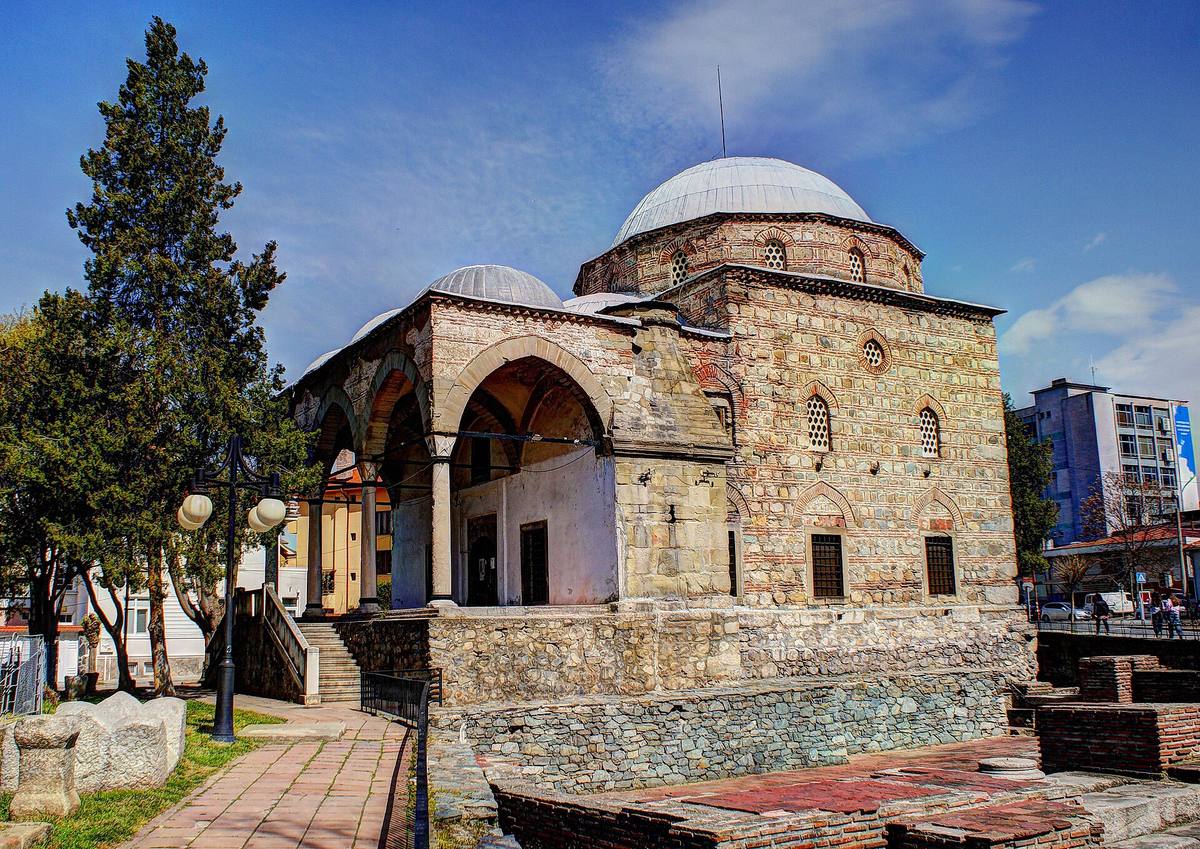
The image could not load. Its caption and source remain available.

An exhibition hall of the Regional History Museum in the former Ahmed Bey Mosque, right beside the Roman Thermae. It has housed a museum since 1944. The building has a wide dome and an entrance arcade under three small domes. The Ottomanist Machiel Kiel dates it to 1575-1577, while local sources say the mid-15th century.
Hours, admission, and directions ↓
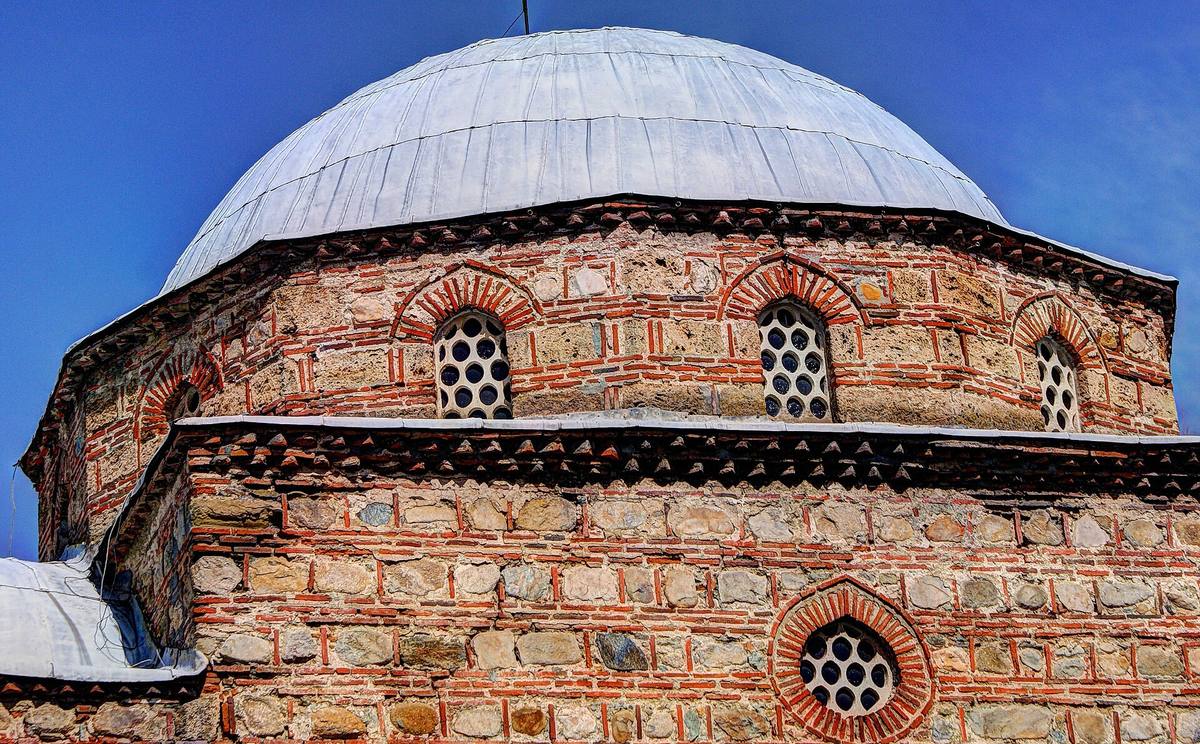
The former Ahmed Bey Mosque now houses the exhibition hall of the Regional History Museum. The building stands on a high stone base directly above the ruins of the Roman Thermae. Its walls are of stone and brick, its dome is clad in sheet metal, and its minaret is long gone. It has been used as a museum since 1944.
When was it built?
↗Here the sources disagree.
- Mid-15th century. So say the municipality and its tourism portal. According to Bulgarian Wikipedia, the years 1575 and 1577 written on the northeast wall probably refer to later rebuilding.
- 1575-1577. Machiel Kiel writes in the Turkish Encyclopedia of Islam (TDV, 2002) that this monumental Friday mosque was built in 983-985 AH, that is, 1575-1577, on the orders of Feridun Ahmed Bey, who briefly served as sanjak bey (provincial governor) of Kyustendil. In his list of surviving Ottoman buildings, Kiel calls it “the mosque of Feridun Ahmed Bey.”
Who was Feridun Ahmed Bey? In the same encyclopedia, Abdülkadir Özcan (1995) writes about the well-known Ottoman statesman of that name, author of the Münşeâtü’s-selâtîn. On April 10, 1576, he was dismissed as nişancı (head of the sultan’s chancery), sent away from Istanbul as sanjak bey of Smederevo, and from there transferred to the sanjak of Kyustendil. After the assassination of the grand vizier Sokollu Mehmed Pasha, he was called back to Istanbul. Kiel does not say outright that this is the same man. But the years nearly match.
A church under the mosque?
↗Tradition or legend According to a tradition recorded in Bulgarian Wikipedia, the mosque was built on the foundations of the medieval Church of St. Nedelya. The municipality’s tourism portal presents this as fact. Kiel writes that Bulgarian sources speak of a destroyed Church of St. Paraskevi, but that archaeological research found only the foundations of a late Roman basilica and nothing else. The site, he adds, lay in the eastern half of Pautalia, which was abandoned after AD 450.
The mosque’s recorded nicknames include: “Indzhili,” “Ingiliz,” and “the Christian Mosque.” İncil is Turkish for “Gospel,” but we found no source that explains the nickname.
The inscription of 1734
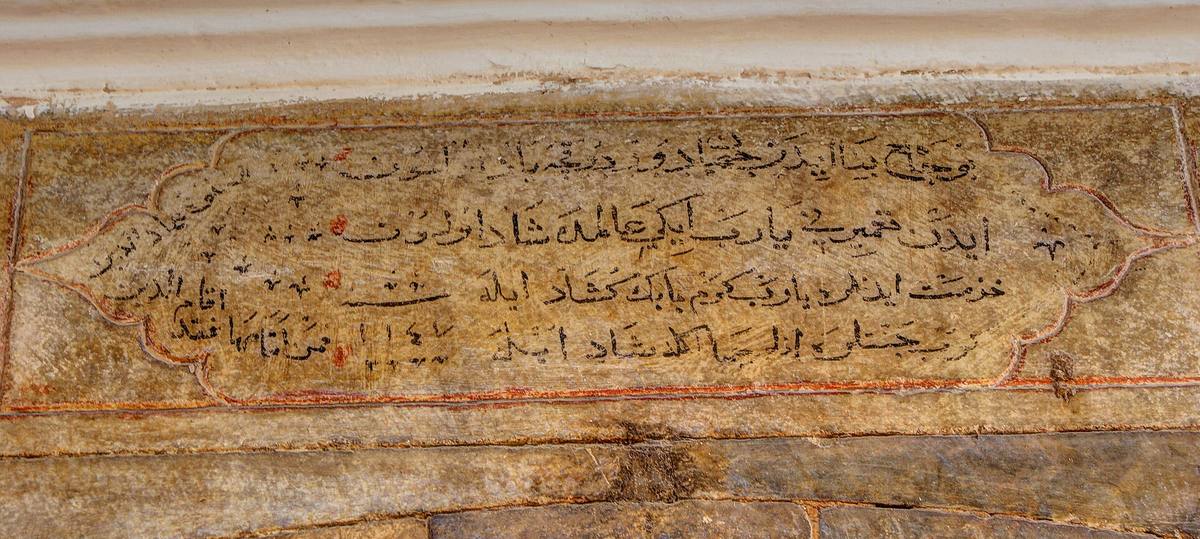
↗Above the entrance is a four-line inscription, in Middle Turkish according to Bulgarian Wikipedia. In the translation it gives, the inscription asks God to remember “whoever built this mosque” and to gladden in both worlds the one who repaired it. It ends with the year 1147 AH, that is, between June 3, 1734, and May 24, 1735. The text itself mentions a repair, and the tourism portal says the mosque was enlarged and rebuilt in 1734.
The building
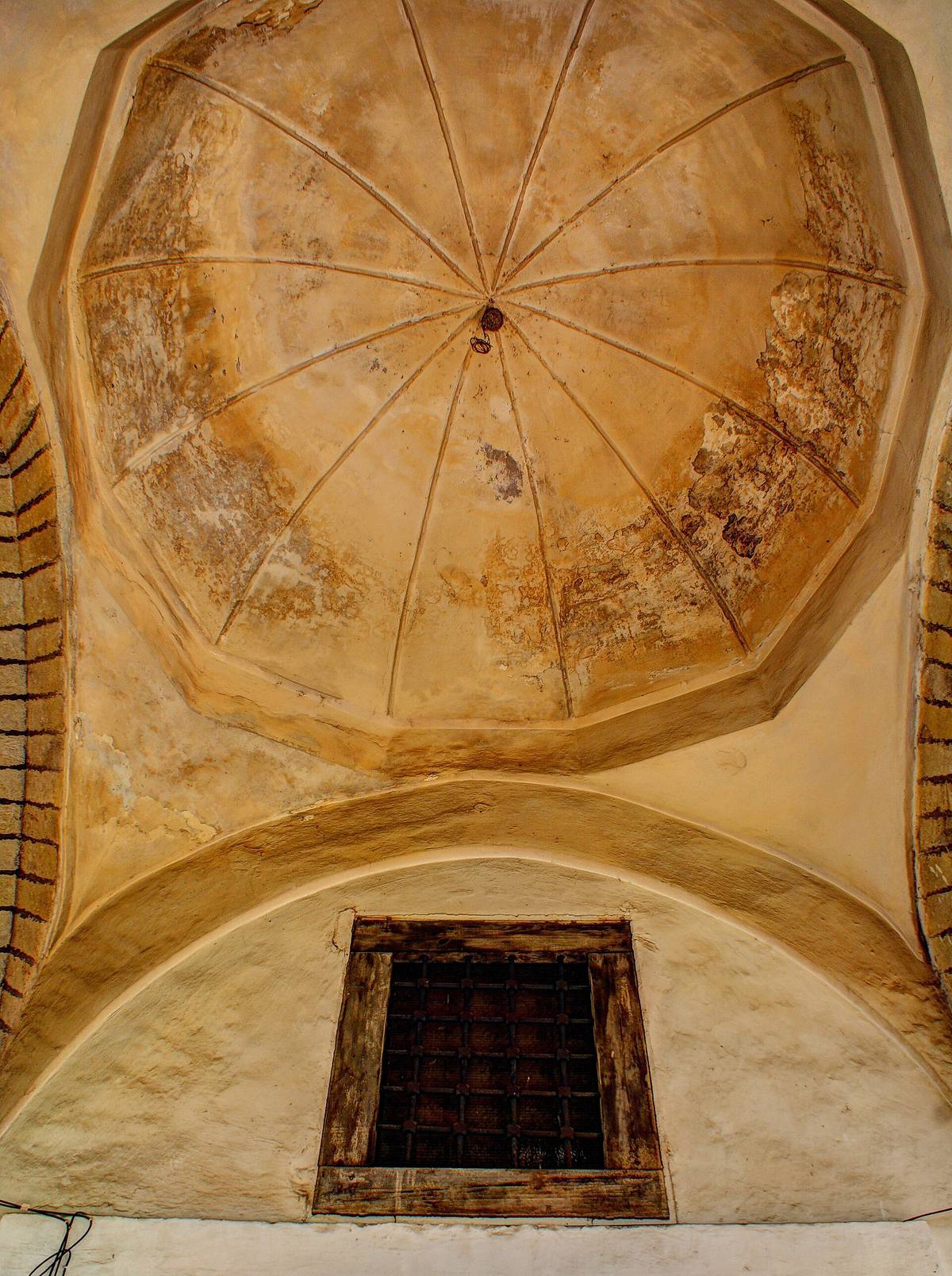
↗The prayer hall is square, under a wide dome on a drum with windows. In front of the entrance is an arcade on marble columns, covered by three small domes. According to the municipality, the arcade survives in its original form. The walls are of stone blocks and bricks, some of them taken from older buildings, with decorative brickwork and a dogtooth cornice. Above the windows are niches with pointed arches.
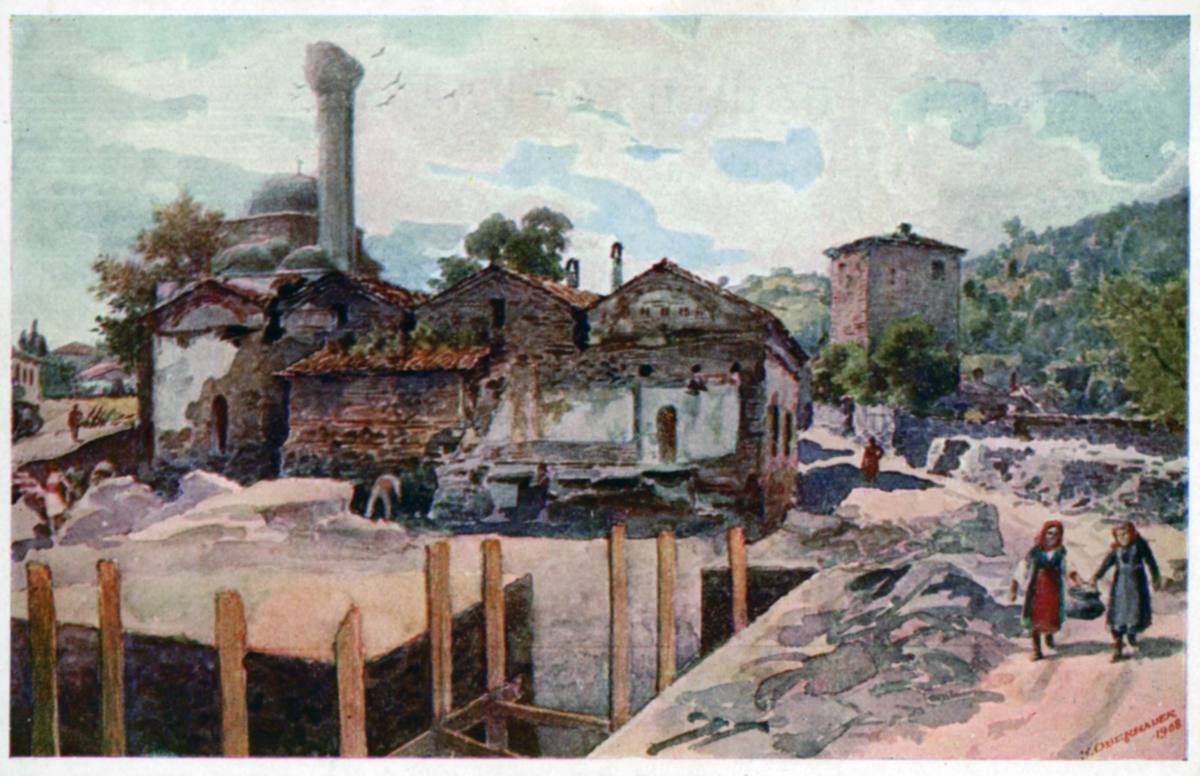
The minaret has been gone for more than a century. In 1904 a strong earthquake cracked it, and the town authorities took it down. The gallery also includes a 1908 postcard after a watercolor by Joseph Oberbauer showing the area around the Pirgova Tower and the mosque. It is an artistic view, rather than a photographic survey of conditions after the earthquake.
The museum in the mosque
↗On June 24, 1943, Mayor Dr. Georgi Efremov wrote to the Bratstvo community center that the municipality was “repairing the Ahmed Bey mosque and preparing it as a museum.” On August 6, 1944, the Town Archaeological Museum with a picture gallery opened here: the community center’s collections and nearly 60 paintings by Vladimir Dimitrov-Maystora and other Kyustendil artists. On December 5, 1954, the first dedicated archaeological exhibition was set up here, “The Local Region until Its Fall under Turkish Rule.” In the 1960s the Roman baths around the town museum were conserved and put on display, with the architect D. Vasileva (all according to the museum’s newspaper, Muzeen Vestnik, 2022). The history of the museum itself is on the page of the Regional History Museum.
In the 1950s many Ottoman buildings in Kyustendil were destroyed. The mosque is one of the few that survived, Kiel writes (see the Dervish Bath).
Today
↗Today the mosque is the exhibition hall of the Regional History Museum. It shows temporary exhibitions, both the museum’s own and visiting ones. For example:
- 2019: “A Mosaic of Crafts” from the Etar museum in Gabrovo;
- 2021: “Technology at Home in the First Half of the 20th Century” from the National Polytechnic Museum;
- 2025: the educational exhibition “Museum Primer” (May 15 to June 15) and “The Magic of Dolnoslav” from the Regional Archaeological Museum in Plovdiv (from June 20).
In 2021 the municipality announced a plan to turn the town’s other surviving mosque, the Fatih Mehmed Mosque, into a museum as well.
Photos and related images
The image could not load. Its caption and source remain available.

The image could not load. Its caption and source remain available.

The image could not load. Its caption and source remain available.

Document or artwork related to this sight
The image could not load. Its caption and source remain available.

Sources
(15)
A date may refer to construction, renewal, or another stated stage. Legends are accounts recorded in sources, rather than established events. Bibliography links help locate the named author; no automatic reference is added where the match is ambiguous.
- Machiel Kiel. Köstendil, TDV İslâm Ansiklopedisi, c. 26, 2002, 277-279Online source · Turkish · islamansiklopedisi.org.tr
Source address
https://islamansiklopedisi.org.tr/kostendil
If a link does not open, use its title, author, and address to search, or consult another listed source.
- Abdülkadir Özcan. Feridun Ahmed Bey, TDV İslâm Ansiklopedisi, c. 12, 1995, 396-397Online source · Turkish · islamansiklopedisi.org.tr
Source address
https://islamansiklopedisi.org.tr/feridun-ahmed-bey
If a link does not open, use its title, author, and address to search, or consult another listed source.
- Feridun Ahmet Bey Camii, Köstendil, Kültür EnvanteriOnline source · Turkish · kulturenvanteri.com
Source address
https://kulturenvanteri.com/yer/feridun-ahmet-bey-camii-kostendil/
If a link does not open, use its title, author, and address to search, or consult another listed source.
- Цени и работно време, РИМ, КюстендилInstitutional page · Bulgarian · kyustendilmuseum.bg
Source address
https://kyustendilmuseum.bg/za-muzeya/ceni-i-rabotno-vreme.html
If a link does not open, use its title, author, and address to search, or consult another listed source.
- Prices and opening hours, Regional History Museum, KyustendilInstitutional page · English · en.kyustendilmuseum.bg
Source address
https://en.kyustendilmuseum.bg/about-the-museum/prices-and-opening-hours.html
If a link does not open, use its title, author, and address to search, or consult another listed source.
- История на музея, РИМ „Акад. Йордан Иванов“, КюстендилInstitutional page · Bulgarian · kyustendilmuseum.bg
Source address
https://kyustendilmuseum.bg/za-muzeya/istoriya-na-muzeya.html
If a link does not open, use its title, author, and address to search, or consult another listed source.
- Музеен вестник, бр. 23 (125 години Регионален исторически музей), РИМ, Кюстендил, 2022PDF document · Bulgarian · kyustendilmuseum.bg
Source address
https://kyustendilmuseum.bg/uploads/%D0%9C%D1%83%D0%B7%D0%B5%D0%B5%D0%BD_%D0%B2%D0%B5%D1%81%D1%82%D0%BD%D0%B8%D0%BA%2C_%D0%B1%D1%80._23_(2022_%D0%B3.).pdf
If a link does not open, use its title, author, and address to search, or consult another listed source.
- Музеен вестник, бр. 22 (отчет за 2019-2020 г.), РИМ, Кюстендил, 2021PDF document · Bulgarian · kyustendilmuseum.bg
Source address
https://kyustendilmuseum.bg/uploads/%D0%9C%D1%83%D0%B7%D0%B5%D0%B5%D0%BD_%D0%B2%D0%B5%D1%81%D1%82%D0%BD%D0%B8%D0%BA%2C_%D0%B1%D1%80._22_(2021_%D0%B3.).pdf
If a link does not open, use its title, author, and address to search, or consult another listed source.
- Музеен вестник, бр. 28 (отчет за 2025 г.), РИМ, Кюстендил, 2026PDF document · Bulgarian · kyustendilmuseum.bg
Source address
https://kyustendilmuseum.bg/uploads/MUZEEN_VESTNIK_2026_cveten_3.pdf
If a link does not open, use its title, author, and address to search, or consult another listed source.
- Недвижимо културно наследство, Община КюстендилInstitutional page · Bulgarian · kyustendil.bg
Source address
https://kyustendil.bg/index.php?Itemid=273&id=119&lang=bg&option=com_content&view=article
If a link does not open, use its title, author, and address to search, or consult another listed source.
- Министерски съвет предостави 140 088 лв. за спешен и укрепителен ремонт на джамията „Фатих Мехмед“, Община Кюстендил, 2021Institutional page · Bulgarian · kyustendil.bg
Source address
https://kyustendil.bg/index.php?option=com_k2&view=item&id=1037:140-088&lang=bg
If a link does not open, use its title, author, and address to search, or consult another listed source.
- Джамия Ахмед Бей, Туристическа дестинация КюстендилOnline source · Bulgarian · visit-kyustendil.eu
Source address
https://visit-kyustendil.eu/djamia-ahmed-bej
If a link does not open, use its title, author, and address to search, or consult another listed source.
- Йозеф Обербауер. Пиргова кула, пощенска картичка, 1908, Wikimedia CommonsImage and license · Bulgarian · commons.wikimedia.org
Source address
https://commons.wikimedia.org/wiki/File:Kyustendil_034_1908.jpg
If a link does not open, use its title, author, and address to search, or consult another listed source.
- Ахмед бей джамия (Кюстендил), УикипедияEncyclopedia article · Bulgarian · bg.wikipedia.org
Source address
https://bg.wikipedia.org/wiki/Ахмед_бей_джамия_(Кюстендил)
If a link does not open, use its title, author, and address to search, or consult another listed source.
- Wikidata: Ахмед бей джамия (Q401059)Online source · Bulgarian · wikidata.org
Source address
https://www.wikidata.org/wiki/Q401059
If a link does not open, use its title, author, and address to search, or consult another listed source.