Chifte Bath
1910-1913, on the site of a late-15th-century bath
Dating stated in the sources: 1910-1913
Your visit at a glance
- Address
- Stefan Karadzha St., in the Bath Garden, next to the Ahmed Bey Mosque
- Approximate time at the site
- about 1 hour 30 minutes
- Opening hours
- Visit details
- Admission
- No verified information found
The image could not load. Its caption and source remain available.

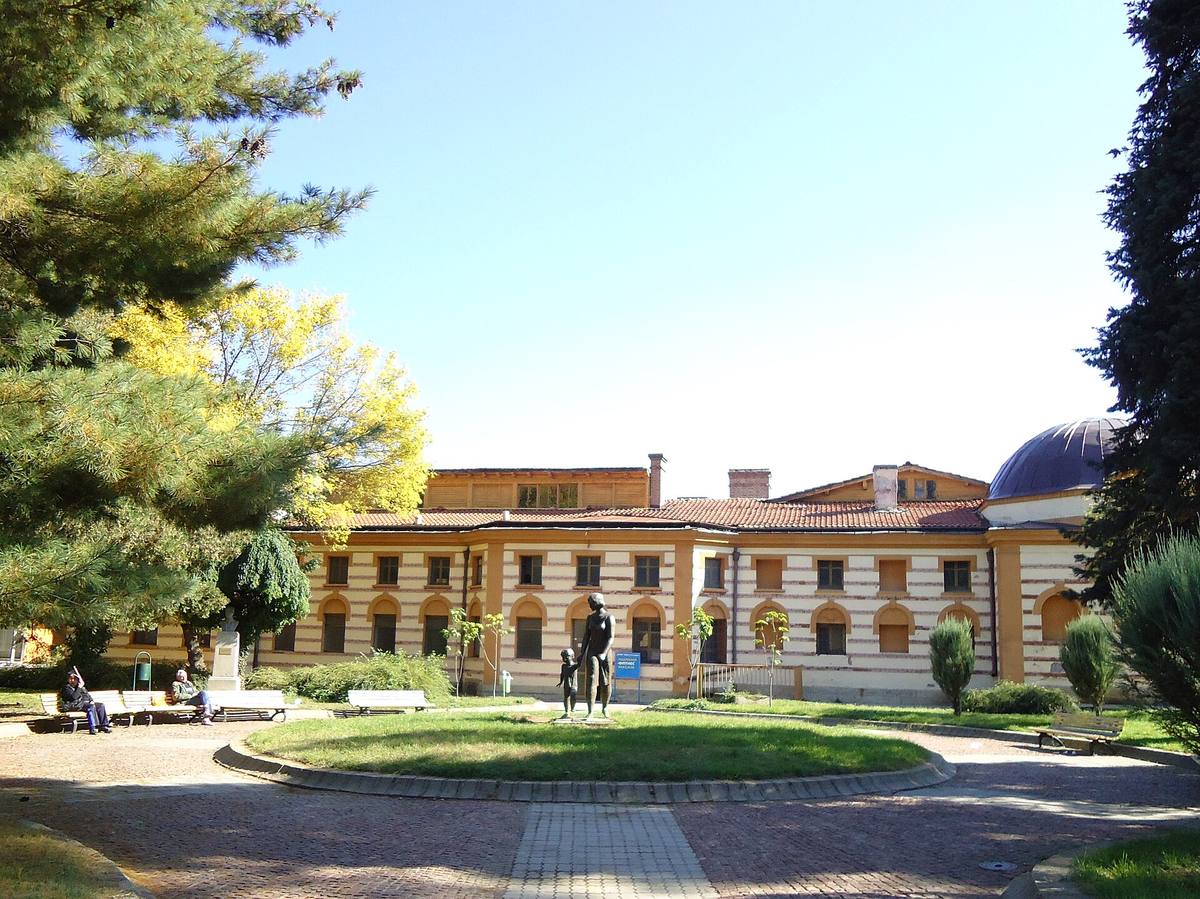
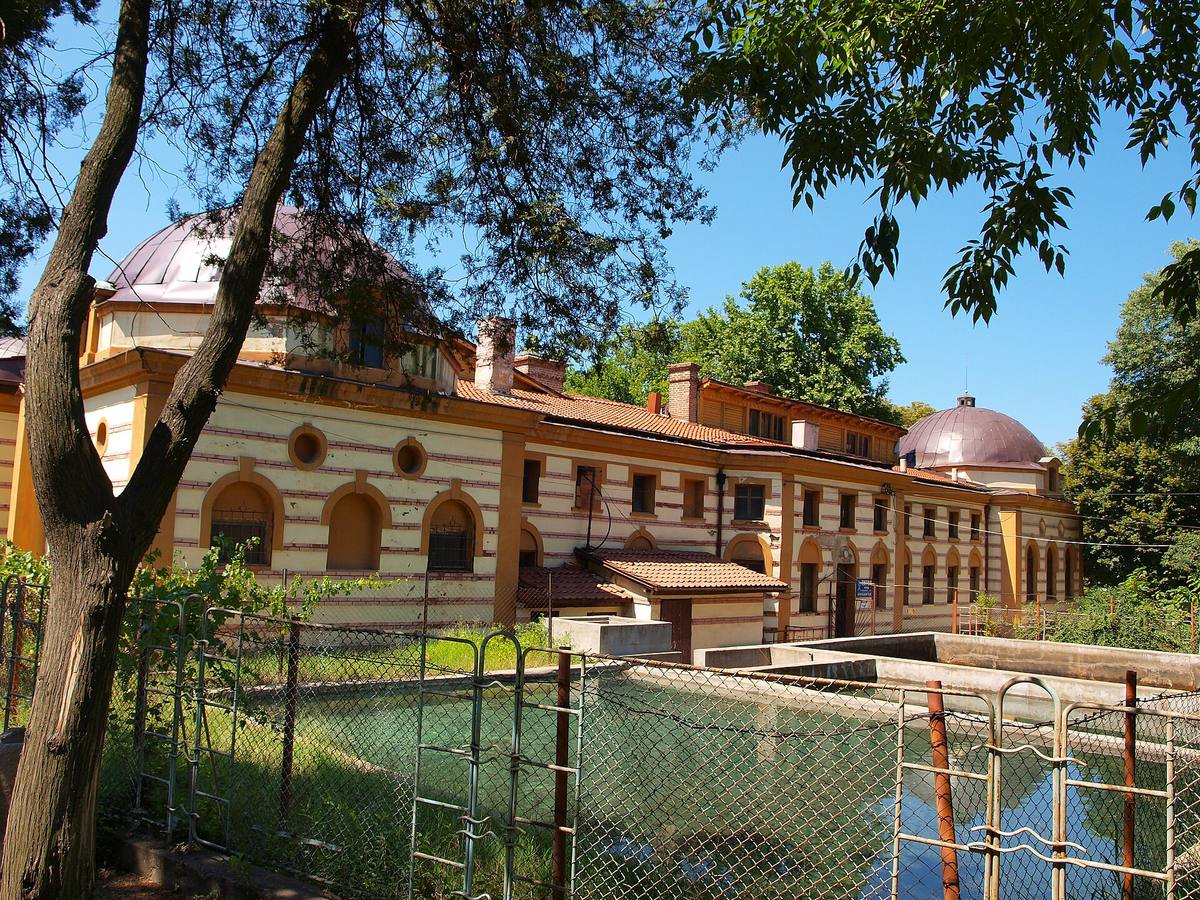
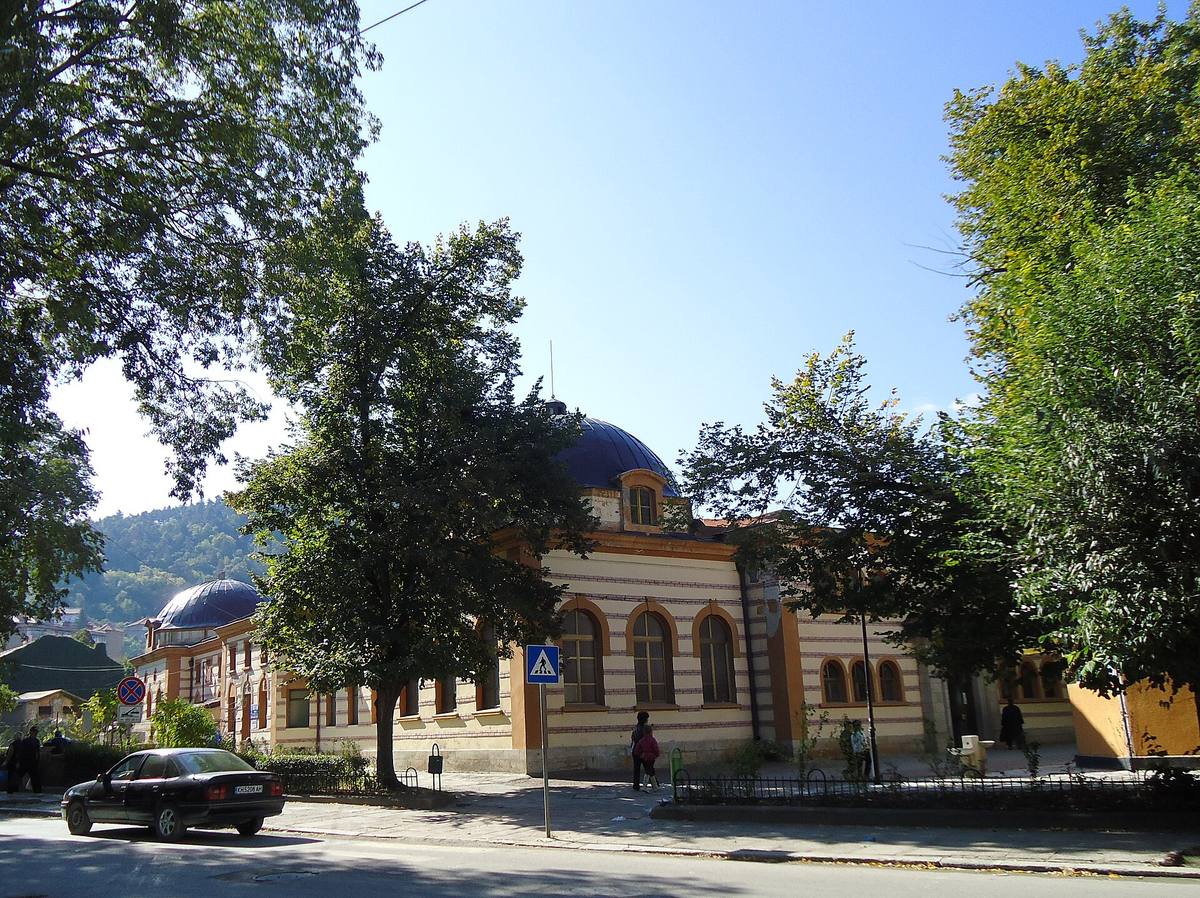
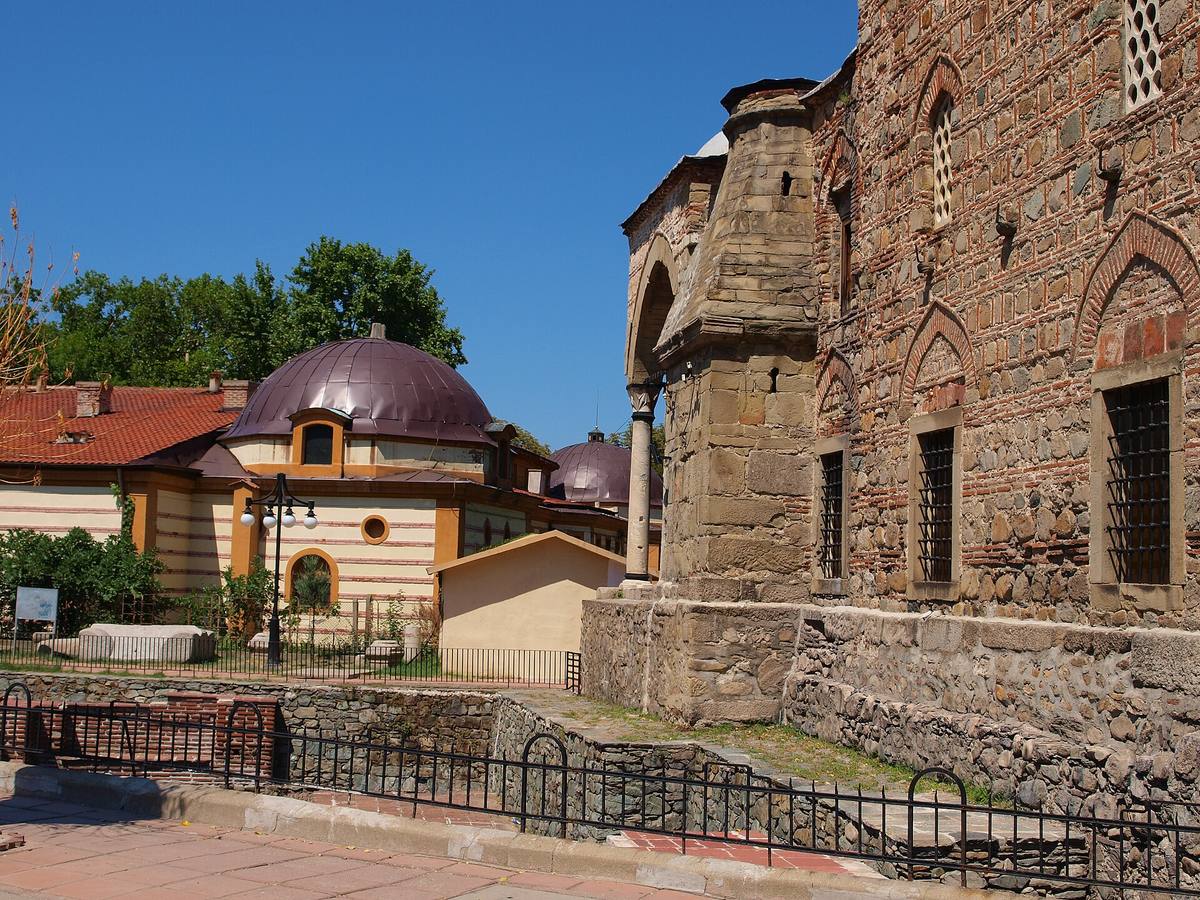
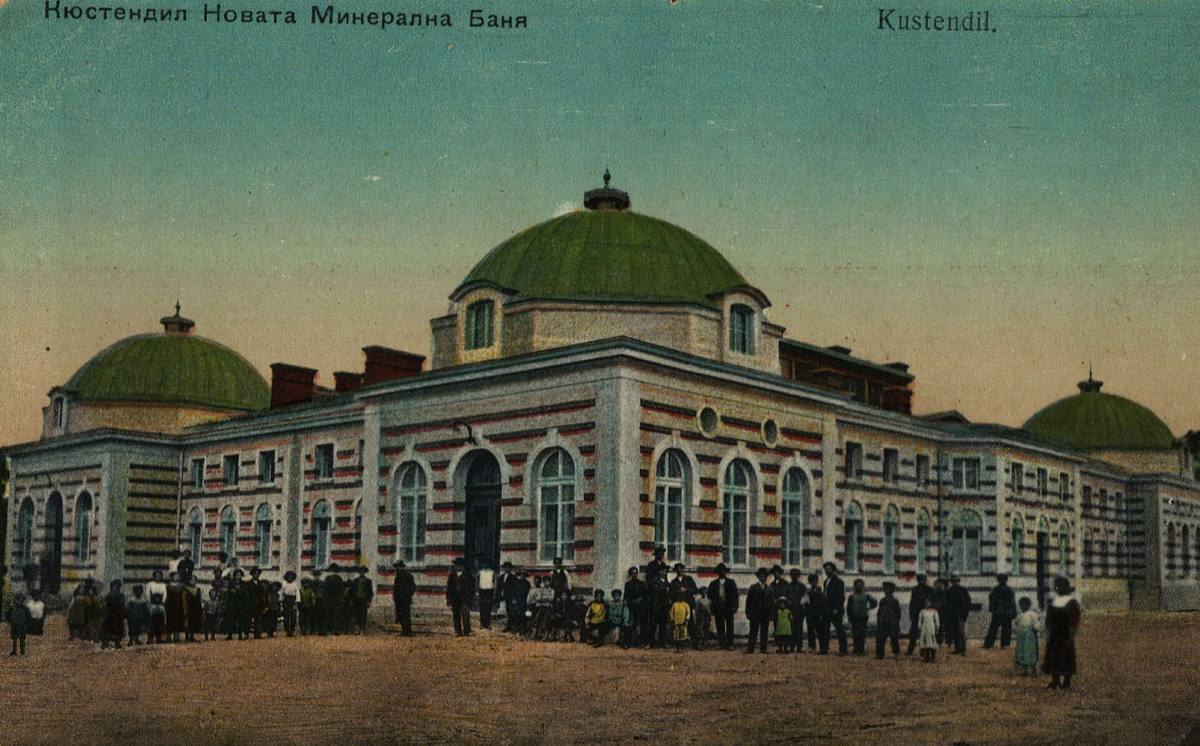
Kyustendil’s town mineral bath, built in 1910-1913 on the site of a late-15th-century Ottoman double bath. It still works today: separate sections for men and women, each with three pools of hot mineral water that is cooled the old way, with a tank and gravity. Around it lies the Bath Garden.
Hours, admission, and directions ↓
The Chifte Bath is one of the few places in Kyustendil where history isn’t looked at but used. For more than a hundred years people have come here with a towel: for many locals, and for visitors from the neighboring countries, the bath is part of the week, not a sight.
The “double” bath
↗In Turkish, çifte hamam means a bath split into two sections, one for women and one for men. The name survives from the Ottoman bath, and it still fits the building: it has a men’s and a women’s section today.
The Ottoman bath
↗The first bath here was built in the late 15th century. The Ottomanist Machiel Kiel writes that the town owes to Süleyman Pasha “a domed mosque, a large double bath, and the town’s water distribution system.” The year 1489 appears on Bulgarian Wikipedia and in Turkey’s Kültür Envanteri register. Kiel gives no year. [4]
Sources disagree on how many baths Ottoman Kyustendil had, Violeta Kotseva writes in Sofia University’s journal Seminar_BG (2024). According to Kiel, in 1530 the town had two hamams and seven baths with hot mineral water. According to Yordan Ivanov, 12 baths were working in the 17th century, and Lyubomir Mikov counts 15 in Kyustendil out of 113 in the Bulgarian lands. The 1873 salname (yearbook) of the Danube Vilayet lists nine hot-spring baths in the town, along with sixteen mosques, four churches, and a synagogue, Kiel writes. [2]
The town’s water came from the village of Bogoslov, three hours away. For centuries its people served as suyolcu, keepers of the water channels, and they still did so in the 19th century.
It is often written that the bath stands “on the foundations of the Asklepion of Pautalia.” We found no excavation report from under the building, so treat this as a supposition.
The new bath
↗At the start of the 20th century the town council set out to make Kyustendil a “European-style spa resort.” From 1906 to 1909 its technical department was run by the Kyustendil-born architect Hristo Kovachevski, a graduate of the Vienna Polytechnic. He designed the capture of the hot springs and the water supply.
- 1908: the mineral springs at the foot of Hisarlaka were captured and a water main was built.
- 1910: the old bath was partly demolished, and the new one began on its foundations, to Kovachevski’s design.
- 1912: the Bath Garden was planted around the bath, also to Kovachevski’s design. Its first trees were the plane trees in front of the main entrance.
- September 1913: the rebuilding was finished. The newspaper Trud writes that the work was completed by the Czech architect Rudolf Fischer, then the town architect of Kyustendil.
- January 1914: the bath officially opened. Its director said in 2020: “The bath was built during the war of 1913. It officially opened in January 1914.”
The Bulgarian Thermal Heritage Association notes that Sofia’s Central Mineral Bath also opened in 1913.
Not every source gives the same year. Ekaterina Keremidarska and Mihal Nikolov write in Sofia University’s Kyustendil Readings (1996) that the enlargement and rebuilding of the central bath were finished in 1912, to a design by “Hristo Kovachev,” a Kyustendil man who had studied architecture at the Vienna Polytechnic. Kotseva calls the new bath “built in 1913.”
Between the wars
↗The 1923 rules for the Chifte and Dervish baths, quoted by Kotseva, give the Chifte Bath one men’s and one women’s section, and the Dervish Bath just one, used in shifts. The two baths shared one management and one doctor, who watched over order and cleanliness. In 1926-1929 the Chifte was the largest of the town’s three baths, and its income, together with that of the laundry attached to it, grew every year.
By the late 1930s the baths brought in so much money that they paid for improvements across the whole town. In 1938 Zahariev called them “the town’s little mill, which keeps grinding winter and summer.” In 1935 the Kyustendil baths recorded 300,000 baths and 2.5 million leva in income. On March 6, 1950, Kyustendil was declared a resort town (all according to Kotseva).
How it works
↗The bath has two floors and two sections, for men and for women, each with three pools. It covers 1,394 m², on a plot of 5.6 decares (5,600 m²).
- The ground floor has the foyer with the ticket desk, the two shared sections, and private cabins with single and family tubs.
- The upper floor has rooms for physical therapy and massage.
The mineral water is too hot to step into straight away, at about 74 °C. So the bath has a cooling system that, according to the Thermal Heritage Association, survives only here: “Behind the bath there is a tank of water that cools, and by gravity it feeds the bath with fresh water.”
Inside there are mosaics and sculpted lion heads, one of them a fountain. They are the work of the artist Nikolay Nikolov-Zikov.
The water
↗The water comes from the town’s roughly forty hot springs. It is a bicarbonate-sulfate-sodium water, clear, with the smell of hydrogen sulfide. The Visit Kyustendil tourism portal links the water’s use in balneotherapy to its sulfides, high temperature, low mineral content, and fluoride content. It describes use for musculoskeletal disorders and some forms of infertility.
The same portal describes therapeutic procedures in a pool at 40-41 °C and bathing at 37-38 °C. Kyustendil was declared a spa resort of national importance by the Ministry of Health on March 8, 1994.
The Bath Garden
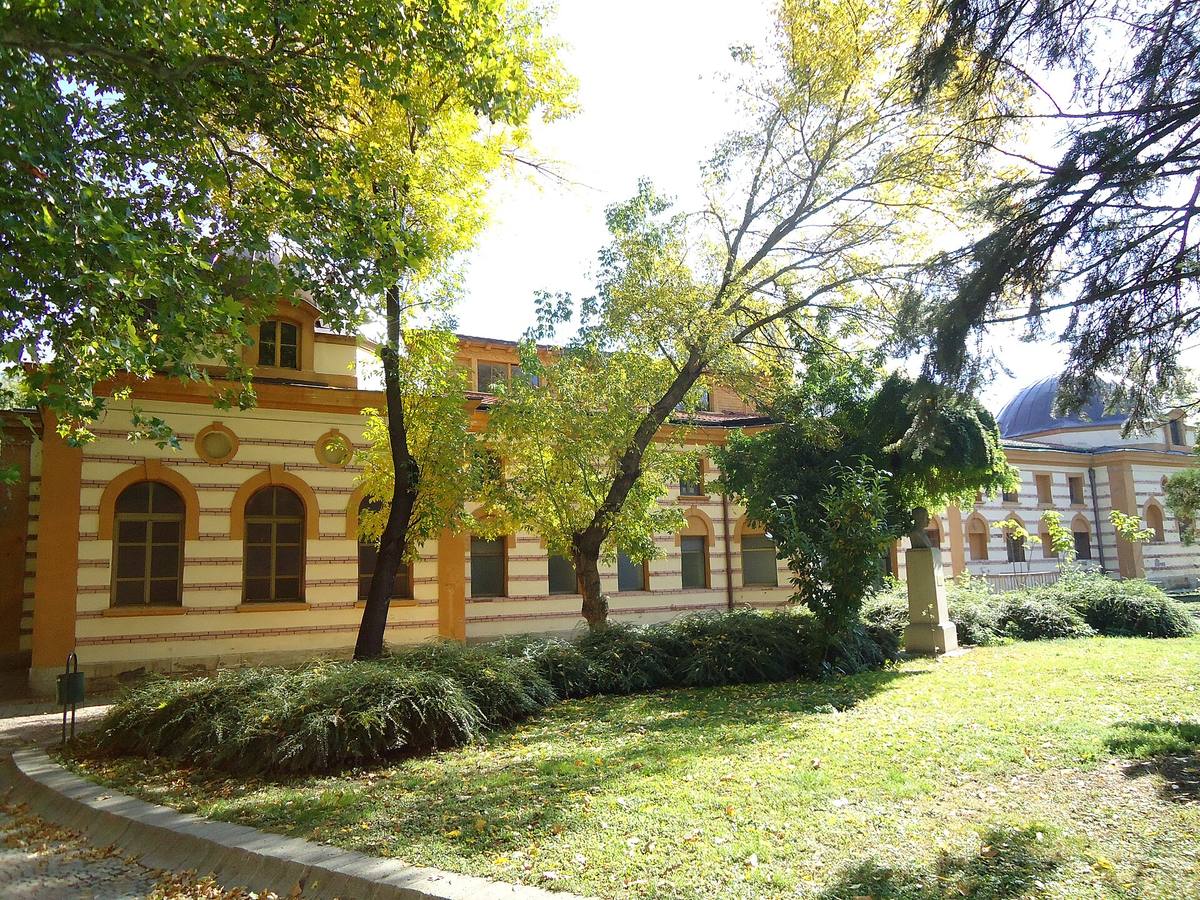
↗The park around the bath was planted together with it, in 1912:
- 1929: a bust of the poet Peyo Yavorov, in mosaic on a granite pedestal, was placed under the mulberry. It is a copy of Grigor Aharonyan’s monument in Sofia’s Borisova Gradina park.
- 1935: the gardener Al. Balabanov planted paulownias, a weeping mulberry, and ornamental shrubs.
- 1971: the fountain Playing Children, with a bronze group, was built under the plane trees.
Stories
↗- No days off. The bath ran without a break from its opening, “even through the wars.” It closed for the first time on March 13, 2020, because of the pandemic, and reopened on June 3.
- Guests from across the border. Regulars include people from North Macedonia, Kosovo, and Albania. Some of them rent rooms in Kyustendil so they can use the water.
- An attempt to sell it. On December 29, 2014, the town council decided to sell the bath, with a starting price of 1,026,000 leva. The buyer would have had to keep the façade and 35 jobs. Protests and a lawsuit followed. In 2015 the Supreme Administrative Court declared the decision void, because the bath is a cultural monument and the exclusive property of the state.
- A visitor’s voice. One bather said in 2020: “The pool and the mineral water, everything is very good, and it has to be kept at any cost.”
- A free bath. In July 2025, during a water-supply emergency, the mayor announced that the Chifte Bath and the bath in the Iztok quarter would be free for two days.
Today
↗The bath is run by the municipal company Higia EOOD. In 2024 Bulgarian National Radio reported that the complex had deteriorated and that “no repairs are being made, for lack of municipal funds.”
We found no official price list. The Thermal Heritage Association listed (February 2026) 7 leva for the shared bath, 8 leva for a tub, and 15 leva for a tub for two. Prices are now quoted in euros, so check them on site.
Photos and related images
The image could not load. Its caption and source remain available.

The image could not load. Its caption and source remain available.

The image could not load. Its caption and source remain available.

The image could not load. Its caption and source remain available.

Document or artwork related to this sight
The image could not load. Its caption and source remain available.

Sources
(16)
A date may refer to construction, renewal, or another stated stage. Legends are accounts recorded in sources, rather than established events. Bibliography links help locate the named author; no automatic reference is added where the match is ambiguous.
- Работно време, Чифте баня, от 28.07.2025 г., „Хигия“ ЕООД / Община КюстендилInstitutional page · Bulgarian · kyustendil.bg
Source address
https://kyustendil.bg/index.php?option=com_k2&view=item&id=3402
If a link does not open, use its title, author, and address to search, or consult another listed source.
- Виолета Коцева. Развитие на балнеолечението в гр. Кюстендил в началото на ХХ в. Семинар_BG 27, СУ, 2024, 260-276Research publication · Bulgarian · periodicals.uni-sofia.bg↑1
Source address
https://periodicals.uni-sofia.bg/index.php/seminar_bg/bg/article/view/6050
If a link does not open, use its title, author, and address to search, or consult another listed source.
- Екатерина Керемидарска, Михал Николов. Отдихът и развлеченията на кюстендилци след Освобождението. Кюстендилски четения 3, СУ, 1996, 38-47Research publication · Bulgarian · periodicals.uni-sofia.bg
Source address
https://periodicals.uni-sofia.bg/index.php/KRe/bg/article/view/kre-1996a-06
If a link does not open, use its title, author, and address to search, or consult another listed source.
- Machiel Kiel. Köstendil, TDV İslâm Ansiklopedisi, c. 26, 2002Online source · Turkish · islamansiklopedisi.org.tr↑1
Source address
https://islamansiklopedisi.org.tr/kostendil
If a link does not open, use its title, author, and address to search, or consult another listed source.
- Минерална баня „Чифте баня“, Българска асоциация за термално наследствоOnline source · Bulgarian · thermalassociation.bg
Source address
https://thermalassociation.bg/izvor/mineralna-banya-chifte-banya/
If a link does not open, use its title, author, and address to search, or consult another listed source.
- Кирил Фалин. Реквием за Чифте баня, Труд, 2015Online source · Bulgarian · trud.bg
Source address
https://trud.bg/a/articles/article-4646393
If a link does not open, use its title, author, and address to search, or consult another listed source.
- Смениха управителя на кюстендилската Чифте баня, БНР, 2024Online source · Bulgarian · bnrnews.bg
Source address
https://bnrnews.bg/horizont/post/282009/smeniha-upravitelya-na-kyustendilskata-chifte-banya
If a link does not open, use its title, author, and address to search, or consult another listed source.
- Чифте баня вече работи с пълния си капацитет, kustendil.info, 2020Online source · Bulgarian · kustendil.info
Source address
https://www.kustendil.info/novini/15162-chifte-banya-veche-raboti-s-palniyat-si-kapatzitet
If a link does not open, use its title, author, and address to search, or consult another listed source.
- Чифте баня в Кюстендил отново отвори врати, Радио 999, 2020Online source · Bulgarian · radio999bg.com
Source address
https://radio999bg.com/bylgariya/chifte-banya-kyustendil-otnovo-otvori-vrati-sled-padaneto-og
If a link does not open, use its title, author, and address to search, or consult another listed source.
- Веска Спасова. За величието и духа на старите кюстендилски къщи, Музеен вестник, бр. 28, 2026PDF document · Bulgarian · kyustendilmuseum.bg
Source address
https://kyustendilmuseum.bg/uploads/MUZEEN_VESTNIK_2026_cveten_3.pdf
If a link does not open, use its title, author, and address to search, or consult another listed source.
- Чифте баня (Кюстендил), УикипедияEncyclopedia article · Bulgarian · bg.wikipedia.org
Source address
https://bg.wikipedia.org/wiki/Чифте_баня_(Кюстендил)
If a link does not open, use its title, author, and address to search, or consult another listed source.
- Банска градина (Кюстендил), УикипедияEncyclopedia article · Bulgarian · bg.wikipedia.org
Source address
https://bg.wikipedia.org/wiki/Банска_градина_(Кюстендил)
If a link does not open, use its title, author, and address to search, or consult another listed source.
- Çifte Hamam, Köstendil, Kültür EnvanteriOnline source · Turkish · kulturenvanteri.com
Source address
https://kulturenvanteri.com/yer/?p=190799
If a link does not open, use its title, author, and address to search, or consult another listed source.
- OpenStreetMap: Чифте баняMap record · Bulgarian · openstreetmap.org
Source address
https://www.openstreetmap.org/way/182906196
If a link does not open, use its title, author, and address to search, or consult another listed source.
- Изявление на кмета за водоснабдяването, Община Кюстендил, 2025Institutional page · Bulgarian · kyustendil.bg
Source address
https://kyustendil.bg/index.php?option=com_k2&view=item&id=3400
If a link does not open, use its title, author, and address to search, or consult another listed source.
- Балнеология, Туристическа дестинация КюстендилOnline source · Bulgarian · visit-kyustendil.eu
Source address
https://visit-kyustendil.eu/balneologia
If a link does not open, use its title, author, and address to search, or consult another listed source.