04History
Pirgova Tower
14th-16th centuries
Dating stated in the sources: 14th-16th c.
Your visit at a glance
- Address
- Prof. Kiril Tsonev St., town center, next to the Roman Thermae
- Approximate time at the site
- about 20 minutes
- Opening hours
- Visit details
- Admission
- Visit details
The image could not load. Its caption and source remain available.

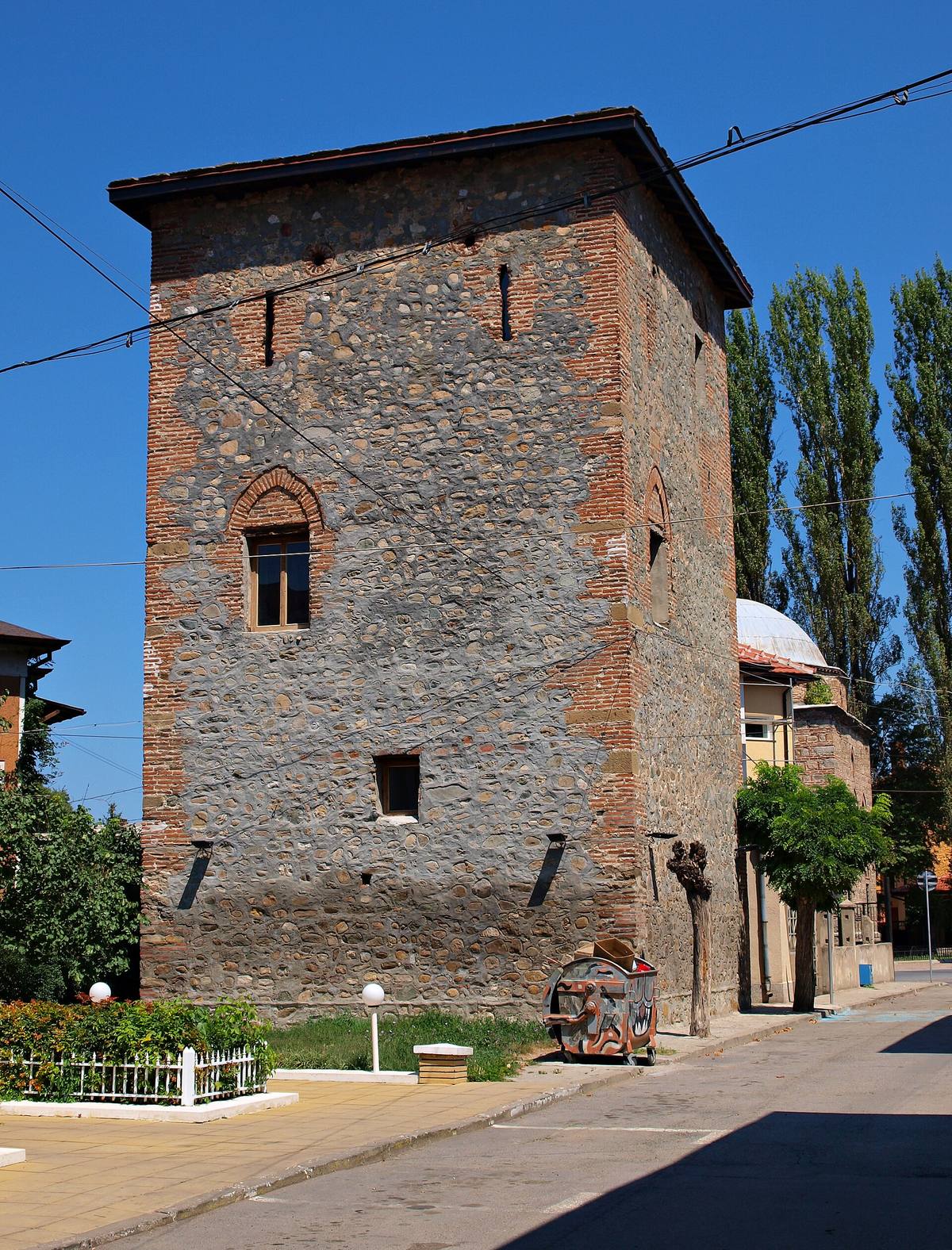
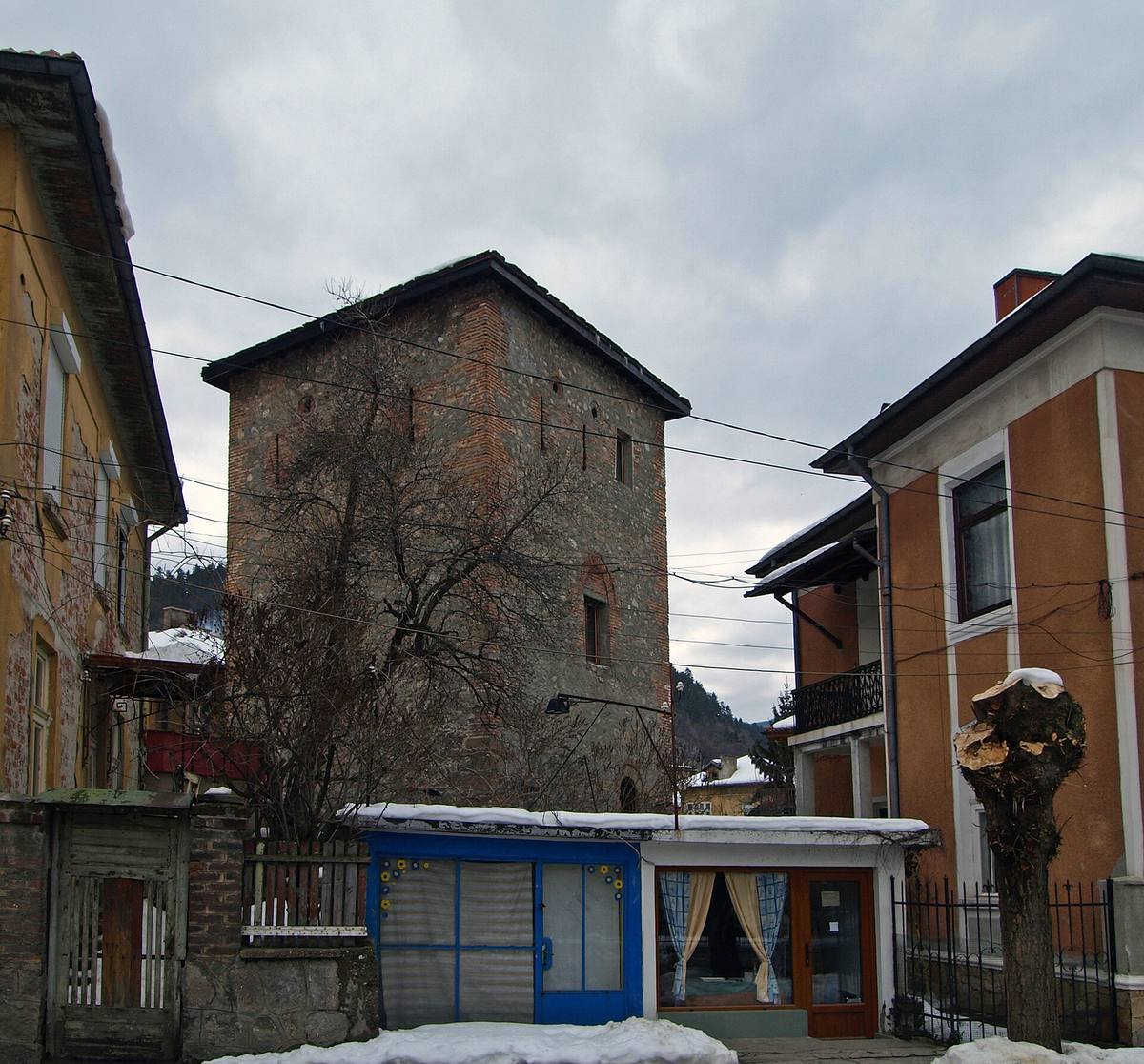
A stone residential tower in central Kyustendil, built between the 14th and 16th centuries as the home and stronghold of a local lord. It is the only survivor of the town’s several medieval towers, and today it is an exhibition space of the Regional History Museum.
Hours, admission, and directions ↓
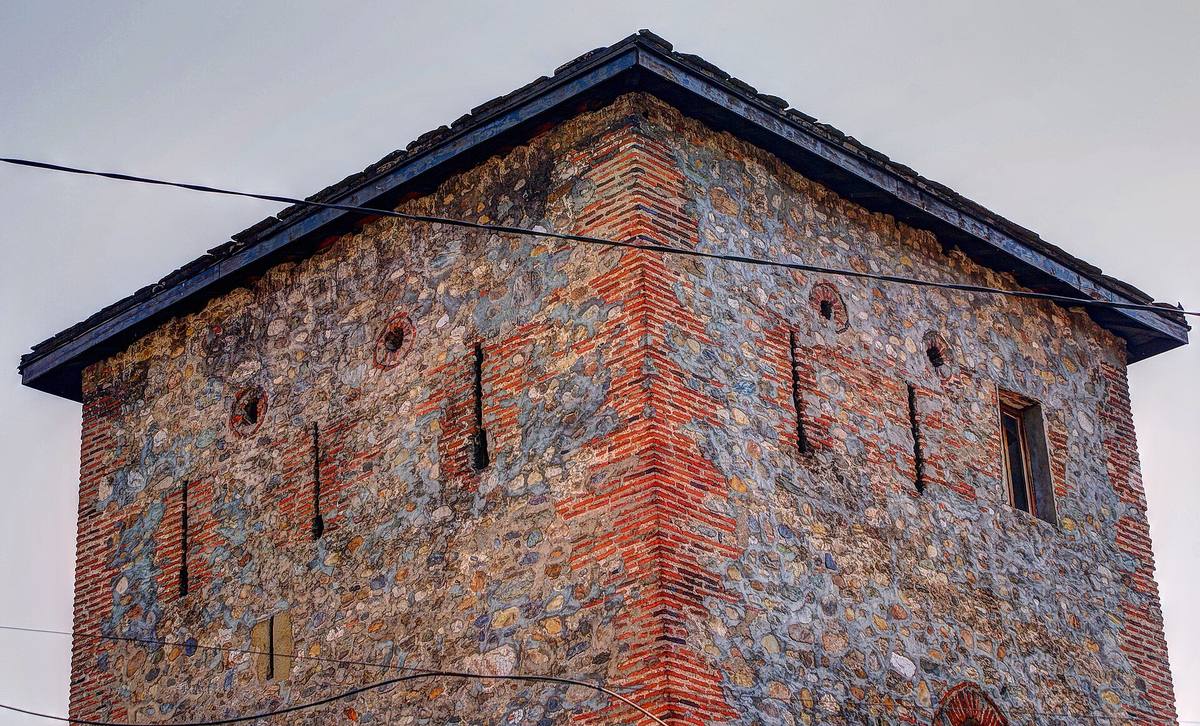
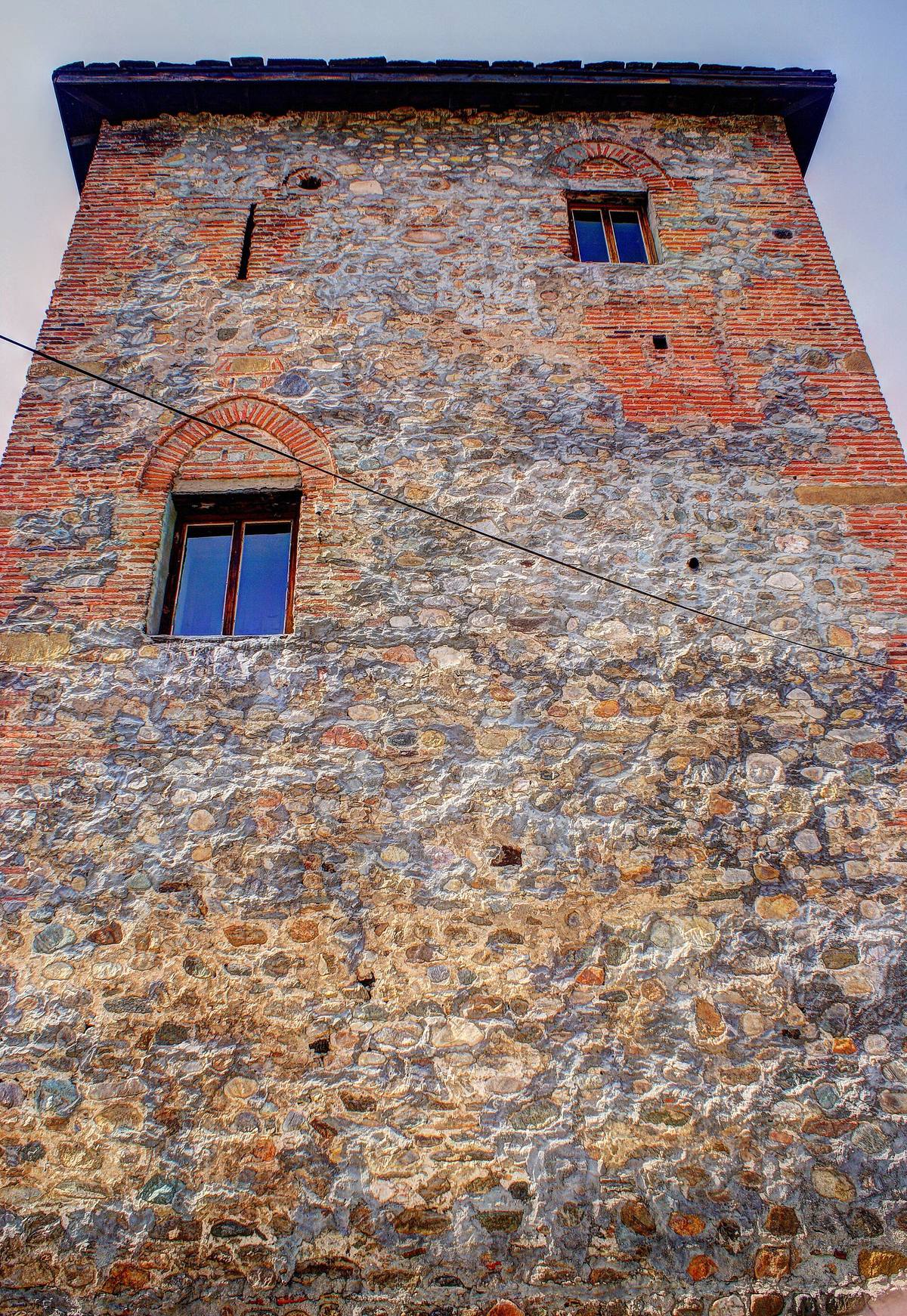
The tower stands in the very center of town, next to the Roman Thermae. From outside it looks simple: four walls of rough stone, brick corners, small windows, and loopholes. But every detail of it was designed for defense.
The name
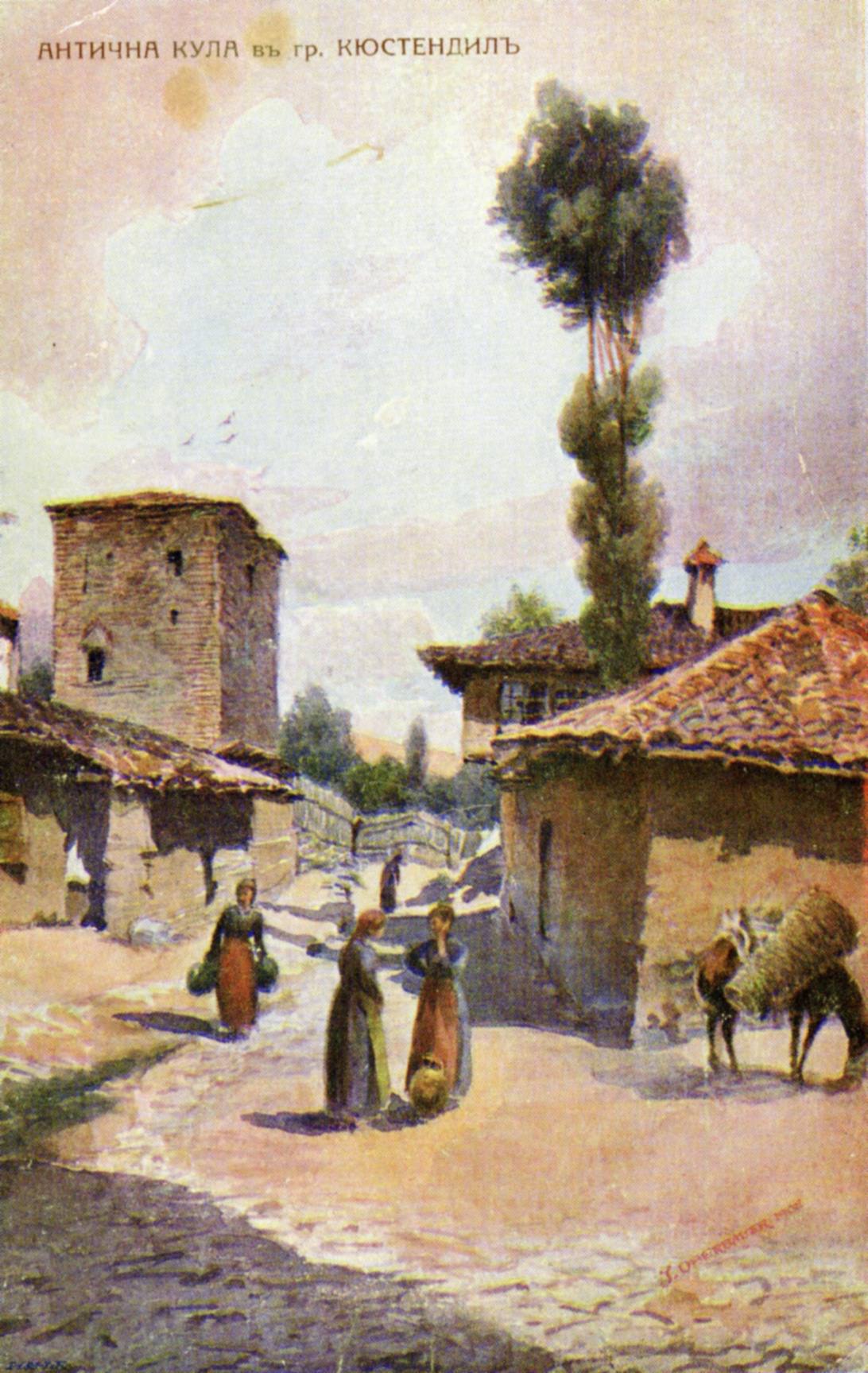
↗“Pirgova” comes from the Greek word pyrgos, “tower.” The name has taken several forms. A 1909 law calls it “the state tower known as the Pirkova Tower.” The first register of monuments, in 1927, lists it as “the tower ‘Pirgite’”: “the towers,” in the plural. A 1908 postcard calls it “the antique tower in the town of Kyustendil.”
When it was built
↗There is no exact date, and the proposals span three centuries:
- The municipality and the “Digital Culture” project place it between the late 14th century and the first quarter of the 15th.
- The Regional History Museum gives the 14th-15th centuries.
- The architect Elitsa Vitkova writes 15th-16th centuries, “though it may be older (from the end of the 14th century).”
- Kültür Envanteri, Turkey’s register of Ottoman heritage, dates it to the 16th-17th centuries.
Yordan Ivanov first described it in scholarship, in Northern Macedonia in 1906.
If the earlier dates are right, the tower was built shortly before or around the time when Velbazhd was the center of the domain of Despot Konstantin Dragaš, in the late 14th century. That is only the historical background: no source links the tower to Dragaš.
A lord’s house
↗The tower was “the town residence of a local feudal lord,” as Vitkova puts it. His name is not known. More interesting is that it was not alone. Vitkova writes that it is “the only one left of the several residential towers that stood in Kyustendil in the late Middle Ages.” That may be why the old register calls it “the towers.”
The builders took stone from the neighboring Roman baths. The bricks came from there too: square, 25 cm on a side and only 4 cm thick.
Layout and defenses
↗The base is almost square, 8.25 by 8.35 m, and the tower is about 15 m tall: 14.40 m to the eaves, by Vitkova’s measurements. The walls get thinner as they rise, from 1.40 m at the ground floor to 0.80 m at the top. There is a ground floor and three upper floors, and the third is split in half into two half-levels.
- The ground floor, 2.05 m high, was a storeroom. It could only be reached by a wooden stair inside, from the first floor.
- The first floor, 3.50 m high, was for living and for defense: it has a fireplace and two loopholes.
- The second floor, 4.70 m high, was the main living floor. It has three windows, a fireplace, a niche, and five loopholes. There is also a gallery with a latrine niche, which Vitkova considers a later addition.
- The third floor, 3.20 m high, was for summer use and for defense on every side: one window, seven round loopholes, and nine vertical ones.
The entrance was clever. The original door is on the northwest wall, more than 2 m above the ground, and it could only be reached by a removable ladder from outside. Once the ladder was pulled up, nobody could get in. Today’s street-level entrance is later. In Vitkova’s view it takes away from the tower’s defensive character.
From home to arsenal
↗In the late Middle Ages the tower stopped being a home and became a weapons store. That is when a doorway was cut on the east side.
The state tower given to the town
↗On January 24, 1909, the 14th Ordinary National Assembly decided to give the tower to the Kyustendil town council, “together with the ground around it, about 250 square meters.” The decision was confirmed by Decree No. 2 of Tsar Ferdinand I on February 20, 1909.
A protected monument
↗- 1927: listed as a national antiquity, confirmed in 1932.
- 1966: the first major restoration rebuilt the beams of the three floors, the floors, and the roof.
- 1968: declared an architectural monument of national importance.
- 1977: included, with the whole old town center, in the Pautalia-Velbazhd architectural and archaeological reserve.
- 2009: a second major restoration was completed.
Things worth knowing
↗- An “antique” tower. In 1908 the painter Joseph Oberbauer painted the tower for a series of postcards. The caption reads “Antique tower in the town of Kyustendil”: at the time, people thought it was Roman.
- Comparisons. Scholars of Balkan tower houses set it beside Hrelyo’s Tower at the Rila Monastery, from 1334-1335: “similar in purpose but different in design.”
- In Turkey’s heritage register. It is listed in Kültür Envanteri, the register of Ottoman heritage, as “Pirkova Kulesi,” with photographs from the archive of the historian Machiel Kiel.
- No legend. We have not found any recorded legend about the tower. If you know one, we’d be glad to add it.
Today
↗The tower belongs to the Regional History Museum in Kyustendil. It hosts temporary exhibitions of painting and photography; in 2025, for example, it showed Violeta Apostolova-Leti’s photo exhibition Near and Far.
It also hosts evenings of poetry and music. In 2024 the Asklepion club and the museum held “The Pirgova Tower of the Spirit,” presenting the tower as a place that has “kept the spirit of Kyustendil for centuries.” On the European Night of Museums, May 23, 2026, it showed Buffaloes, an art project by the Kyustendil artist Evgeni Serafimov.
There is a proposal to give the tower a permanent exhibition on medieval Velbazhd and on weapons through the ages, but it has not been carried out yet.
Photos and related images
The image could not load. Its caption and source remain available.

The image could not load. Its caption and source remain available.

The image could not load. Its caption and source remain available.

Document or artwork related to this sight
The image could not load. Its caption and source remain available.

Sources
(12)
A date may refer to construction, renewal, or another stated stage. Legends are accounts recorded in sources, rather than established events. Bibliography links help locate the named author; no automatic reference is added where the match is ambiguous.
- Цени и работно време, РИМ, КюстендилInstitutional page · Bulgarian · kyustendilmuseum.bg
Source address
https://kyustendilmuseum.bg/za-muzeya/ceni-i-rabotno-vreme.html
If a link does not open, use its title, author, and address to search, or consult another listed source.
- Музейни обекти на РИМ, КюстендилInstitutional page · Bulgarian · kyustendilmuseum.bg
Source address
https://kyustendilmuseum.bg/muzeyni-obekti-na-rim-kyustendil/
If a link does not open, use its title, author, and address to search, or consult another listed source.
- Списък на паметниците на културата с национално значение в област Кюстендил, Министерство на културата, 2006PDF document · Bulgarian · mc.government.bg
Source address
https://mc.government.bg/images/NPK/KUSTENDIL.pdf
If a link does not open, use its title, author, and address to search, or consult another listed source.
- арх. Елица Виткова. Пиркова кула в Кюстендил, BG JourneyOnline source · Bulgarian · bgjourney.com
Source address
https://www.bgjourney.com/Architecture/kreposti/Pirkova_kula/Pirkova_kula.html
If a link does not open, use its title, author, and address to search, or consult another listed source.
- Пиркова кула, Без граници 21 век / „Дигитална култура за регионално сближаване“Online source · Bulgarian · nf-21.com
Source address
https://nf-21.com/DC/bg/material-assets/kyustendil/kyustendil-municipality/80-pirkova-tower-bg
If a link does not open, use its title, author, and address to search, or consult another listed source.
- Пиркова кула, Туристическа дестинация КюстендилOnline source · Bulgarian · visit-kyustendil.eu
Source address
https://visit-kyustendil.eu/pirkova-kula
If a link does not open, use its title, author, and address to search, or consult another listed source.
- Пиргова кула и Средновековна църква „Св. Георги“, библиографска справка, Регионална библиотека, Кюстендил, 2023Online source · Bulgarian · libkn.bg
Source address
https://www.libkn.bg/пиргова-кула-и-средновековна-църква/
If a link does not open, use its title, author, and address to search, or consult another listed source.
- Кюстендил и „Пирговата кула на духа“, Фокус, 2024Online source · Bulgarian · focus-news.net
Source address
https://www.focus-news.net/novini/regioni/Kyustendil-i-Pirgovata-kula-na-duha-2281234
If a link does not open, use its title, author, and address to search, or consult another listed source.
- Пиргова кула, УикипедияEncyclopedia article · Bulgarian · bg.wikipedia.org
Source address
https://bg.wikipedia.org/wiki/Пиргова_кула
If a link does not open, use its title, author, and address to search, or consult another listed source.
- Pirgowa-Turm, Wikipedia (de)Encyclopedia article · German · de.wikipedia.org
Source address
https://de.wikipedia.org/wiki/Pirgowa-Turm
If a link does not open, use its title, author, and address to search, or consult another listed source.
- Pirkova Kulesi, Kültür EnvanteriOnline source · Turkish · kulturenvanteri.com
Source address
https://kulturenvanteri.com/yer/?p=259656
If a link does not open, use its title, author, and address to search, or consult another listed source.
- OpenStreetMap: Пиргова кулаMap record · Bulgarian · openstreetmap.org
Source address
https://www.openstreetmap.org/way/182908514
If a link does not open, use its title, author, and address to search, or consult another listed source.