Roman Thermae
Around the mid-2nd century, in use into the 3rd
Dating stated in the sources: 2nd c.
Your visit at a glance
- Address
- Town center, Hristo Smirnenski St., next to the Ahmed Bey Mosque
- Approximate time at the site
- about 30 minutes
- Visiting conditions
- No verified information found
- Admission
- No verified information found
The image could not load. Its caption and source remain available.

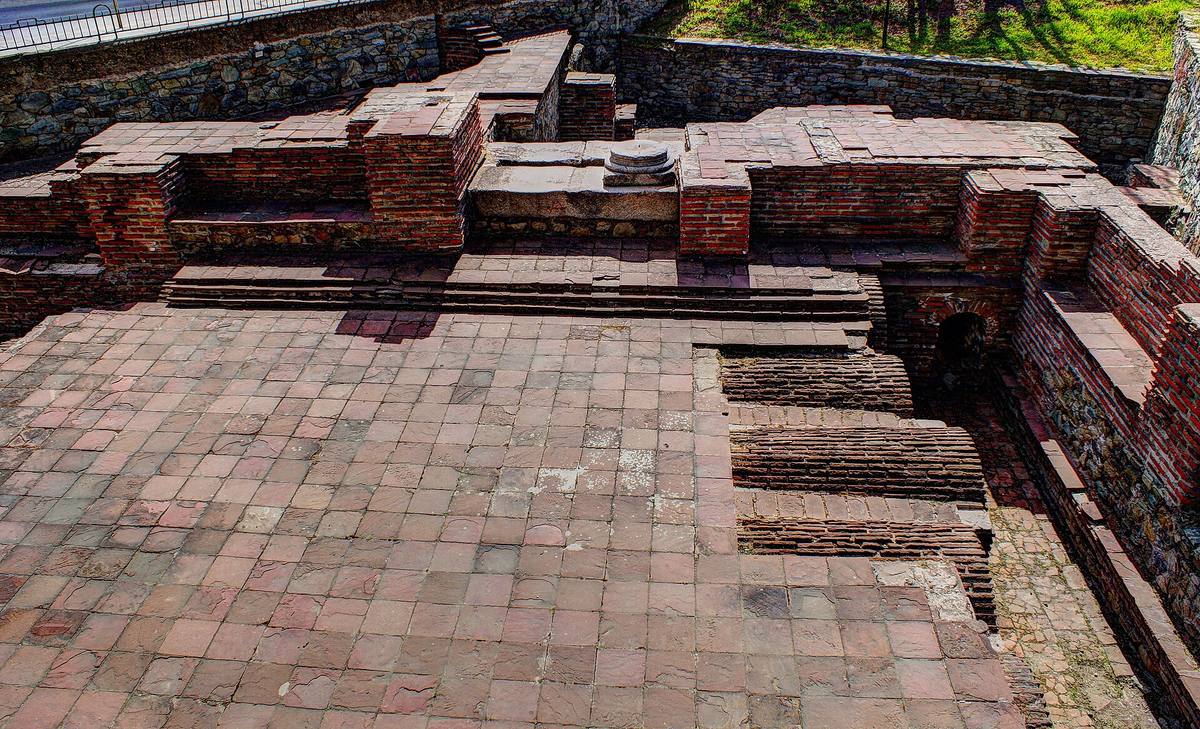
The ruins of the great public baths of Roman Pautalia, built around the middle of the 2nd century and still in use in the 3rd. Below today’s streets you can see parts of six rooms, with two kinds of underfloor heating and walls of alternating stone and brick. The town grew up because of its hot springs, and the baths are their finest monument.
Hours, admission, and directions ↓
The baths lie below the level of today’s streets, in the very center of town, next to the Ahmed Bey Mosque. You look at them over railings: brick floors, steps, vaulted channels for hot air, and striped walls. Today’s sidewalk and road traffic are above the ruins. That sense of two towns, one on top of the other, may be the best thing about the place.
A town of springs
↗According to the municipality, Kyustendil sits on about forty hot mineral springs. They rise along the fault between the Osogovo Mountains and the Kyustendil valley, in a strip about a kilometer long and 200-250 m wide. At the capture point the water is about 74 °C, one of the hottest in the country, and flows at about 33-35 liters per second. It is a bicarbonate-sulfate-sodium water, clear, with the typical smell of hydrogen sulfide.
Where the water comes from is explained by Lazar and Boyko Berov in a 2025 article in the Review of the Bulgarian Geological Society. It forms in the granite of Osogovo and in the diorite along the Struma, moves through gneiss, and is held back by a band of crushed (mylonitized) gneiss. In a guide written for the society’s 2018 field excursion, Lazar Berov adds that the waters are recharged mainly high in the mountains southwest of the valley.
The Kyustendil deposit is one of five in the Kyustendil hydrothermal system. In the others, at Bersin, Barishteto, Topilata, and Nikolichevtsi, the water is mostly 25-30 °C; Kyustendil’s is the only one this hot, at 73-74 °C. According to the Berovs, its chemistry has not changed for at least 150 years. They describe the deposit with 11 springs and 2 boreholes. The sources don’t explain why the municipality counts about forty.
The archaeologist Veselka Katsarova of the National Archaeological Institute (Bulgarian Academy of Sciences) writes in her monograph on Pautalia that these springs, “healing, with a high flow,” were the main reason the Romans built the town here. She calls Pautalia an important spa for the province. [1]
The town’s very name is tied to the springs. Wikipedia says Pautalia is a Thracian word meaning “spring town” or “gushing springs,” though the article gives no source. What is certain is that Ottoman documents also call the town Ilıca-yı Köstendil, or simply Ilıca, “hot spring,” for its many baths. So writes the Ottomanist Machiel Kiel. [11]
The town and its baths
↗Pautalia was founded as a Roman town under Emperor Trajan (98-117), developed under Hadrian, and fortified under Marcus Aurelius. The oldest inscription from the town, from 135, records the building of a civic basilica.
The second-oldest inscription was uncovered by Katsarova in 2001 and concerns the building of a water supply for the baths. In her words, “the great Pautalian thermae were built around the middle of the 2nd century.” They are the best-documented and best-excavated public building in the town.
Finds from the earlier excavations confirm the date: pottery, hairpins, fragments of votive plaques, and a hoard of 61 silver coins. So the baths were still in use in the 3rd century.
The coins are denarii and antoniniani from 166 (Marcus Aurelius) to 251 (Hostilian), found in a burned layer. So writes the numismatist Svetoslava Filipova of the Kyustendil history museum in a 2022 article in Numismatics, Sigillography and Epigraphy, the journal of the National Archaeological Institute (Bulgarian Academy of Sciences), following E. Aleksandrov’s publication of the hoard (2004). Filipova links the hoard to the Gothic invasion of 250-251, or to the larger one of 269-270. [2]
In the same article she describes the building about 20 m east of the baths, at 1 Stefan Karadzha Street, excavated in 1992 and again in 2002 by Katsarova. It has vaulted underground galleries. Because of its size and its closeness to the baths, Katsarova reads its first phase as a cistern “for storing or mixing hot and cold water.” In the middle or second half of the 3rd century a great fire brought its vaults down.
How they were built
↗Parts of six rooms have been uncovered over about 1,000 m², and the whole building is estimated at about 3,000 m². The rooms are aligned from southeast to northwest, so that no hall lacked sunlight. The large rectangular halls connect through doorways with granite thresholds that still show traces of double doors.
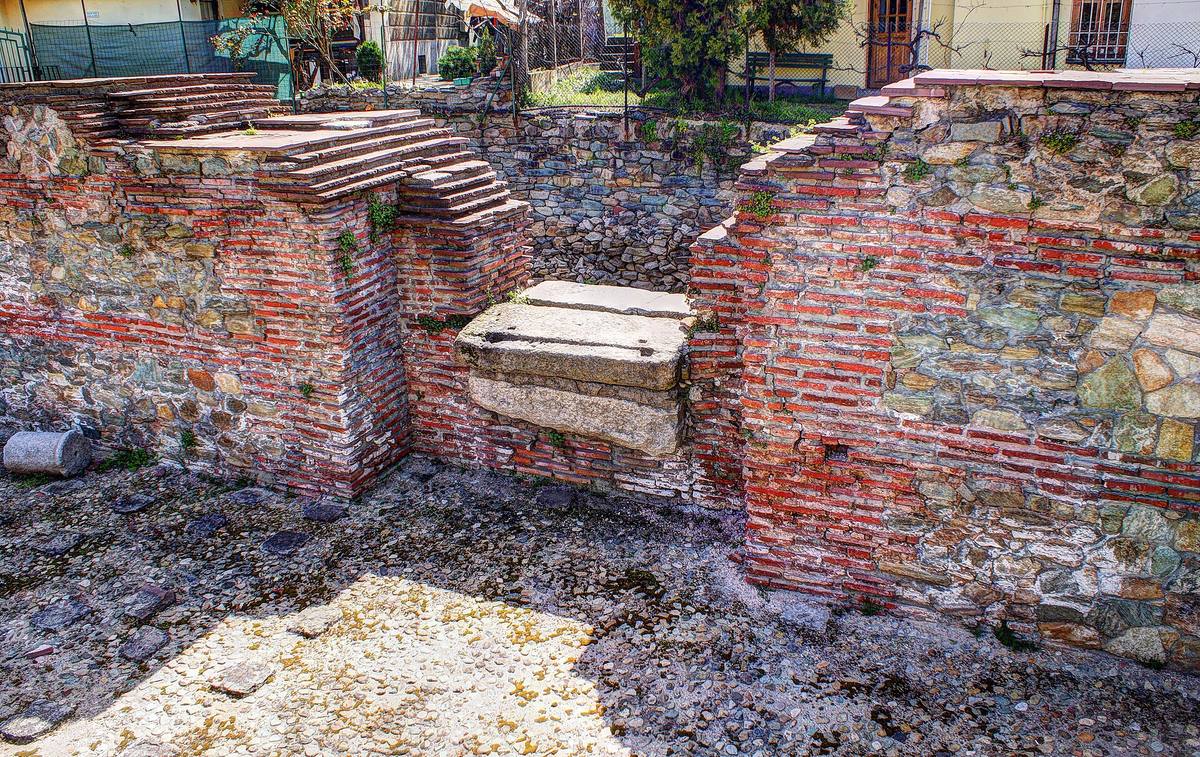
The walls are built in mixed masonry, opus mixtum: bands of stone alternate with bands of four rows of brick, set in mortar mixed with crushed brick. Floors and walls were faced with marble slabs, molded cornices, and pilasters. Some rooms have semicircular niches and pools.
The baths would have had a changing room (apodyterium) and a sequence of cold, warm, and hot rooms (frigidarium, tepidarium, caldarium). It would also have had a dry sweat room (laconicum) and an exercise court (palaestra). The sources don’t say which of the uncovered rooms was which.
Underfloor heating
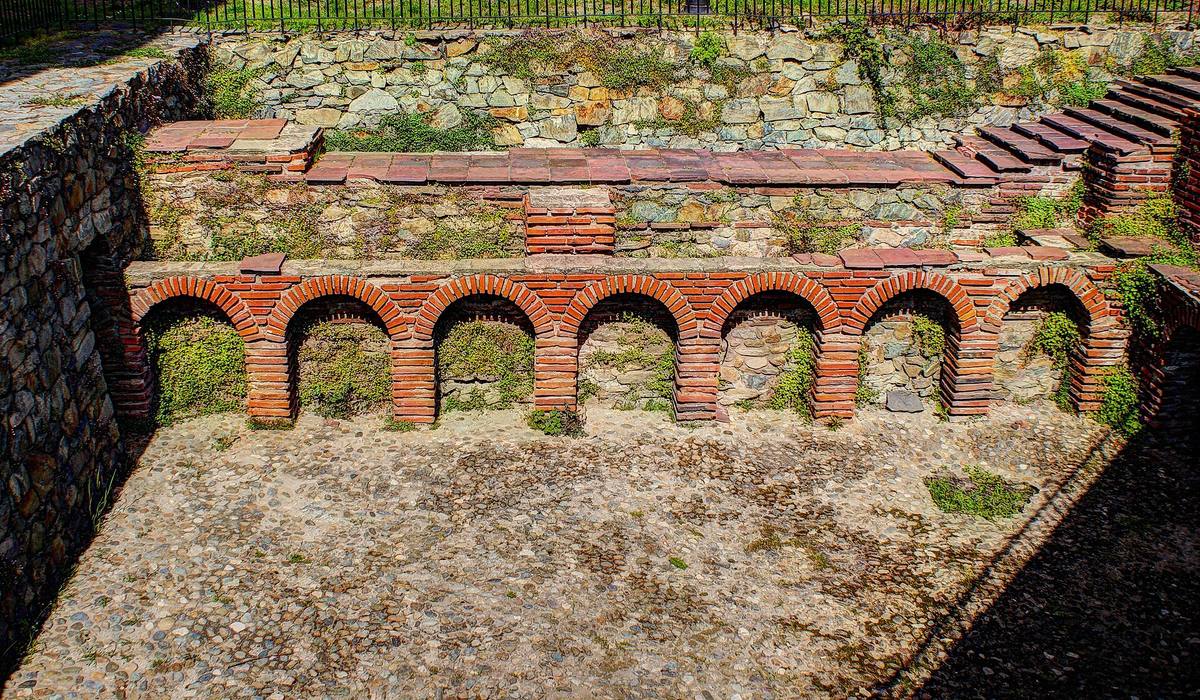
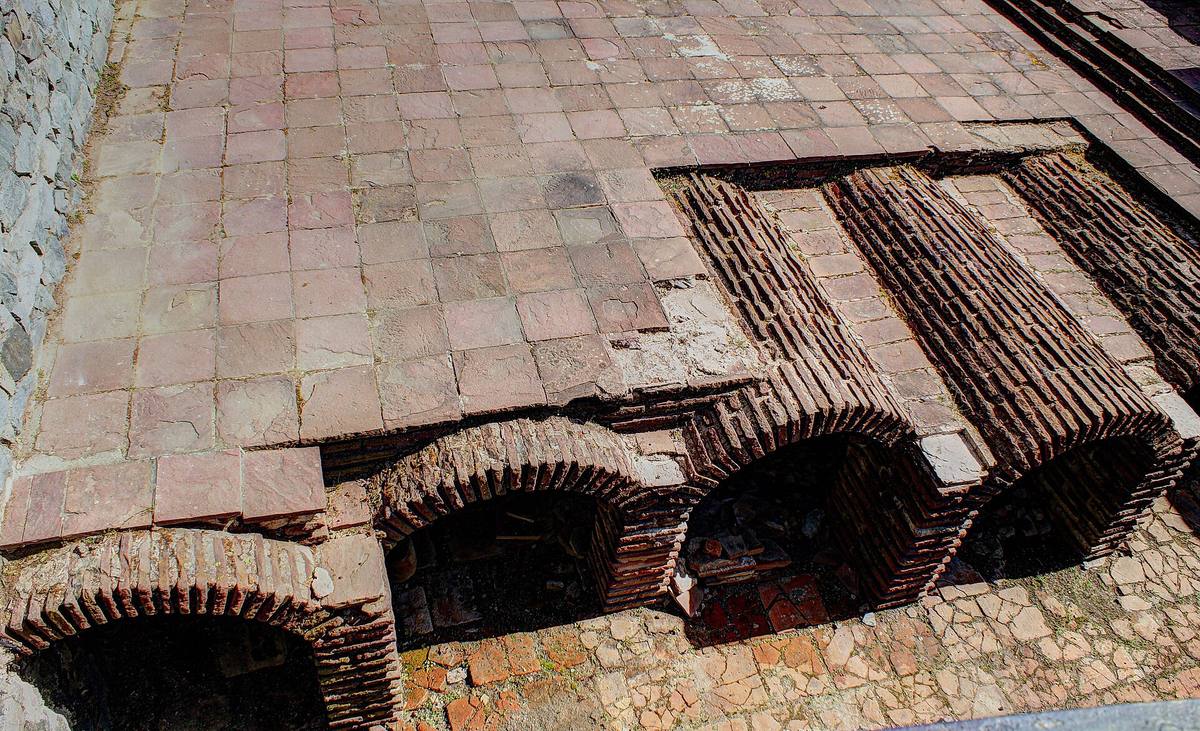
↗Every hall was heated from below by a hypocaust of one of two kinds:
- Rows of brick columns or pipes, capped with large bricks, on which the floor rested.
- A system of vaulted corridors: arcades of brick arches, the easiest part to see today.
Hot air came from the furnace (praefurnium) through a main channel that runs through one of the rooms, and passed from hall to hall through vaulted openings. The municipal tourism portal says the second type is “the only one known in Bulgaria so far.” We found no academic confirmation of that.
Asclepius and the asklepion
↗Pautalia’s patron was Asclepius, the god of healing. The town mint, active from 138 to 217, struck coins with his image: old, bearded, half-naked in a cloak, with a snake coiled around his staff. As Yordan Ivanov noted as early as 1906, the snake on Pautalia’s coins is a sign of its healing springs and baths. [12]
The historian Nikolay Dimitrov of Sofia University describes the coins in more detail in a 2021 article in Jubilaeus, the journal of the university’s Faculty of History: [3]
- Pautalia also struck one “pseudo-autonomous” type, with no emperor: the head of Asclepius with long hair and a beard on the front, and a snake coiled around a staff on the back. Such coins usually show the town’s patron god.
- From Antoninus Pius to Geta and Caracalla, the mint struck a temple front with a statue of Asclepius.
- On some coins Asclepius sits on a winged serpent with a fish’s tail.
- On others the town goddess Pautalia or the river god Strymon, that is, the Struma, holds a small statuette of Asclepius.
His cult was also tied to the worship of the emperor. An inscription from Kyustendil names Ulpia Martialis, priestess of the “savior gods” and high priestess of the emperors. Dimitrov takes the saviors to be Asclepius and Hygieia. Her husband, Antius Teres, was thracarch in 222-235. And at Epidaurus, the most famous sanctuary of Asclepius, a dedication to the “Pautalian” Asclepius, Hygieia, and Telesphorus was found, made by a priest who was probably from Pautalia.
In the yard of the history museum stands a granite altar, 143 cm tall, from the second half of the 2nd or the first half of the 3rd century. Aristaenetus, son of Demetrius, a member of the town council, set it up “to the imperial gods.” Georgi Mihailov and Nikolay Sharankov, who publish the inscription in Telamon, Sofia University’s digital corpus of ancient inscriptions from Bulgaria, suggest that these are Pautalia’s chief gods, Asclepius and Hygieia. A second altar of Aristaenetus, shorter but with the same text, stands in the yard of the Geodesy, Cartography and Cadastre Service in Kyustendil.
The baths are often said to be part of the famous Asklepion of Pautalia, the sanctuary and healing center of Asclepius. Katsarova, however, treats the two separately: the thermae as a civic public building, and the asklepion as a cult complex “rather set apart, at the foot of the hill” of Hisarlaka, with a bath of its own. So it’s more accurate to say the baths are traditionally linked with the asklepion.
Scholars differ on where exactly the temple of Asclepius stood. The historian Ivan Valchev of Sofia University writes in the same issue of Jubilaeus that of the temples on the hill, only the one at its northern foot can be identified with certainty, “right next to one of the hot mineral springs,” and that the coins show it was the temple of Asclepius. Dimitrov is more cautious: in his view, no temple buildings of the healing gods have been identified with certainty. [4]
The cult also involved deliberately throwing objects into the mineral waters, Dimitrov writes in the summary of his dissertation (Sofia University, 2022). Valchev notes that after the sanctuaries were destroyed, most of their monuments were either built into the wall of the Hisarlaka fortress or thrown into the mineral spring itself.
Legends and exaggerations
↗- Trajan and the springs. Legend says Emperor Trajan was cured in Pautalia’s hot springs and ordered public baths to be built.
- Two ailing emperors. The municipal tourism portal says Trajan and Marcus Aurelius were “very successfully” cured here “of chronic skin diseases,” and so built “the largest spa on the Balkan Peninsula after the one in the Peloponnese.”
- Marcus Aurelius and the Meditations. A popular 1980 book claims that almost every emperor from Trajan to Caracalla visited the asklepion, and that Marcus Aurelius wrote his work here. The text of the Meditations says otherwise. Book I was written “among the Quadi, at the Granua,” and Book II “at Carnuntum,” both on the Danube front. We found no ancient source linking Marcus Aurelius to Pautalia.
- Which are the biggest? The municipality says these are the second-largest Roman baths in Bulgaria, after those of Odessos (Varna). The Ministry of Tourism calls the asklepion “the fifth largest in Europe,” and Wikipedia says it is second in the Balkans after Epidaurus. None of these claims comes with evidence.
- The mosque next door. “According to tradition,” the neighboring Ahmed Bey Mosque stands on the foundations of the medieval church of St. Nedelya; Kiel adds that Bulgarian sources speak of a church of St. Paraskevi. The mosque also has nicknames: “Indzhili,” “Ingiliz,” and “the Christian mosque.”
Excavation and protection
↗The national broadcaster BNT reports that about half of the rooms and heating systems were uncovered in the 1930s. Violeta Kotseva, writing in Sofia University’s Seminar_BG (2024) and following Ruseva-Slokoska (1989), is more precise: part of the baths was found by chance during excavations in 1932 and announced at the time as the asklepion of Pautalia. The Encyclopedic Dictionary Kyustendil (1988) says the ruins were put on display after excavations in the 1960s. The main excavation report, by L. Ruseva-Slokoska and L. Slokoska, appeared in the journal Arheologiya in 1964. [8]
In 1968 the baths were declared an architectural monument of national importance. In 1977 they became part of the Pautalia-Velbazhd architectural and archaeological reserve.
Today
↗The ruins are open-air, fenced with railings, and seen from the street. On November 4, 2025, the municipality opened an open-air lapidarium beside them: original pedestals and sarcophagi from Pautalia, 2nd-3rd centuries, carved from Osogovo granite.
Kyustendil is a member of the European cultural route “Roman Thermal Spas of Europe,” presented in Berlin in 2017.
The neighboring Ahmed Bey Mosque houses an exhibition hall of the Regional History Museum, with temporary shows and paid admission.
Photos and related images
The image could not load. Its caption and source remain available.

The image could not load. Its caption and source remain available.

The image could not load. Its caption and source remain available.

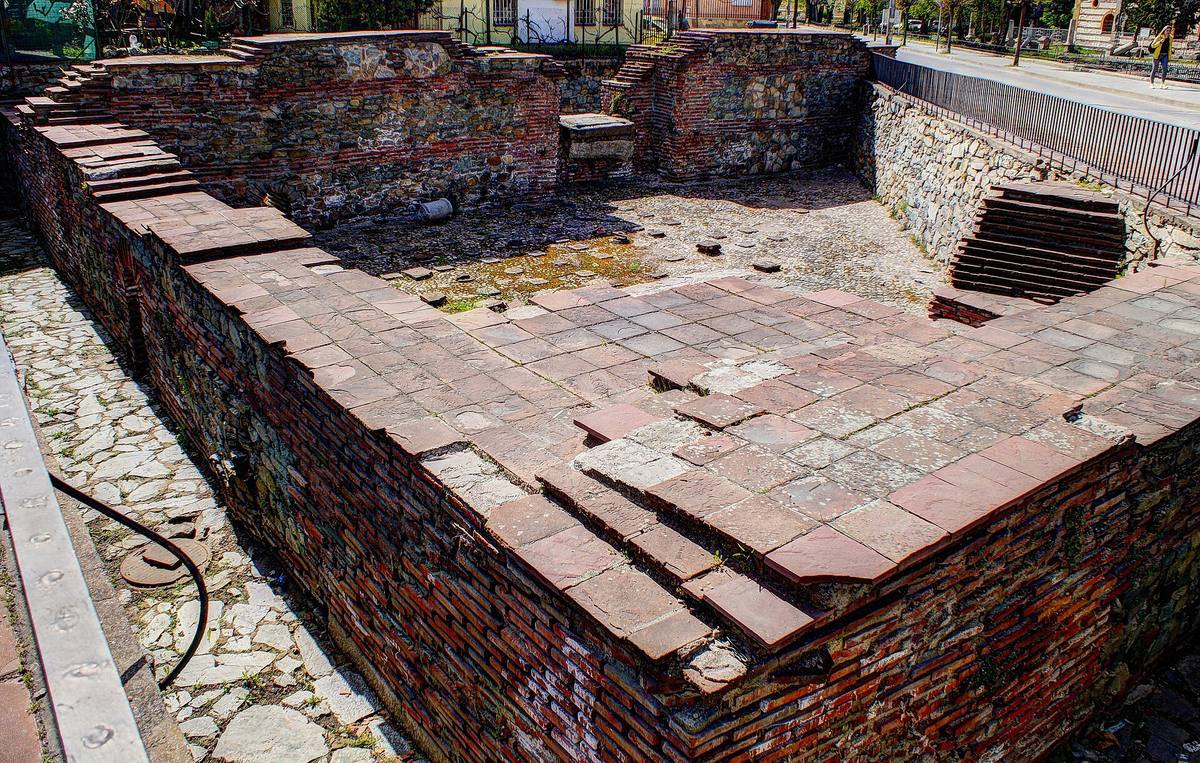
The image could not load. Its caption and source remain available.

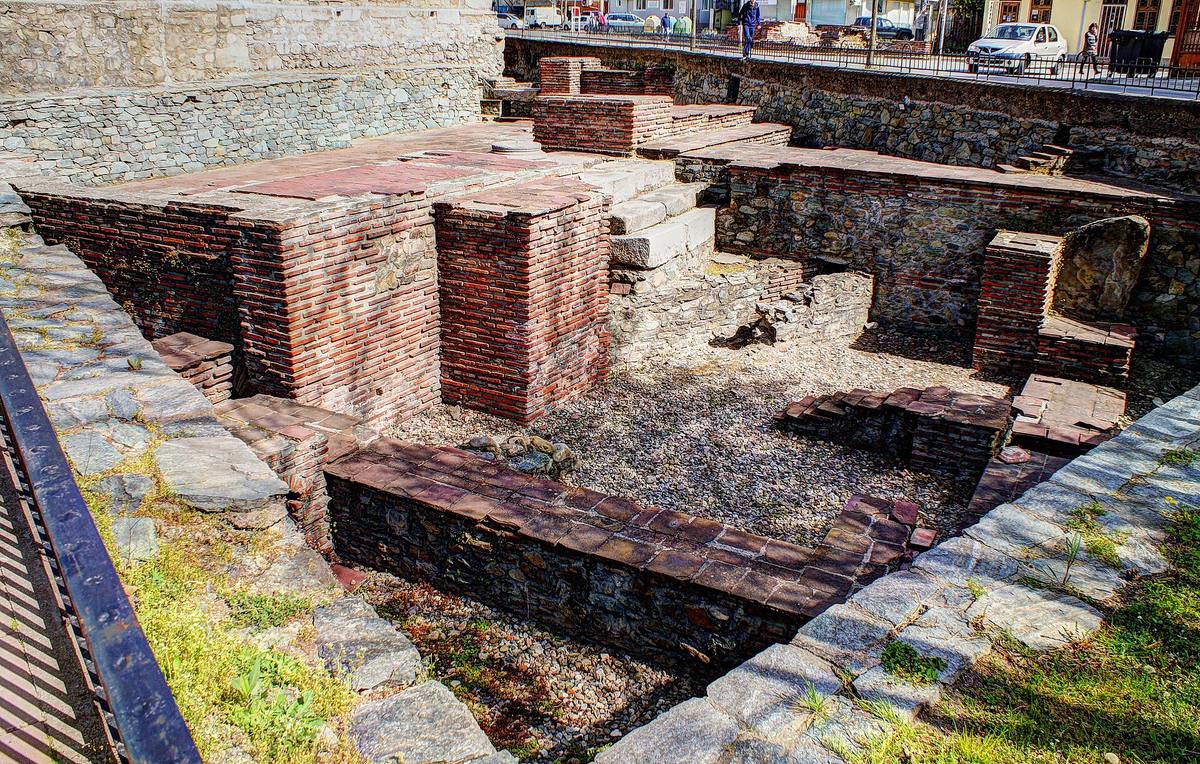
The image could not load. Its caption and source remain available.

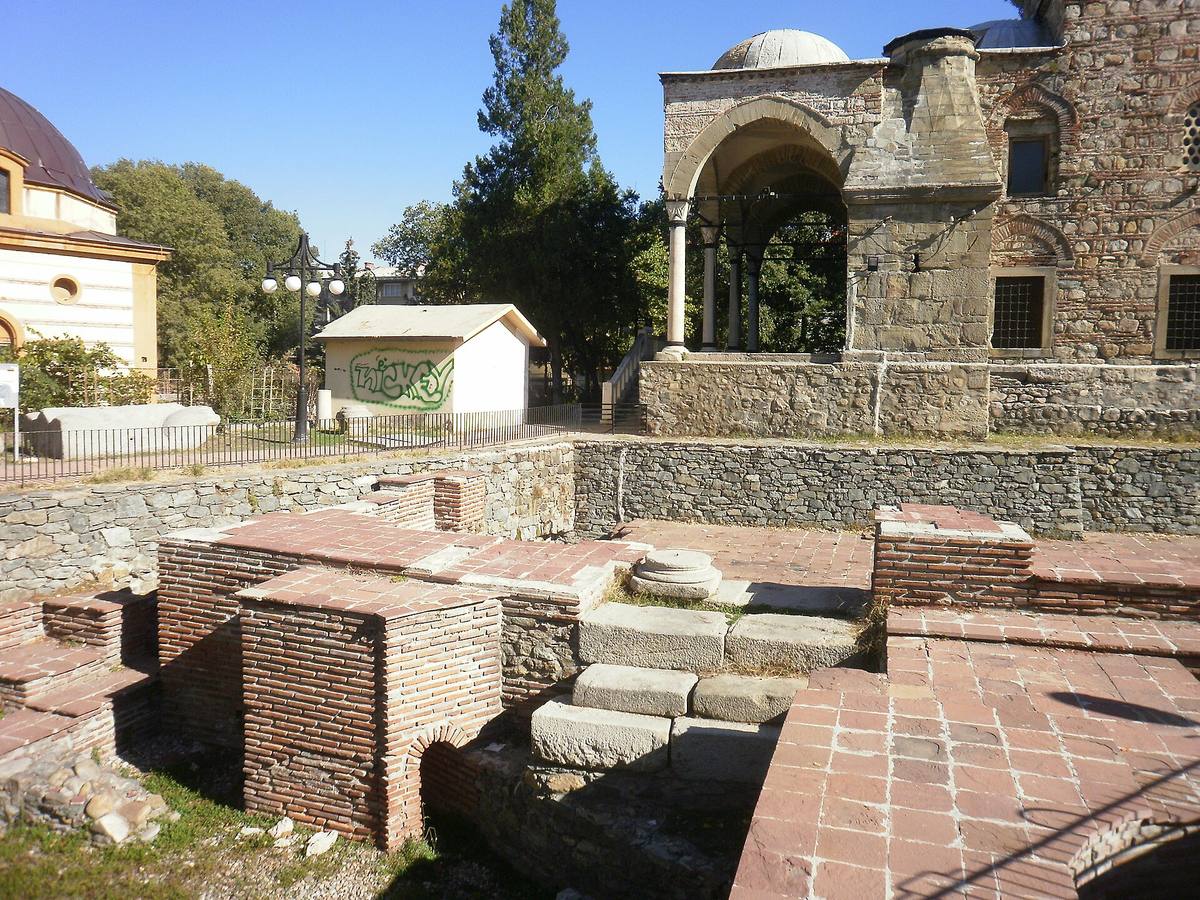
The image could not load. Its caption and source remain available.

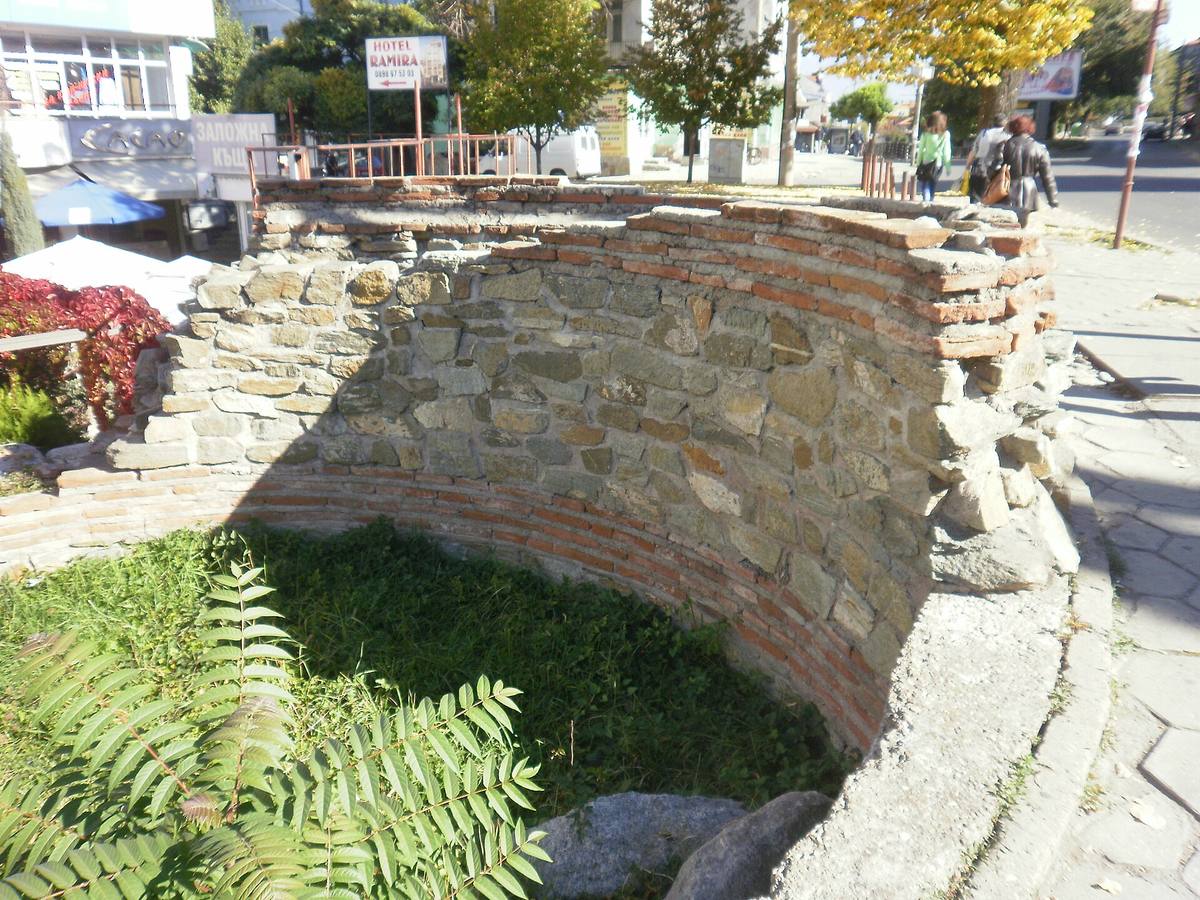
The image could not load. Its caption and source remain available.

Sources
(25)
A date may refer to construction, renewal, or another stated stage. Legends are accounts recorded in sources, rather than established events. Bibliography links help locate the named author; no automatic reference is added where the match is ambiguous.
- Веселка Кацарова. Пауталия и нейната територия през I-VI век, НАИМ, БАН, 2005 (откъс)Research publication · Bulgarian · naim.bg↑1
Source address
https://naim.bg/issuesFiles/Pautalia.pdf
If a link does not open, use its title, author, and address to search, or consult another listed source.
- Светослава Филипова. Монети от проучването на обект „Стефан Караджа“ № 1 в Кюстендил. Нумизматика, сфрагистика и епиграфика 18, НАИМ, БАН, 2022, 23-44Research publication · Bulgarian · publications.naim.bg↑1
Source address
https://www.publications.naim.bg/index.php/NSE/article/view/314
If a link does not open, use its title, author, and address to search, or consult another listed source.
- Николай Димитров. Бележки към почитането на Асклепий в Пауталия през II-III в. Jubilaeus 8/2, Исторически факултет на СУ, 2021, 71-80Research publication · Bulgarian · periodicals.uni-sofia.bg↑1
Source address
https://periodicals.uni-sofia.bg/index.php/Jubilaeus/article/view/jblae-08-2-06
If a link does not open, use its title, author, and address to search, or consult another listed source.
- Иван Вълчев. Градските храмове в двете Дакии през късноримската епоха. Jubilaeus 8/2, Исторически факултет на СУ, 2021, 49-62Research publication · Bulgarian · periodicals.uni-sofia.bg↑1
Source address
https://periodicals.uni-sofia.bg/index.php/Jubilaeus/article/view/jblae-08-2-04
If a link does not open, use its title, author, and address to search, or consult another listed source.
- Николай Димитров. Религиозен живот в Пауталия и Сердика през римската епоха. Автореферат на дисертация, СУ, 2022PDF document · Bulgarian · uni-sofia.bg
Source address
https://www.uni-sofia.bg/index.php/bul/content/download/276781/1810200/version/1/file/BG_Summary_Nikolay_bulgarian.pdf
If a link does not open, use its title, author, and address to search, or consult another listed source.
- Олтар за императорските богове, издигнат от Аристенет (IGBulg 5778). Теламон, корпус на древните надписи, СУOnline source · Bulgarian · telamon.uni-sofia.bg
Source address
https://telamon.uni-sofia.bg/bg/epi/view_ins/IGBulg_5778
If a link does not open, use its title, author, and address to search, or consult another listed source.
- Олтар за императорските богове, издигнат от Аристенет (Tlmn4 0001). Теламон, корпус на древните надписи, СУOnline source · Bulgarian · telamon.uni-sofia.bg
Source address
https://telamon.uni-sofia.bg/bg/epi/view_ins/Tlmn4_0001
If a link does not open, use its title, author, and address to search, or consult another listed source.
- Виолета Коцева. Развитие на балнеолечението в гр. Кюстендил в началото на ХХ в. Семинар_BG 27, СУ, 2024, 260-276Research publication · Bulgarian · periodicals.uni-sofia.bg↑1
Source address
https://periodicals.uni-sofia.bg/index.php/seminar_bg/bg/article/view/6050
If a link does not open, use its title, author, and address to search, or consult another listed source.
- Lazar Berov, Boyko Berov. Kyustendil hydrothermal system: hydrogeological characteristics and GIS-based conceptual model. Списание на Българското геологическо дружество 86/3, 2025, 249-258Research publication · Bulgarian · bgd.bg
Source address
http://bgd.bg/REVIEW_BGS/REVIEW_BGD_2025_3/PDF/36_Berov_Rev_BGS_2025-3.pdf
If a link does not open, use its title, author, and address to search, or consult another listed source.
- Хидрогеоложки условия в района на Кюстендилската котловина (материал на Лазар Беров). Годишна геоложка екскурзия на БГД, 2018Research publication · Bulgarian · bgd.bg
Source address
https://www.bgd.bg/EXCURZII/Excursion_2018/Hydrogeology_Kyustendil.pdf
If a link does not open, use its title, author, and address to search, or consult another listed source.
- Machiel Kiel. Köstendil, TDV İslâm Ansiklopedisi, c. 26, 2002Online source · Turkish · islamansiklopedisi.org.tr↑1
Source address
https://islamansiklopedisi.org.tr/kostendil
If a link does not open, use its title, author, and address to search, or consult another listed source.
- Йордан Иванов. Северна Македония, 1906, archive.orgOnline source · Bulgarian · archive.org↑1
Source address
https://archive.org/details/sievernamakedon00ivangoog
If a link does not open, use its title, author, and address to search, or consult another listed source.
- Недвижимо културно наследство, Община КюстендилInstitutional page · Bulgarian · kyustendil.bg
Source address
https://kyustendil.bg/index.php?Itemid=273&id=119&lang=bg&option=com_content&view=article
If a link does not open, use its title, author, and address to search, or consult another listed source.
- Минерални извори, Община КюстендилInstitutional page · Bulgarian · kyustendil.bg
Source address
https://kyustendil.bg/index.php?Itemid=96&id=68&lang=bg&option=com_content&view=article
If a link does not open, use its title, author, and address to search, or consult another listed source.
- Римските терми в Кюстендил, БНТ, „10 000 крачки“, 2019Online source · Bulgarian · bnt.bg
Source address
https://bnt.bg/bg/a/rimskite-termi-v-kyustendil-03062019
If a link does not open, use its title, author, and address to search, or consult another listed source.
- Нов лапидариум до Римските терми, pirinsko.com, 2025Online source · Bulgarian · pirinsko.com
Source address
https://pirinsko.com/nov-lapidarium-do-rimskite-termi-otkrita-ekspoziciq-syhranqvashta-drevnoto-nasledstvo-na-kiustendil-169021/
If a link does not open, use its title, author, and address to search, or consult another listed source.
- Антични терми (Асклепионът на Пауталия), Министерство на туризмаOnline source · English · tourism.government.bg
Source address
https://www.tourism.government.bg/en/tourist-destinations/2304/6423
If a link does not open, use its title, author, and address to search, or consult another listed source.
- Kyustendil, Roman Thermal Spas of EuropeOnline source · Language not specified · roman-thermal-spas.eu
Source address
https://roman-thermal-spas.eu/destinations/kyustendil/
If a link does not open, use its title, author, and address to search, or consult another listed source.
- Марк Аврелий. Размишления (английски превод), Project GutenbergOnline source · Bulgarian · gutenberg.org
Source address
https://www.gutenberg.org/cache/epub/2680/pg2680.txt
If a link does not open, use its title, author, and address to search, or consult another listed source.
- Римски терми, visit-kyustendil.euOnline source · Bulgarian · visit-kyustendil.eu
Source address
https://visit-kyustendil.eu/rimski-termi
If a link does not open, use its title, author, and address to search, or consult another listed source.
- Римски терми (Кюстендил), УикипедияEncyclopedia article · Bulgarian · bg.wikipedia.org
Source address
https://bg.wikipedia.org/wiki/Римски_терми_(Кюстендил)
If a link does not open, use its title, author, and address to search, or consult another listed source.
- Пауталийски асклепион, УикипедияEncyclopedia article · Bulgarian · bg.wikipedia.org
Source address
https://bg.wikipedia.org/wiki/Пауталийски_асклепион
If a link does not open, use its title, author, and address to search, or consult another listed source.
- OpenStreetMap: Римски термиMap record · Bulgarian · openstreetmap.org
Source address
https://www.openstreetmap.org/way/413168436
If a link does not open, use its title, author, and address to search, or consult another listed source.
- Ахмед бей джамия (Кюстендил), УикипедияEncyclopedia article · Bulgarian · bg.wikipedia.org
Source address
https://bg.wikipedia.org/wiki/Ахмед_бей_джамия_(Кюстендил)
If a link does not open, use its title, author, and address to search, or consult another listed source.
- Пауталия, УикипедияEncyclopedia article · Bulgarian · bg.wikipedia.org
Source address
https://bg.wikipedia.org/wiki/Пауталия
If a link does not open, use its title, author, and address to search, or consult another listed source.