Vladimir Dimitrov-Maystora Art Gallery
Gallery since 1944; building from 1972
Dating stated in the sources: 1944
Your visit at a glance
- Address
- 20 Patriarh Evtimiy St., 250 m from Velbazhd Square
- Approximate time at the site
- about 1 hour 30 minutes
- Opening hours
- Visit details
- Admission
- Visit details
The image could not load. Its caption and source remain available.

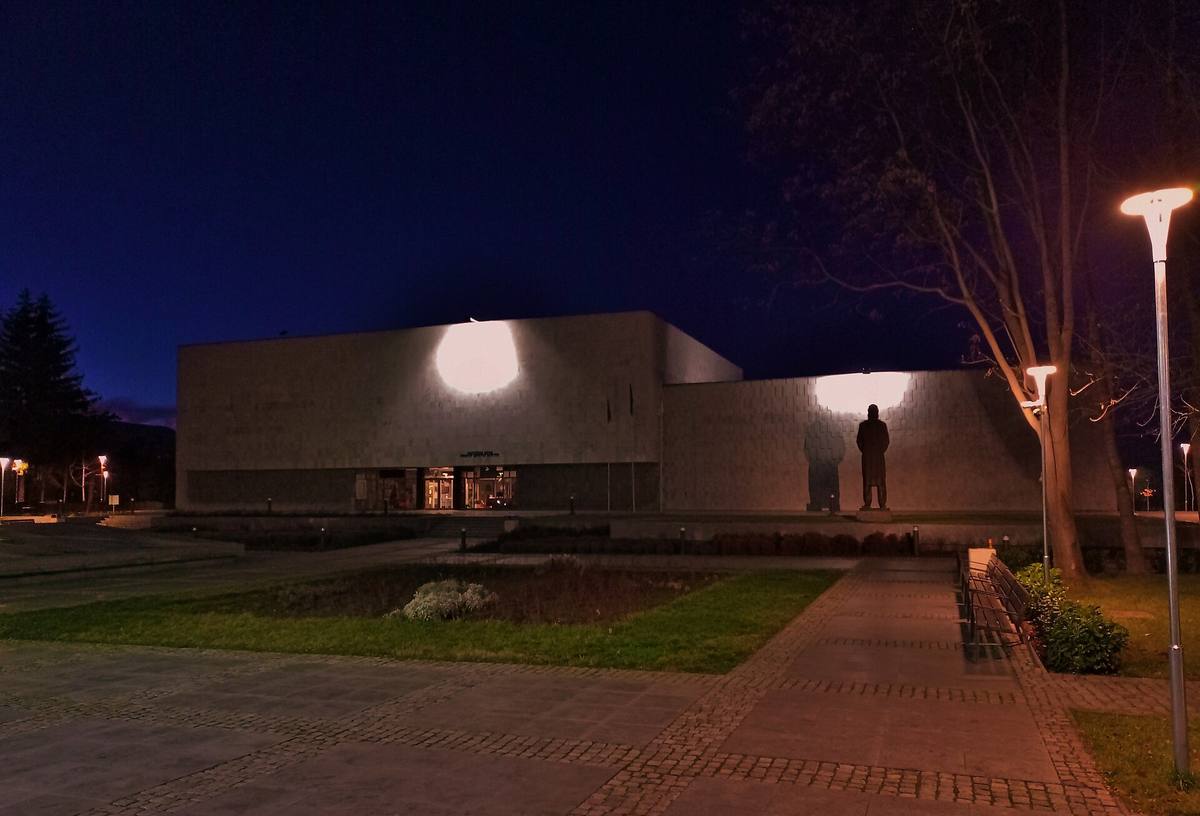
The gallery bears the name of Vladimir Dimitrov-Maystora (1882-1960), the painter of the Kyustendil region and its people. It holds his largest collection, more than 1,500 works. The 1972 building is, in the gallery’s own words, the first in Bulgaria built specifically as an art gallery, and beneath it lies the fortress wall of Roman Pautalia.
Hours, admission, and directions ↓
Maystora’s paintings are bright, almost like icons: girls with apples, women at the harvest, and fruit and fields in fiery colors. Most of his models were real people from the villages around Kyustendil, which makes this gallery more than a museum. It is where the painter comes home.
Maystora
↗Vladimir Dimitrov was born on February 1, 1882, in the village of Frolosh, into a family of hereditary priests. In 1889, after his father was injured, the family moved to Kyustendil “in extreme poverty.” As a boy he worked as a hotel servant, a bookseller’s helper, and an apprentice to various craftsmen. From 1898 to 1903 he was a clerk at the Kyustendil District Court.
There the president of the court, Nikola Chehlarov, noticed him. He gathered the young clerk’s drawings and, on May 11, 1903, gave him his first exhibition, in the gymnasium of the Pedagogical School. The gallery counts it as the first art exhibition ever held in Kyustendil. Chehlarov also persuaded prominent citizens to give money every month for his studies.
- 1903-1910: the State Drawing School in Sofia. He enrolled as a non-regular student and in 1907 joined Prof. Ivan Mrkvička’s class. There his fellow students gave him the nickname Maystora, “the Master,” “an undisputed recognition of his great talent.”
- 1909-1910: travels. Moscow, Odesa, Kyiv, St. Petersburg, and the Venice Biennale, then Rome, Florence, Venice, and Naples.
- 1911-1918: teacher and war artist. He taught calligraphy in Svishtov. During the Balkan Wars and World War I he was a war artist with the 7th Rila Division. He drew not the battles but “the exhausting marches and the brief rests.” In 1916, 13 of his drawings were shown in Berlin.
- 1922-1923: Italy. He went at the invitation of the painter Boris Georgiev.
The American patron
In Rome the merchant Vladimir Tsanov introduced him to the American patron and collector John O. Crane. From early 1924 Maystora worked for him under an oral agreement. In 1924 he was in New York: from March to May, according to the gallery’s chronology, or for four months, according to its longer biography. Both say his poor health brought him back.
Bulgarian Wikipedia calls Crane a “senator,” but the gallery never describes him that way. It calls him a patron and collector.
Shishkovtsi
In 1924 Maystora settled in the village of Shishkovtsi, 6 km from Kyustendil. By 1928, in his own words, he had handed Crane “more than 200 works” in return for financial support. The world economic crisis ended the arrangement.
His models were real people from the nearby villages: Stana Gogova of Razhdavitsa, “grandfather” Stoyne of Divlya, Staniya of Kalotintsi, Todorka Vishnyarska of Shishkovtsi. The gallery writes that “by idealizing the image, the artist conveys his idea of the moral beauty of the human being.” In 1927 he painted the celebrated Constantinople Cycle of watercolors.
From 1930 to 1945 he worked as a painter for the Ministry of Education. In 1944 he became an honorary citizen of Kyustendil. In 1948, already ill, he moved to Sofia. He was named Honored Artist (1950) and People’s Artist (1952). He died in Sofia on September 29, 1960. In 1972 his remains were moved to Shishkovtsi.
The gallery
↗The idea came from Mayor Dr. Georgi Efremov in 1943. On August 6, 1944, “before a huge crowd of Kyustendil citizens,” a museum with a picture gallery opened in the Ahmed Bey Mosque, with about 50 works. Many of Maystora’s paintings came from school basements in villages near Sofia, where the School Museum had been evacuated because of the bombing. It was proposed that the new institution bear the painter’s name, “something that, in his modesty, he flatly refused.”
- May 24, 1959: the gallery became independent, with about 150 works, housed in the converted synagogue.
- 1961: after the painter’s death, it took his name.
- 2022: its collection numbered 3,893 works by 760 artists, including more than 1,500 originals by Maystora.
The building
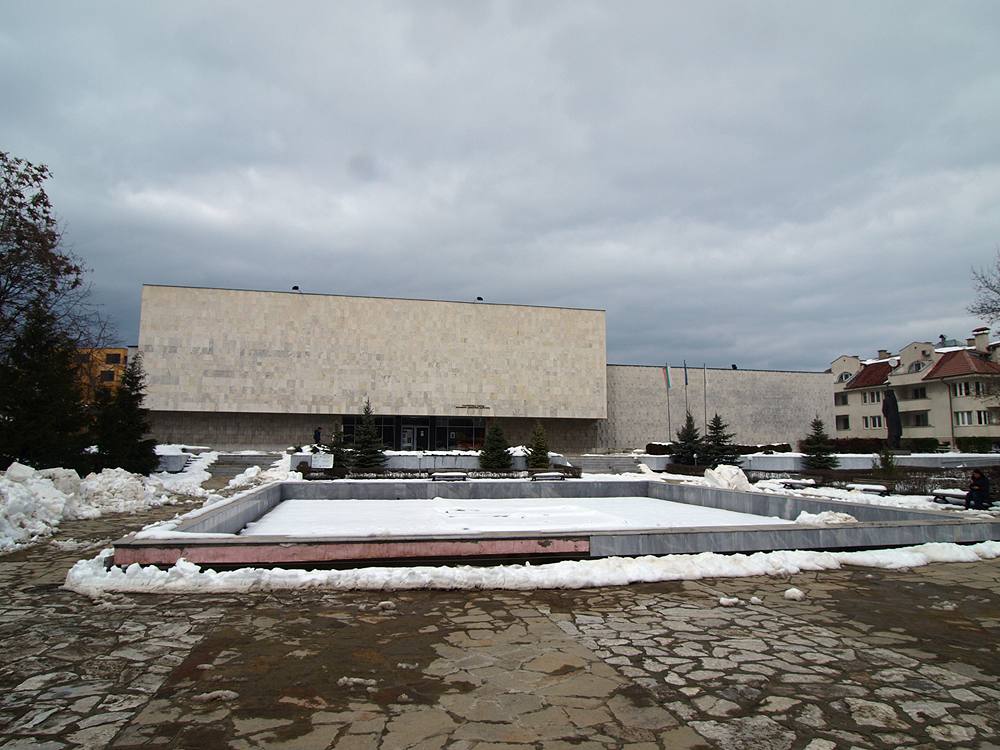
↗Excavation began in 1968. The new building opened on November 24, 1972, for the 90th anniversary of Maystora’s birth. It was designed by the architect Mila Mineva with the engineers A. Konforti, G. Daskalov, and Zhelev, and the architect Sl. Vasilev.
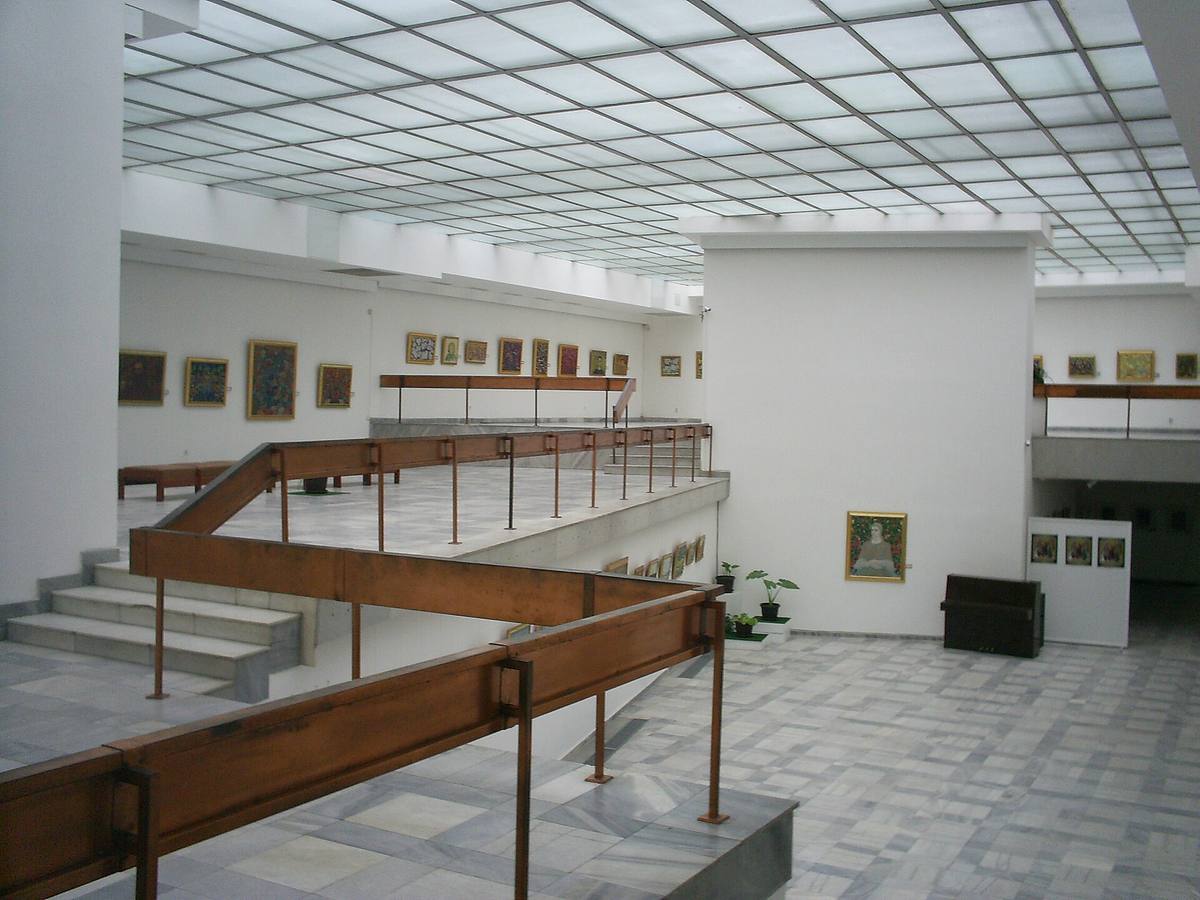
The gallery says this was the first building in Bulgaria made specifically for a gallery; until then, galleries used converted buildings. The exhibition space is 734 m² in eight halls on different levels, linked in a loop.
The halls have no windows or niches. The light comes from above, so that “every new generation of visitors sees Maystora’s works in the same natural light.” In 1975 the Ministry of Culture declared it a “model gallery.”
In the late 1970s work began on an extension of about 1,375 m². The digging uncovered the northern fortress wall of ancient Pautalia, and the design was changed to include a hall of ancient art. The economic crisis of the early 1990s stopped construction. Since 2012 the gallery has gradually been using parts of the unfinished space. The wall in its ground floor is an archaeological monument of national importance.
The collection
↗Besides Maystora, the gallery has sections for Kyustendil artists, for artists from the rest of Bulgaria, for ancient and medieval art, and for foreign art. The Kyustendil artists include Prof. Asen Vasiliev, Boris Kolev, the sculptor Dragan Lozenski, the printmaker Evtim Tomov, Nikolay Dyulgerov, and Rayna Evtimova. Among the older treasures is the icon Dormition of St. John of Rila by Toma Vishanov, from the late 18th century.
Stories
↗- “The Painter.” In Shishkovtsi the villagers called him “the Painter,” his landlord compared him to St. John of Rila, and the children called him “Grandfather Christmas.” The gallery describes his life there as that of “an ascetic.”
- Apples instead of flowers. When he lay in state in Sofia, “the people of Shishkovtsi honored their beloved fellow villager not with flowers but with baskets full of apples and grapes.”
- The house that’s gone. According to articles by Asen Milchev, the house of the merchant Asen Suichmezov, “one of the finest in town,” stood where the gallery is now and was demolished to build it. Suichmezov was one of the four Kyustendil men who went to Sofia in March 1943 to stop the deportation of the Jews. Neither the gallery nor the museum mentions this.
- The big exhibition. In 2022 the National Gallery in Sofia held a major exhibition, Maystora, including works lent from Kyustendil.
Today
↗The gallery is on the list of the 100 National Tourist Sites (No. 26), together with the Regional History Museum, the Church of St. George, and the Dimitar Peshev house. It also runs Maystora’s house museum in Shishkovtsi.
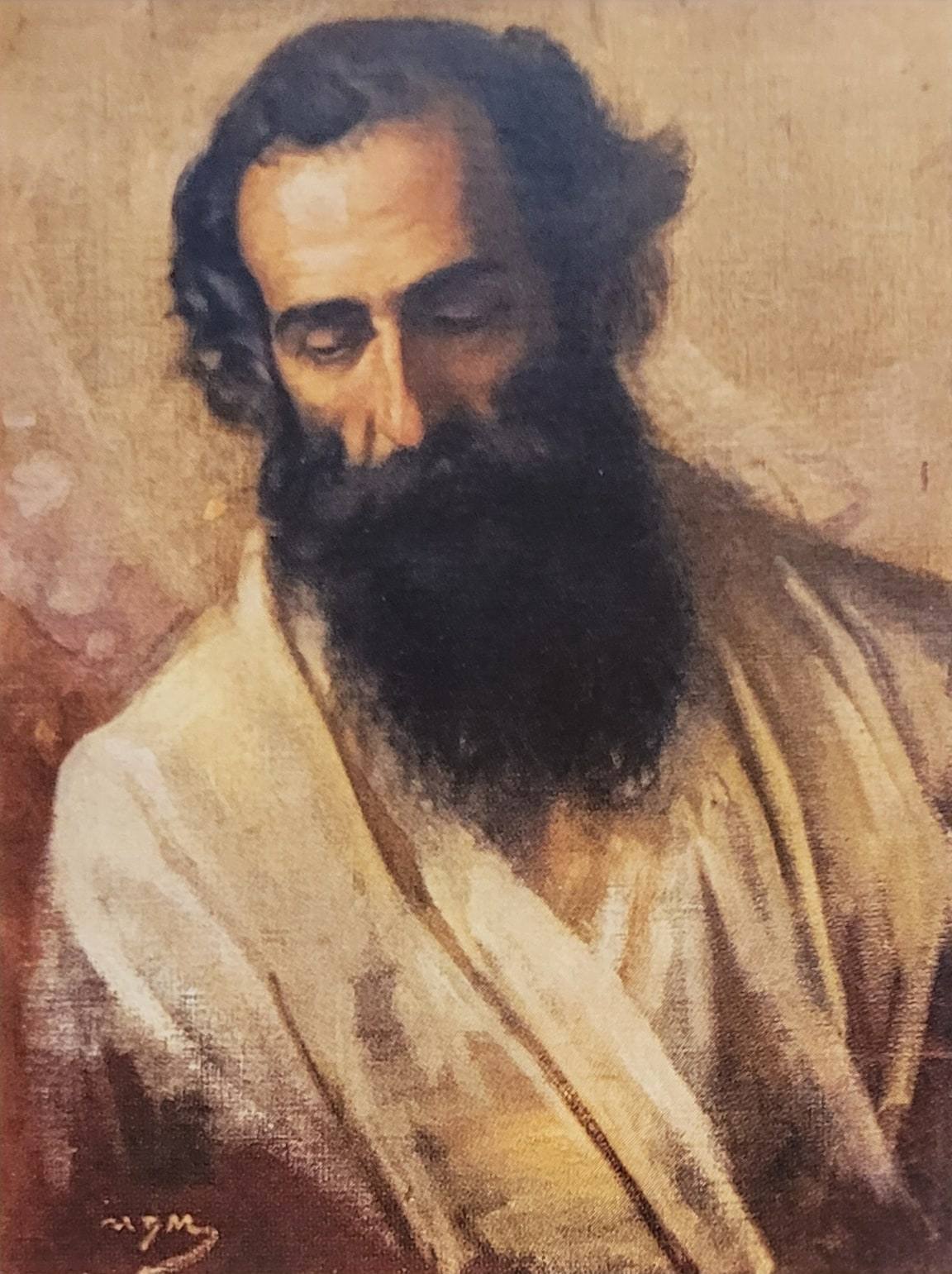
Vladimir Dimitrov’s paintings are under copyright until the end of 2030, so we don’t show them here. Come and see them in person, in the natural light the building was made for.
Photos and related images
The image could not load. Its caption and source remain available.

The image could not load. Its caption and source remain available.

Document or artwork related to this sight
The image could not load. Its caption and source remain available.

Sources
(12)
A date may refer to construction, renewal, or another stated stage. Legends are accounts recorded in sources, rather than established events. Bibliography links help locate the named author; no automatic reference is added where the match is ambiguous.
- История, Художествена галерия „Владимир Димитров-Майстора“Institutional page · Bulgarian · artgallery-maystora.org
Source address
https://artgallery-maystora.org/история/
If a link does not open, use its title, author, and address to search, or consult another listed source.
- Сграда, Художествена галерия „Владимир Димитров-Майстора“Institutional page · Bulgarian · artgallery-maystora.org
Source address
https://artgallery-maystora.org/сграда/
If a link does not open, use its title, author, and address to search, or consult another listed source.
- Живот в дати, Художествена галерия „Владимир Димитров-Майстора“Institutional page · Bulgarian · artgallery-maystora.org
Source address
https://artgallery-maystora.org/живот-в-дати/
If a link does not open, use its title, author, and address to search, or consult another listed source.
- Майстора. Разширена биография, Художествена галерия „Владимир Димитров-Майстора“Institutional page · Bulgarian · artgallery-maystora.org
Source address
https://artgallery-maystora.org/разширена/
If a link does not open, use its title, author, and address to search, or consult another listed source.
- Фонд, Художествена галерия „Владимир Димитров-Майстора“Institutional page · Bulgarian · artgallery-maystora.org
Source address
https://artgallery-maystora.org/фонд/
If a link does not open, use its title, author, and address to search, or consult another listed source.
- Майстора (изложба, 2022), Национална галерияOnline source · Bulgarian · nationalgallery.bg
Source address
https://nationalgallery.bg/exhibitions/майстора/
If a link does not open, use its title, author, and address to search, or consult another listed source.
- История на музея, РИМ, КюстендилInstitutional page · Bulgarian · kyustendilmuseum.bg
Source address
https://kyustendilmuseum.bg/za-muzeya/istoriya-na-muzeya.html
If a link does not open, use its title, author, and address to search, or consult another listed source.
- Списък на паметниците на културата с национално значение в област Кюстендил, Министерство на културата, 2006PDF document · Bulgarian · mc.government.bg
Source address
https://mc.government.bg/images/NPK/KUSTENDIL.pdf
If a link does not open, use its title, author, and address to search, or consult another listed source.
- Асен Милчев. Съдбата на българските Праведници на света, alef-bg.org, 2020Online source · Bulgarian · alef-bg.org
Source address
https://alef-bg.org/bg/съдбата-на-българските-праведници-на/
If a link does not open, use its title, author, and address to search, or consult another listed source.
- Владимир Димитров-Майстора, УикипедияEncyclopedia article · Bulgarian · bg.wikipedia.org
Source address
https://bg.wikipedia.org/wiki/Владимир_Димитров_%E2%80%93_Майстора
If a link does not open, use its title, author, and address to search, or consult another listed source.
- Почетни граждани на Кюстендил, Община КюстендилInstitutional page · Bulgarian · kyustendil.bg
Source address
https://www.kyustendil.bg/index.php?option=com_content&view=article&id=171&Itemid=318&lang=bg
If a link does not open, use its title, author, and address to search, or consult another listed source.
- OpenStreetMap: Художествена галерия „Владимир Димитров-Майстора“Map record · Bulgarian · openstreetmap.org
Source address
https://www.openstreetmap.org/way/154606403
If a link does not open, use its title, author, and address to search, or consult another listed source.