Dimitar Peshev House Museum
Rebuilt in 2002; exhibition since 2003, renewed in 2013
Dating stated in the sources: 2002
Your visit at a glance
- Address
- 11 Tsar Simeon I St.
- Approximate time at the site
- about 45 minutes
- Opening hours
- Visit details
- Admission
- Visit details
The image could not load. Its caption and source remain available.

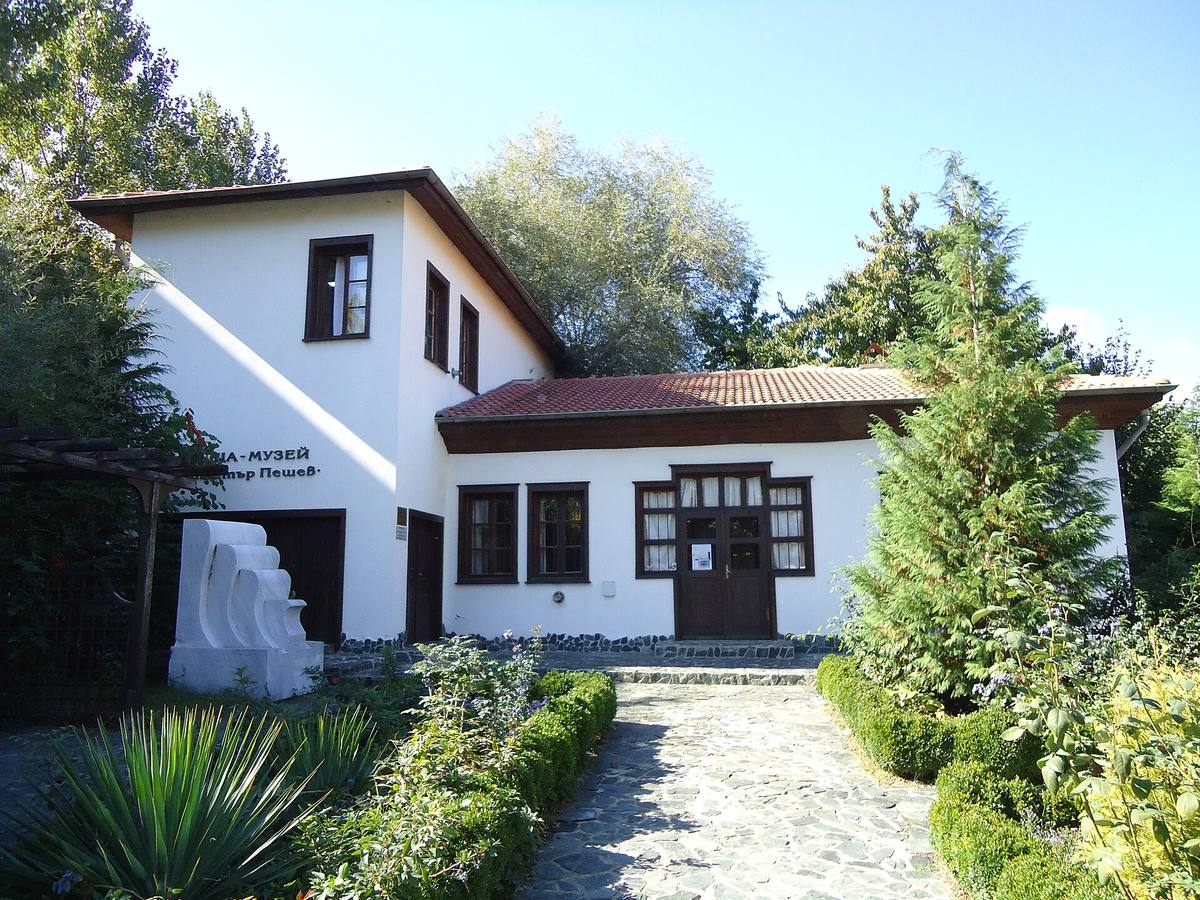
The only museum in Bulgaria devoted to the rescue of the Bulgarian Jews. In March 1943 four men from Kyustendil went to Sofia to stop the deportation of their fellow citizens, and the deputy speaker of Parliament, Dimitar Peshev, took up their cause and organized a protest letter with 43 parliamentary signatures. The house is an exact copy of his family home.
Hours, admission, and directions ↓
This house tells one of the few stories of World War II that end with people staying in their homes. It isn’t a simple story: there is courage in it, but also the laws that made that courage necessary. And there are people who saved their neighbors and then paid for it with years in prison and oblivion.
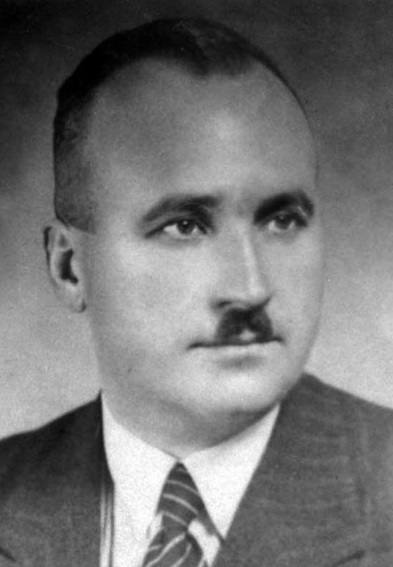
Dimitar Peshev
↗Dimitar Peshev was born in Kyustendil on June 13 (June 25, New Style), 1894:
- 1915: he began studying law at Sofia University, then broke off to fight in World War I.
- 1920s: he became a judge in Plovdiv and Sofia, and later a prosecutor.
- 1932: he became a lawyer.
- 1935-1936: Minister of Justice in Georgi Kyoseivanov’s government.
- 1938 and 1940: deputy speaker of the 24th and 25th National Assemblies.
In 1940 Peshev voted for the anti-Jewish Law for the Protection of the Nation. That is also part of his story, and it makes what he did next all the more significant.
March 1943
↗In February 1943 Bulgaria’s Commissioner for Jewish Affairs, Aleksandar Belev, and the German official Theodor Dannecker signed an agreement to deport the Jews of Bulgaria. In Kyustendil the arrests began on March 7. Nearly a thousand of the town’s Jews faced being taken from their hometown. Yordanka Yancheva and Vasilka Stoyneva describe the size of the Jewish community in Sofia University’s Kyustendil Readings (2006), based on state archives: from the Liberation to that time the town had between 700 and 1,000 Jews, 5-6% of a population of about 18,000.
On March 8, a group of 40 citizens decided to go to Sofia and speak up for them. Only four turned up at the meeting point:
- the lawyer Ivan Momchilov;
- the retired teacher Vladimir Kurtev;
- the merchant Asen Suichmezov;
- the member of Parliament Petar Mihalev.
Why forty became four, Yancheva and Stoyneva explain. The so-called patriotic organizations in the town (the Legion, Otets Paisiy, Brannik, Ratnik) had about 700 members, though many only on paper. They painted anti-Jewish slogans on walls, made threats, and broke the windows of homes and shops belonging to Jews and their friends. They managed to shrink the delegation, but not to stop it.
On March 9, they met Dimitar Peshev. The historian Assoc. Prof. Angel Dzhonev writes that the meeting took place in Peshev’s apartment. Peshev and the delegates pressed the Minister of the Interior, Petar Gabrovski. He first denied knowing about the arrests, then “gave an order by telephone to stop the arrests.” In Dzhonev’s words, “all the measures the authorities had taken to deport the Jews were canceled.”
Yancheva and Stoyneva also give the times: at about 10 a.m. the four met Peshev, and at about 3 p.m. everyone gathered in front of Parliament. Peshev, Mihalev, and six other deputies who supported the Jews went in to see the minister.
Sources tell the beginning differently. The Italian author Gabriele Nissim writes that Peshev learned of the coming deportation from a Jewish schoolmate from Kyustendil on March 7. English Wikipedia says his friend Jakob Baruch warned him on March 8. Both may be parts of the same story. [9]
The rumor reached Kyustendil from several directions, Yancheva and Stoyneva write. The earliest to hear it, “somewhere in mid-February,” was Vladimir Kurtev, at a reception of the Commissariat for Jewish Affairs, “directly from the authors of the Dannecker-Belev agreement,” and he passed it on to Jewish friends at once. Belev’s secretary, Liliana Panitsa, did the same. The secret was also given away by Misho Abadzhiev, the official in charge of seizing Jewish property and of the tobacco warehouse set aside as a temporary camp. On March 7, it was announced openly at meetings in the synagogue and at the Yunak society.
The news of the rescue also reached the town by several routes. Peshev telephoned the district governor from Parliament to stop the gathering of the Jews in the temporary camp. Suichmezov called his friends from a private telephone at the fire station, Mihalev called his brother, and Momchilov told the news in person that same evening.
The letter of the 43
Peshev didn’t stop there. On March 17, he wrote a sharp letter of protest to Prime Minister Bogdan Filov, signed by 43 deputies of the governing majority. The United States Holocaust Memorial Museum dates his initiative in Parliament to March 19.
Filov, “aiming to wound Peshev personally,” demanded that the signatories withdraw their support. Peshev was removed as deputy speaker at the end of March.
Those who were not saved
It has to be said plainly: in the first half of March 1943, Bulgarian military and police authorities deported 11,343 Jews from the territories under Bulgarian occupation: Vardar Macedonia, Aegean Thrace, and Pirot. They were not saved.
Historians also debate the role of Tsar Boris III. The US Holocaust Memorial Museum writes that the tsar was inclined to go ahead with the deportations until Peshev intervened in person and persuaded him to delay them. Bulgarian sources put Interior Minister Gabrovski at the center. We present both readings here.
After 1944
↗In 1945 the People’s Court sentenced Peshev to 15 years of strict imprisonment and a fine of three million leva, with his property confiscated. He was defended by Yosif Yasarov, a lawyer of Jewish origin. “The prosecutor wanted the death penalty for him,” his niece Kaluda Kiradzhieva remembers.
Peshev was released after 13 months. His home had been confiscated, so he lived with his sister, without the right to work. Only after 1968, when he finally had a room of his own, did he start writing his memoirs, which were published in 2004.
Recognition came slowly:
- 1973: shortly before his death, Yad Vashem recognized him as Righteous Among the Nations, together with Petar Mihalev and Asen Suichmezov. He died in Sofia on February 20, 1973.
- 1991: Ivan Momchilov was recognized as Righteous.
- 1997: all five were made honorary citizens of Kyustendil, and Peshev was posthumously awarded the Order of Stara Planina, First Class.
- 1998: the Italian Parliament honored him.
- 2000: a bust of Peshev by Ivan Minekov was unveiled at the Council of Europe in Strasbourg.
- 2010: Vladimir Kurtev was recognized as Righteous, after long research.
The fates of the four
↗- Vladimir Kurtev, a teacher and IMRO activist, went into hiding after 1944. He was killed without trial in 1946.
- Petar Mihalev was sentenced to life in prison and a fine of 5 million leva. He was pardoned in 1949.
- Asen Suichmezov had his property confiscated and was beaten. He was arrested again during the Hungarian events of 1956, and later lost a leg to amputation. His family house was demolished, and the art gallery nearby was built on its site.
- Ivan Momchilov was barred from practicing law, and a floor of his house was taken from him. He died “embittered and unrecognized for what he had done.”
Family memories
↗Peshev’s niece believes he escaped the death sentence in 1945 because, as minister in 1935, he had stopped the death sentences of Damyan Velchev and Kiril Stanchev. General Vinarov told the family: “we should be glad his head stayed on his shoulders.”
Of his character she recalls that “he was quite reserved,” and “I don’t remember him ever saying a harsh word.”
After 1949, Bulgarian Jews who had emigrated to Israel sent Peshev letters and money in gratitude. Gabriele Nissim’s book The Man Who Stopped Hitler made him known in Italy and around the world. [9]
The house
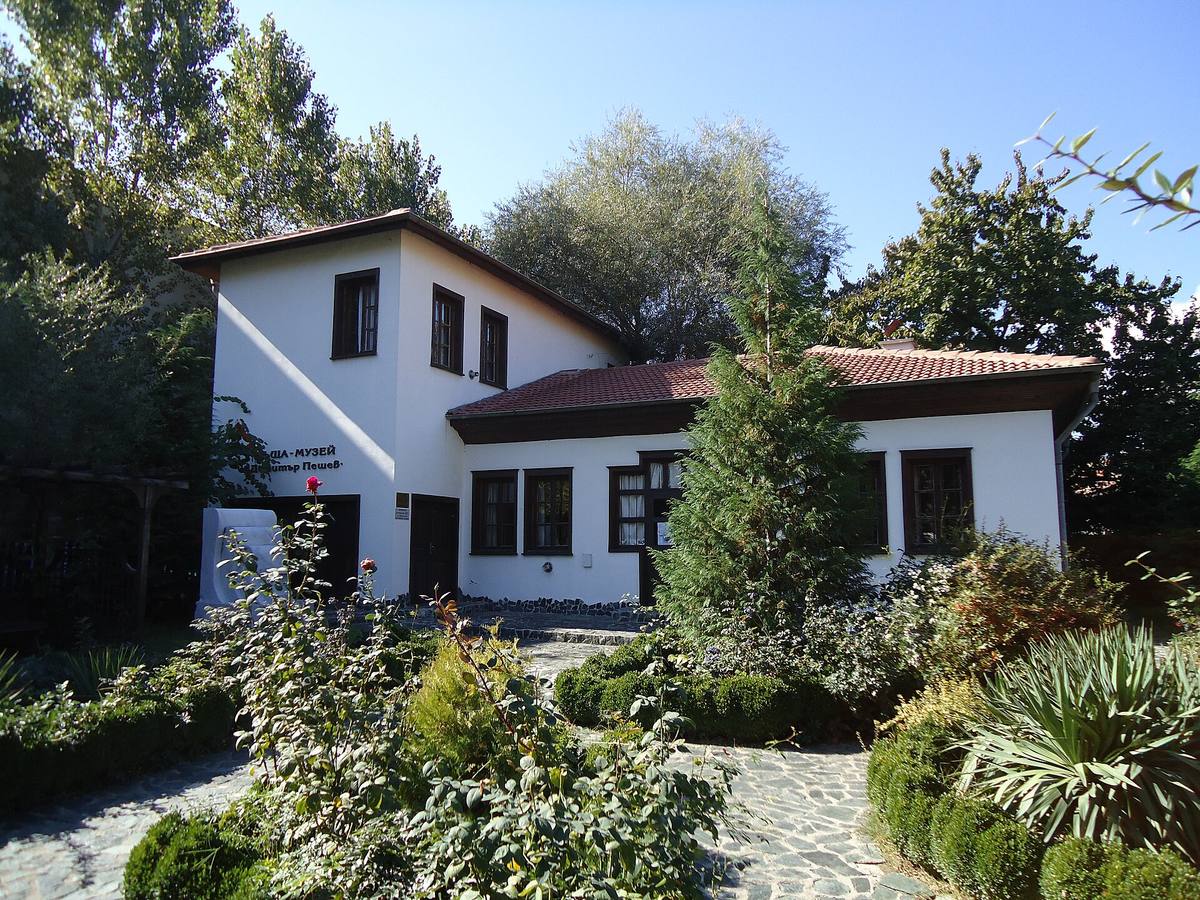
↗In 2002 the Israeli ambassador Emanuel Zisman and Kyustendil Municipality decided to restore Peshev’s house. The old home still stood but was in very poor condition. The municipality recorded the old house’s plans and built it anew. The new building is “an exact copy of Dimitar Peshev’s family home, built in just a few months with money donated by the Union of Bulgarian Jews in Israel.”
The museum opened on October 25, 2002, and its staff declared the date the Day of Bulgarian-Israeli Unity.
The exhibition
↗The permanent exhibition opened on March 9, 2003, the 60th anniversary of the rescue. It was completely renewed for the 70th anniversary, on March 8, 2013. It holds original belongings, photographs, and facsimiles, donated mostly by the rescuers’ descendants. It has three parts:
- Peshev’s life: his family, education, the army and the wars, the law, and his work as a judge and lawyer.
- Bulgaria’s anti-Jewish policy (1941-1944): the Law for the Protection of the Nation and the Belev-Dannecker agreement.
- The Kyustendil rescuers after March 1943: the verdicts, the years of oblivion, and the gradual recognition, first from individual Jews, then from Israel, and after 1990 from Bulgaria.
Today
↗The house is a branch of the Regional History Museum and part of site No. 26 among the 100 National Tourist Sites. The museum marks two dates: March 9, the anniversary of the rescue, and October 25, the day it opened.
Photos and related images
The image could not load. Its caption and source remain available.

The image could not load. Its caption and source remain available.

Sources
(15)
A date may refer to construction, renewal, or another stated stage. Legends are accounts recorded in sources, rather than established events. Bibliography links help locate the named author; no automatic reference is added where the match is ambiguous.
- Къща музей „Димитър Пешев“, РИМ, КюстендилInstitutional page · Bulgarian · kyustendilmuseum.bg
Source address
https://kyustendilmuseum.bg/muzeyni-obekti-na-rim-kyustendil/kashta-muzey-dimitar-peshev.html
If a link does not open, use its title, author, and address to search, or consult another listed source.
- Йорданка Янчева, Василка Стойнева. Поливариантност в историята на кюстендилската акция по спасяването на българските евреи, март 1943 г. Кюстендилски четения 7, СУ, 2006, 166-173Research publication · Bulgarian · periodicals.uni-sofia.bg
Source address
https://periodicals.uni-sofia.bg/index.php/KRe/bg/article/view/kre-2004-18
If a link does not open, use its title, author, and address to search, or consult another listed source.
- Цени и работно време, РИМ, КюстендилInstitutional page · Bulgarian · kyustendilmuseum.bg
Source address
https://kyustendilmuseum.bg/za-muzeya/ceni-i-rabotno-vreme.html
If a link does not open, use its title, author, and address to search, or consult another listed source.
- Къщата музей „Димитър Пешев“ е единственият музей в България, посветен на спасяването на българските евреи, БТА, 2025Online source · Bulgarian · bta.bg
Source address
https://www.bta.bg/bg/news/lik/958194-kashtata-muzey-dimitar-peshev-v-kyustendil-e-edinstveniyat-muzey-v-balgariya-
If a link does not open, use its title, author, and address to search, or consult another listed source.
- Къщата-музей „Димитър Пешев“ в Кюстендил, БНТ, „10 000 крачки“, 2019Online source · Bulgarian · bnt.bg
Source address
https://bnt.bg/bg/a/kshchata-muzey-dimitr-peshev-v-kyustendil-31102019
If a link does not open, use its title, author, and address to search, or consult another listed source.
- Bulgaria, Holocaust Encyclopedia, United States Holocaust Memorial MuseumOnline source · Language not specified · encyclopedia.ushmm.org
Source address
https://encyclopedia.ushmm.org/content/en/article/bulgaria
If a link does not open, use its title, author, and address to search, or consult another listed source.
- Връчване на отличието „Праведник на народите от света“ на родственица на Димитър Пешев, МВнР, 2015Online source · Bulgarian · mfa.bg
Source address
https://www.mfa.bg/embassies/israel/news/9296
If a link does not open, use its title, author, and address to search, or consult another listed source.
- Даниела Горчева. Интервю с Калуда Кираджиева, племенница на Димитър Пешев, LiterNet, 2013Online source · Bulgarian · liternet.bg
Source address
https://liternet.bg/publish19/d_gorcheva/kaluda-kiradzhieva.htm
If a link does not open, use its title, author, and address to search, or consult another listed source.
- Gabriele Nissim. The Story, peshev.orgOnline source · Language not specified · peshev.org↑1 ↑2
Source address
https://www.peshev.org/story.htm
If a link does not open, use its title, author, and address to search, or consult another listed source.
- Асен Милчев. Съдбата на българските Праведници на света, alef-bg.org, 2020Online source · Bulgarian · alef-bg.org
Source address
https://alef-bg.org/bg/съдбата-на-българските-праведници-на/
If a link does not open, use its title, author, and address to search, or consult another listed source.
- Почетни граждани на Кюстендил, Община КюстендилInstitutional page · Bulgarian · kyustendil.bg
Source address
https://www.kyustendil.bg/index.php?option=com_content&view=article&id=171&Itemid=318&lang=bg
If a link does not open, use its title, author, and address to search, or consult another listed source.
- Димитър Пешев, УикипедияEncyclopedia article · Bulgarian · bg.wikipedia.org
Source address
https://bg.wikipedia.org/wiki/Димитър_Пешев
If a link does not open, use its title, author, and address to search, or consult another listed source.
- Спасяване на евреите в България, УикипедияEncyclopedia article · Bulgarian · bg.wikipedia.org
Source address
https://bg.wikipedia.org/wiki/Спасяване_на_евреите_в_България
If a link does not open, use its title, author, and address to search, or consult another listed source.
- OpenStreetMap: Къща музей на Димитър ПешевMap record · Bulgarian · openstreetmap.org
Source address
https://www.openstreetmap.org/node/6188295932
If a link does not open, use its title, author, and address to search, or consult another listed source.
- Dimitar Peshev, WikipediaEncyclopedia article · English · en.wikipedia.org
Source address
https://en.wikipedia.org/wiki/Dimitar_Peshev
If a link does not open, use its title, author, and address to search, or consult another listed source.