45Places of worship · Tavalichevo
St. Petka Church
Late 16th or early 17th century; enlarged around 1900
Dating stated in the sources: Late 16th - early 17th century
Your visit at a glance
- Address
- Tavalichevo, Kyustendil Municipality
- Suggested time; scope not confirmed
- about 45 minutes
- Opening hours
- No verified information found
- Admission
- No verified information found
The image could not load. Its caption and source remain available.

At St. Petka, the older church has become the sanctuary of a larger building. Tsveta Kuneva of the Bulgarian Academy of Sciences’ Institute of Art Studies dates the early paintings to the late 16th or early 17th century and traces their uncovering in 2012-2013.
Hours, admission, and directions ↓
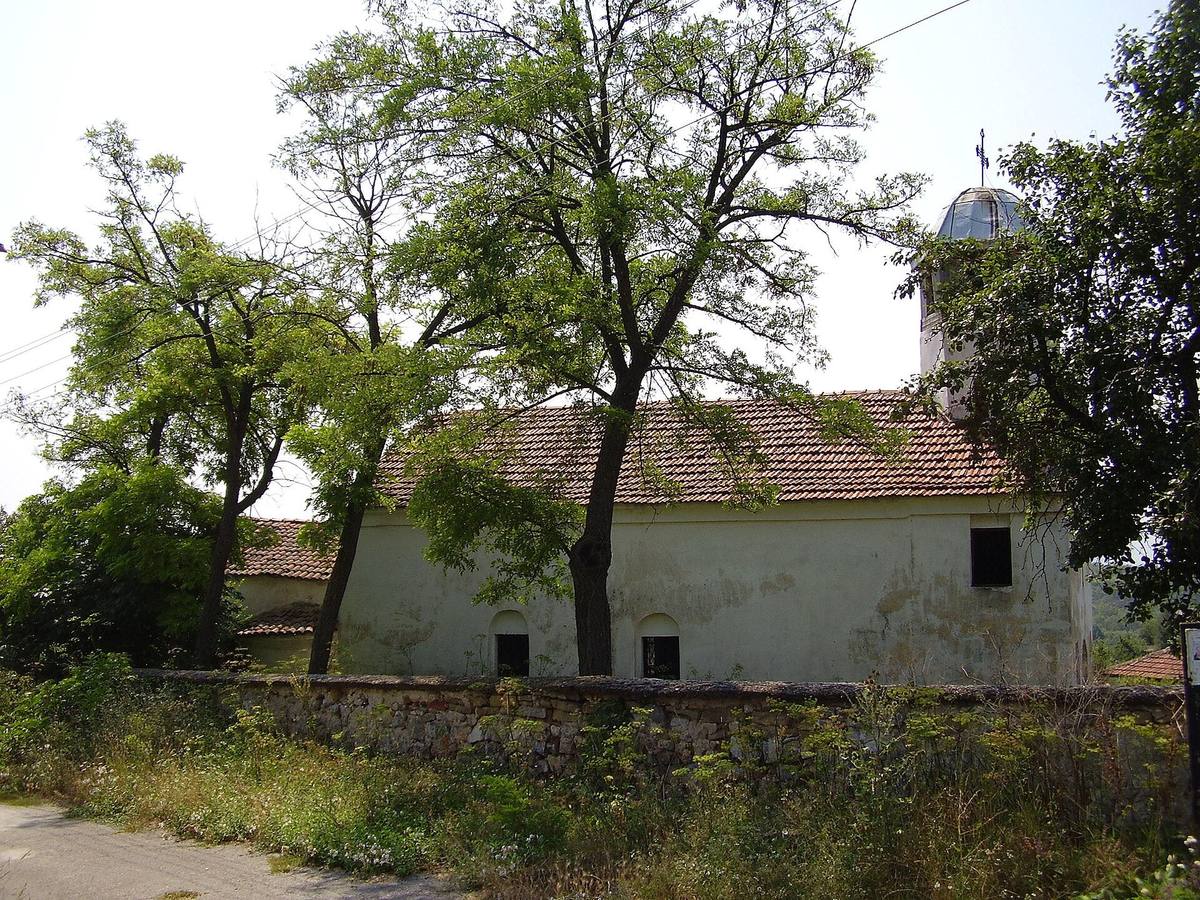
From outside, St. Petka in Tavalichevo looks like a relatively large village church. Its older building survives at the eastern end, behind the iconostasis. A visit brings together two connected spaces whose size and function have changed over time.
The older church within the newer building
↗Tsveta Kuneva examines the paintings in Art Studies Readings 2022: Old Art, published by the Institute of Art Studies at the Bulgarian Academy of Sciences. She dates the construction and first paintings to the late 16th or early 17th century. The assessment relies on architecture and pictorial features, since no inscription supplies an exact year.
Older accounts, including Bulgarian Wikipedia, give a broader 14th-16th-century date. We follow the more recent specialist study here, while distinguishing its conclusions from a dated construction document.
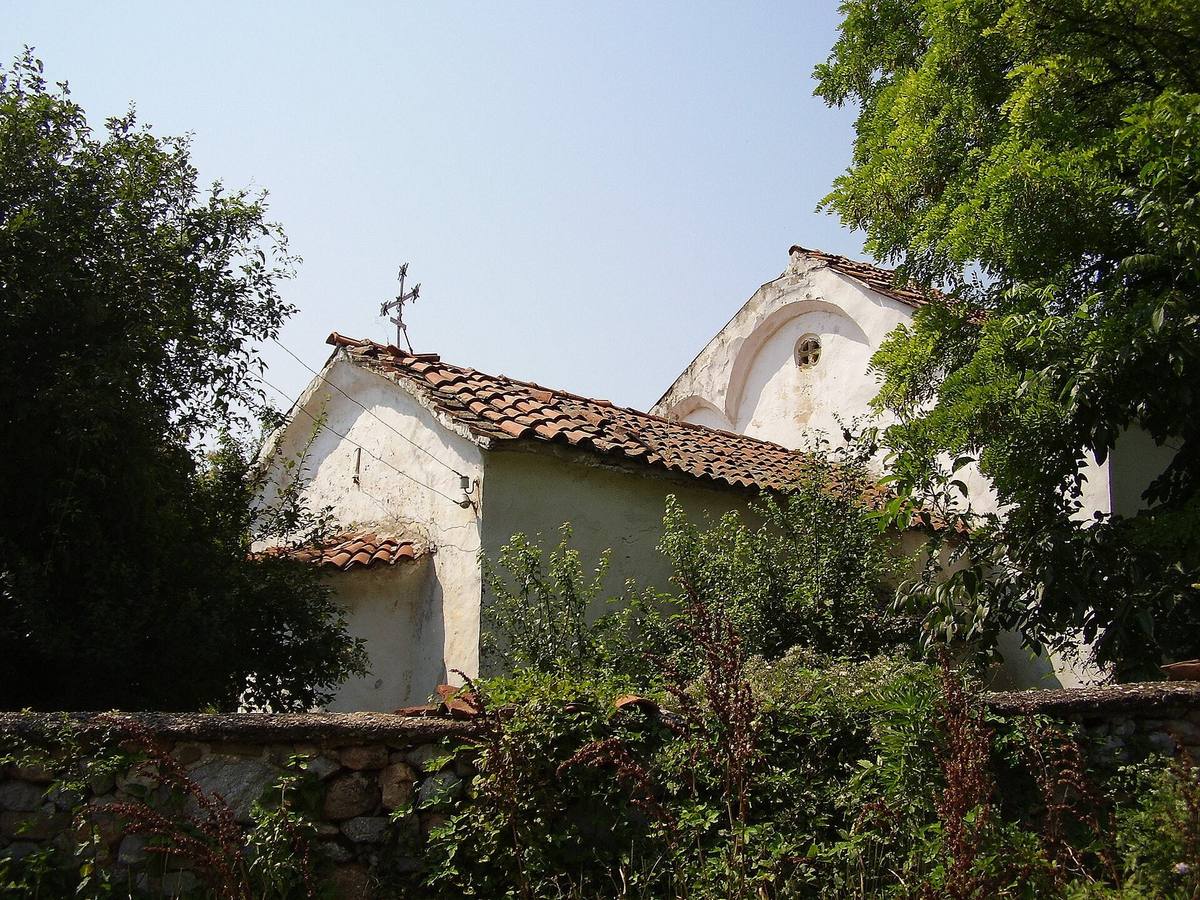
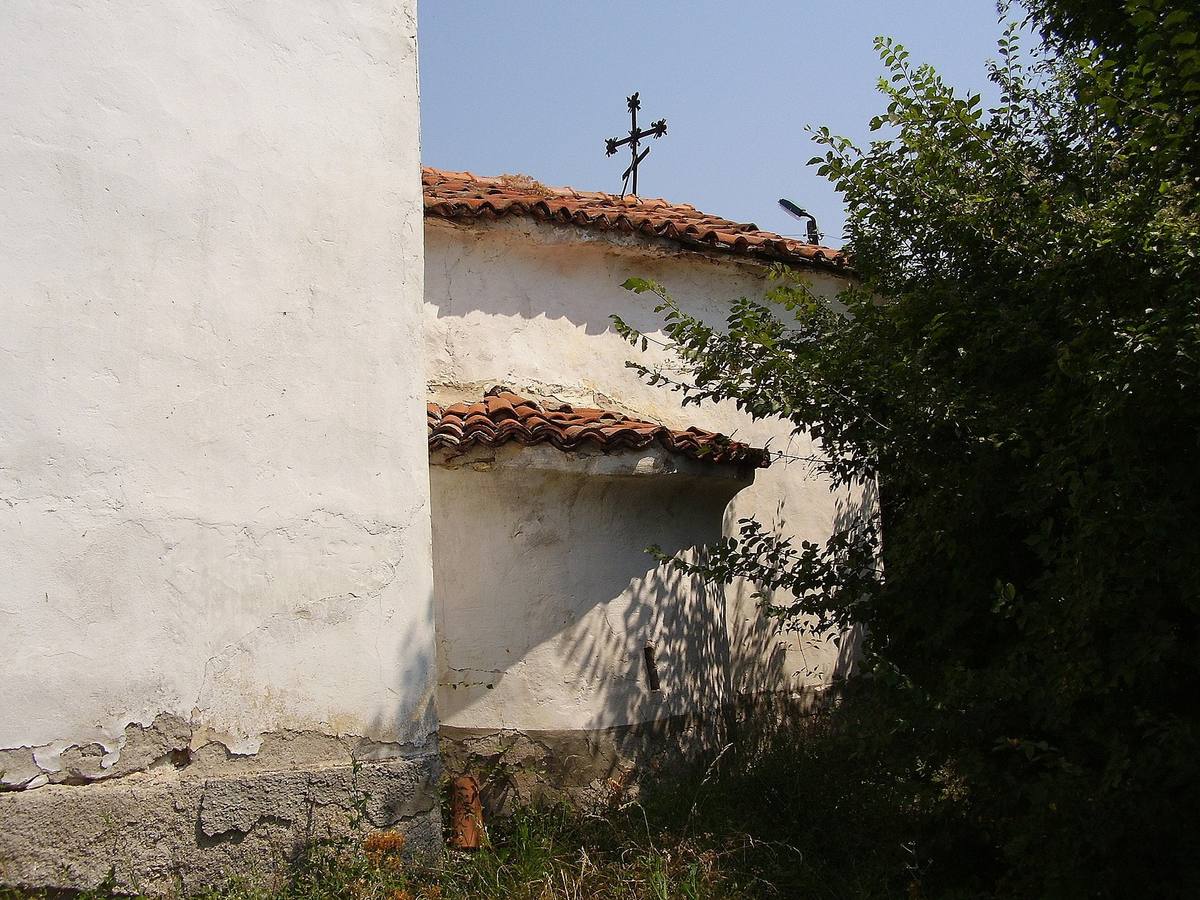
The early building is a small triconch church: in addition to its eastern apse, it has semicircular extensions to the sides. Mortar bonds the stone and brick masonry, and a barrel vault covers the space. Kuneva gives an internal length of 6.35 m and width of 3 m. The floor lies about a meter below the surrounding ground.
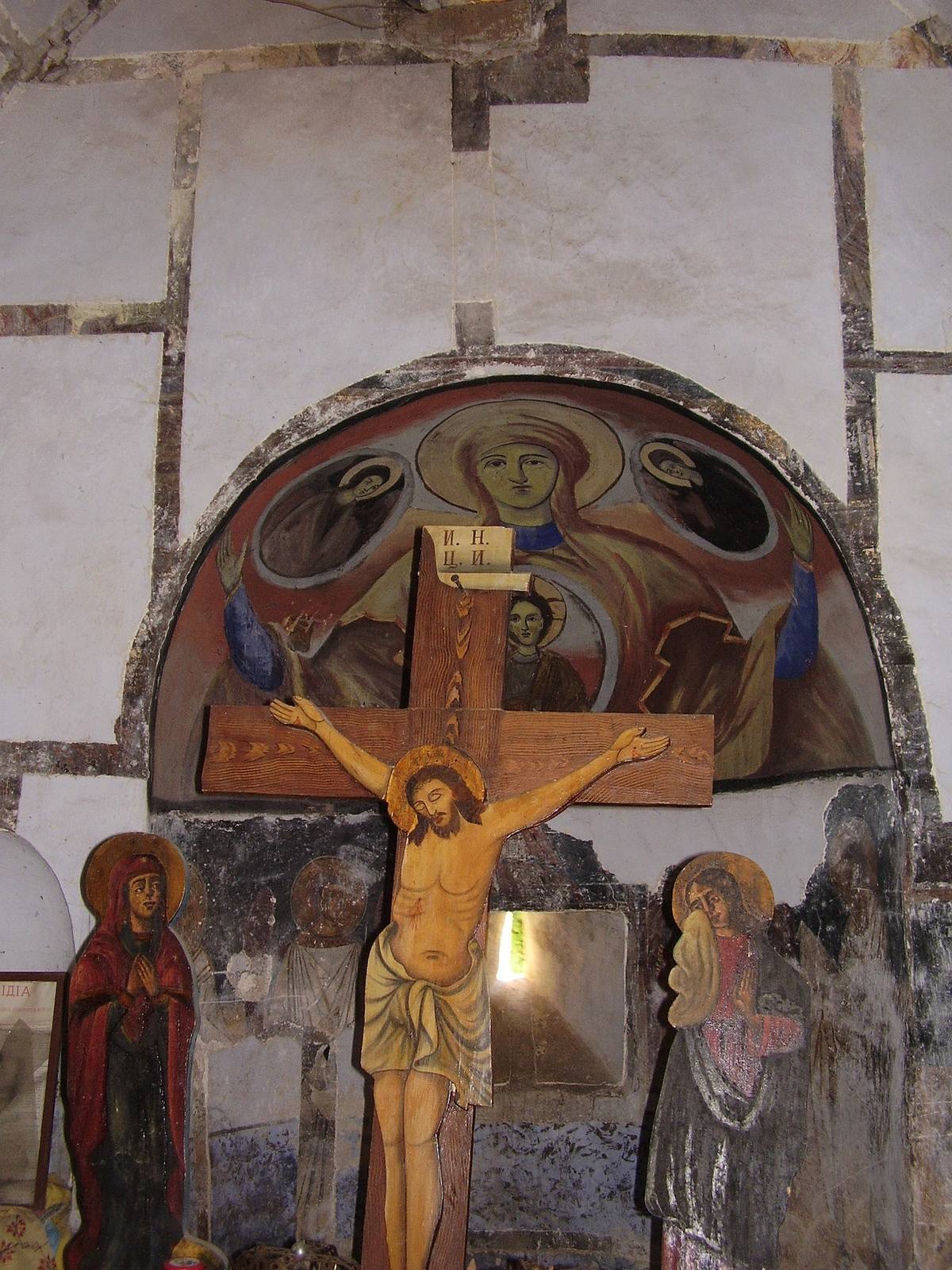
Around 1900, the western wall was removed and a much larger nave was added. The earlier church thereby became the new building’s sanctuary. The bell tower and western gallery are later, 20th-century additions. The division between the two periods is clearer inside than in the overall exterior silhouette.
What the paintings depict
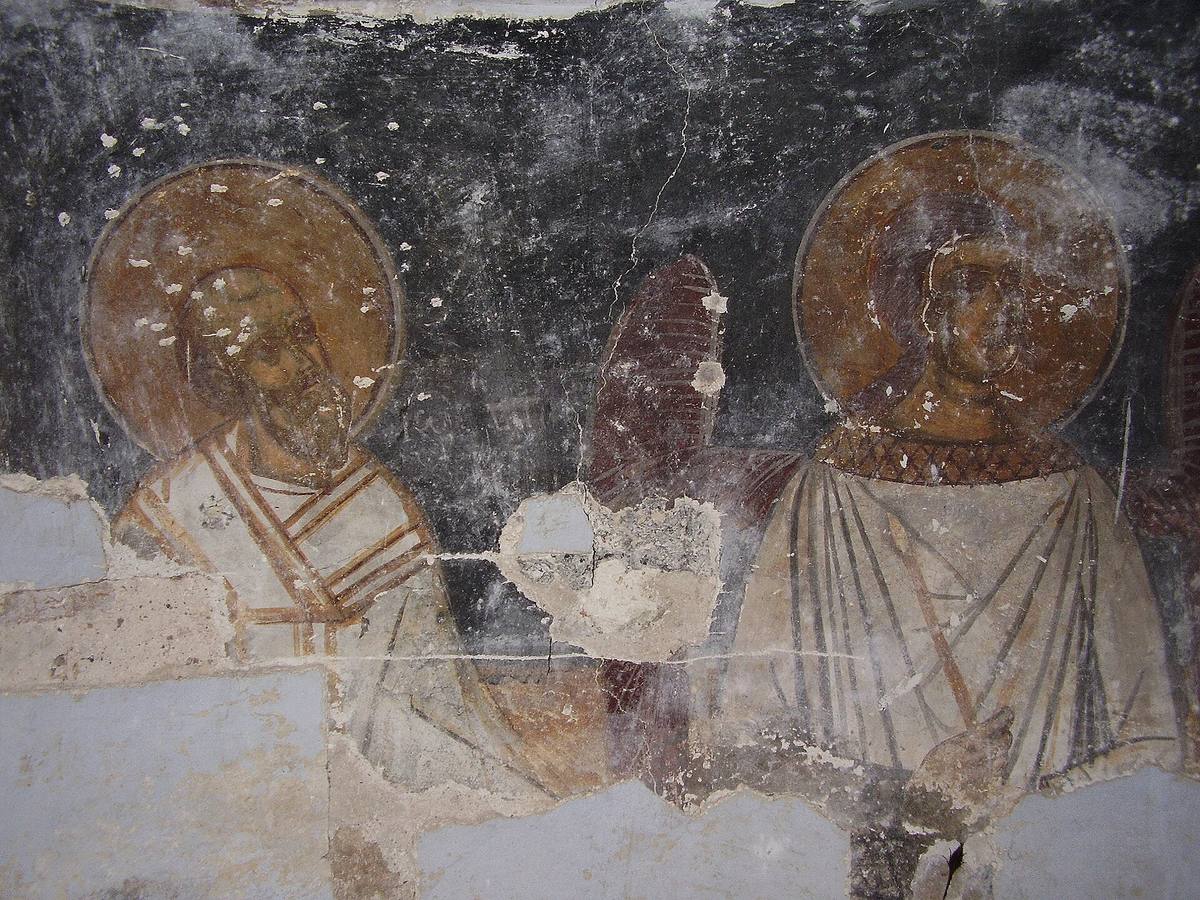
↗Images from the original decoration survive in the older part. Kuneva discusses the Ascension, Christ Pantocrator, prophets, the Annunciation, and scenes from the Gospel narrative. The southern wall contains a cycle associated with St. Nicholas. Some scenes are partly lost, requiring comparison with other churches to identify them.
The author pays particular attention to the image of St. Paraskeva of Rome, connecting it with the church’s original dedication. “St. Petka” can designate different saints; here it should not automatically be understood as St. Petka of Tarnovo. Kuneva also discusses the early church’s probable funerary role.
The pictorial program places this small village building within the wider world of Balkan church painting. For visitors, the position of an image offers the clearest starting point: in the apse, on the side walls, or on the vault. The cycle has survived unevenly.
Uncovering and restoration
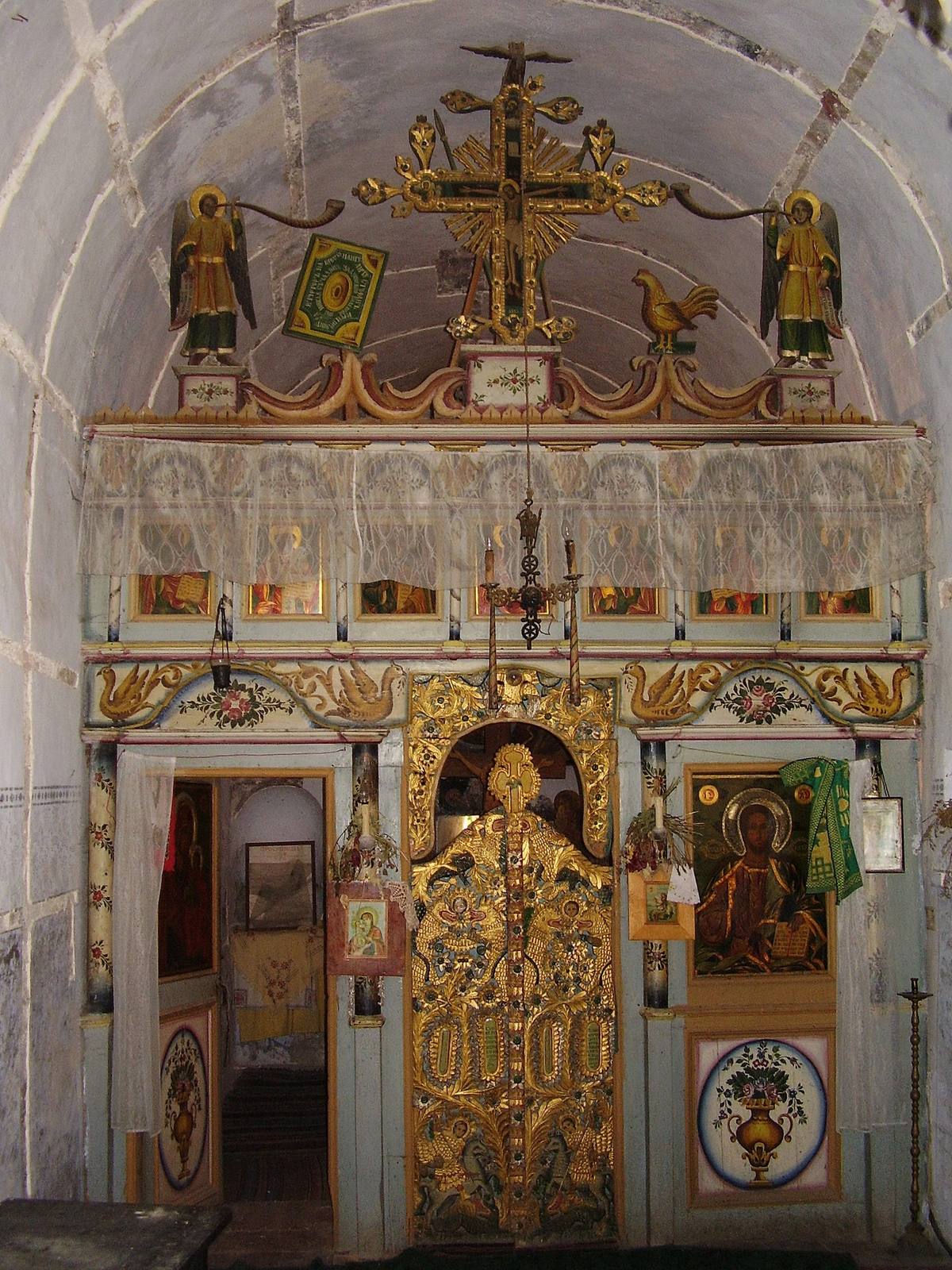
↗Plaster covered the paintings, probably during the enlargement around 1900. Lyuba Krasovska made exploratory exposures in 1967. According to Kuneva’s study, S. Aenski fully uncovered and restored them in 2012-2013. The iconostasis, dated 1888, was restored in 2014.
The author also records intervention in 2020 that, in her assessment, changed the character of the original painting. This is an evaluation in the scholarly publication, rather than the result of our own inspection on site.
The gallery photographs date to 2009. They show the exterior, iconostasis, and fragments visible at that time, before the uncovering of 2012-2013. This chronological difference matters when comparing them with the present interior.
Visiting
↗The church is in Tavalichevo, Kyustendil Municipality. Allow about 45 minutes if access is arranged and the early church can be examined. It stands behind the iconostasis, within the sanctuary, so access must be agreed with the church’s caretakers. An open courtyard does not establish permission to enter every part of the interior. Confirmed opening hours and an admission price have not been found.
Photos and related images
The image could not load. Its caption and source remain available.

The image could not load. Its caption and source remain available.

The image could not load. Its caption and source remain available.

The image could not load. Its caption and source remain available.

The image could not load. Its caption and source remain available.

Sources
(3)
A date may refer to construction, renewal, or another stated stage. Legends are accounts recorded in sources, rather than established events. Bibliography links help locate the named author; no automatic reference is added where the match is ambiguous.
- Google Maps: Черква „Св. Петка“Online source · Bulgarian · maps.app.goo.gl
Source address
https://maps.app.goo.gl/FamPVyfPSjfEkkQZ8
If a link does not open, use its title, author, and address to search, or consult another listed source.
- Цвета Кунева, Стенописите в църквата „Св. Петка“ в село Таваличево, Изкуствоведски четения 2022. Старо изкуство, ИИИ-БАН, с. 129-150PDF document · Bulgarian · artstudies.bg
Source address
https://artstudies.bg/wp-content/uploads/2022/12/Изкуствоведски-четения-2022_Старо-изкуство_20.12.pdf
If a link does not open, use its title, author, and address to search, or consult another listed source.
- Света Петка (Таваличево), УикипедияEncyclopedia article · Bulgarian · bg.wikipedia.org
Source address
https://bg.wikipedia.org/wiki/Света_Петка_(Таваличево)
If a link does not open, use its title, author, and address to search, or consult another listed source.