67Places of worship · Near Vukovo
St. Nicholas Church
16th century; paintings from the second half of the century
Dating stated in the sources: Second half of the 16th century
Your visit at a glance
- Address
- Outside the built-up part of Vukovo, beside the local stream
- Suggested time; scope not confirmed
- about 1 hour
- Opening hours
- No verified information found
- Admission
- No verified information found
The image could not load. Its caption and source remain available.

St. Nicholas is a small stone church near Vukovo with partly preserved paintings from the second half of the 16th century. They include St. John of Rila, whose name is written in the vernacular form “Yovan.”
Hours, admission, and directions ↓
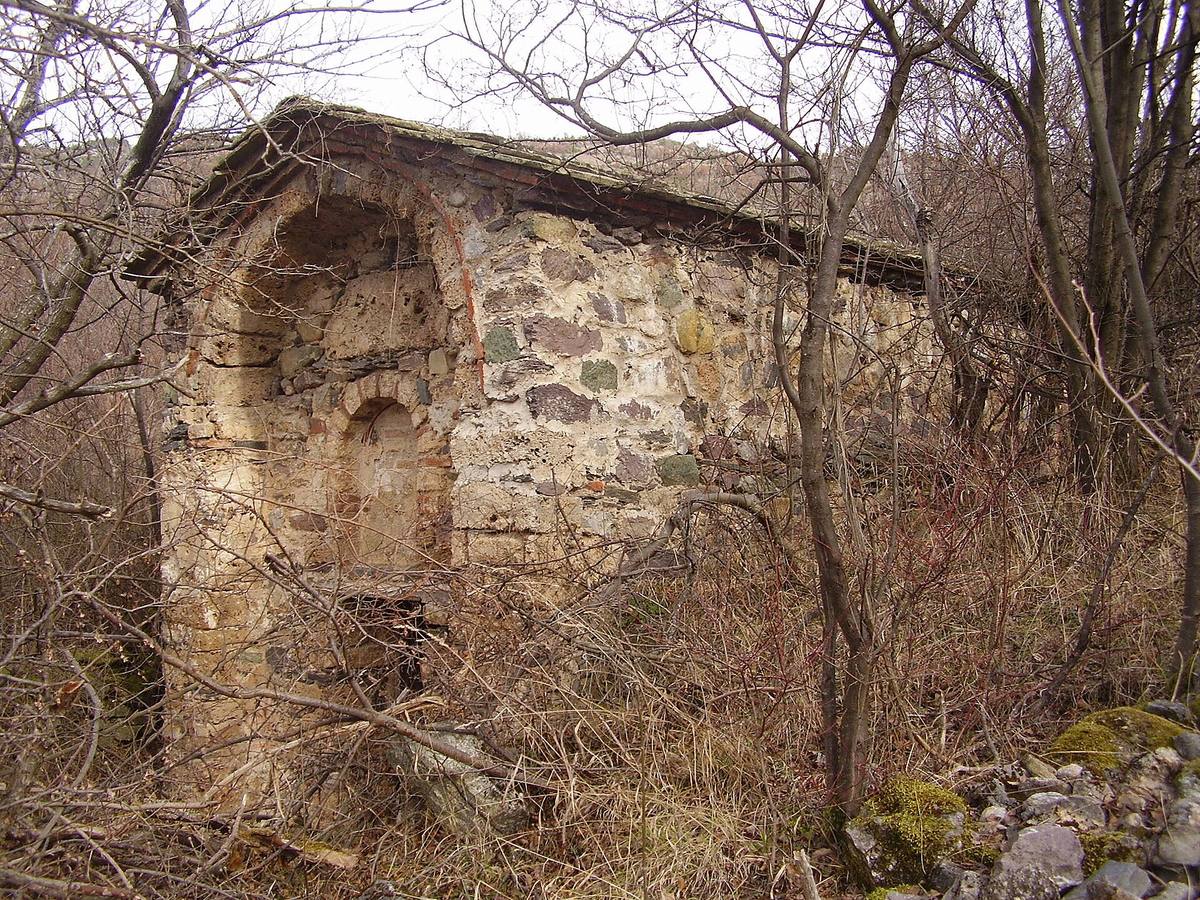
St. Nicholas stands outside the built-up part of Vukovo, beside the local stream and not far from the Struma River. It is reached on foot from a turnoff before the village. The low stone building can be obscured by vegetation, so it helps to know precisely which site you are looking for.
It is one of Vukovo’s two old churches. St. Petka stands beside the village’s main street and has its own donor inscription from 1598. That date should not be transferred to St. Nicholas. This church is also a separate site from its namesake in Slokoshtitsa.
Dating through the paintings
↗In volume 13 of Numismatics, Sphragistics and Epigraphy, published by the National Archaeological Institute with Museum at the Bulgarian Academy of Sciences in 2017, Yavor Mitov identifies the church as a 16th-century monument. He dates its surviving painted layer to the second half of that century, citing Svetozar Angelov’s study of Vukovo. [1]
For visitors, this means there is no single securely established year that explains the whole building and its decoration. Studying the individual surviving sections is more useful.
A small church with substantial losses
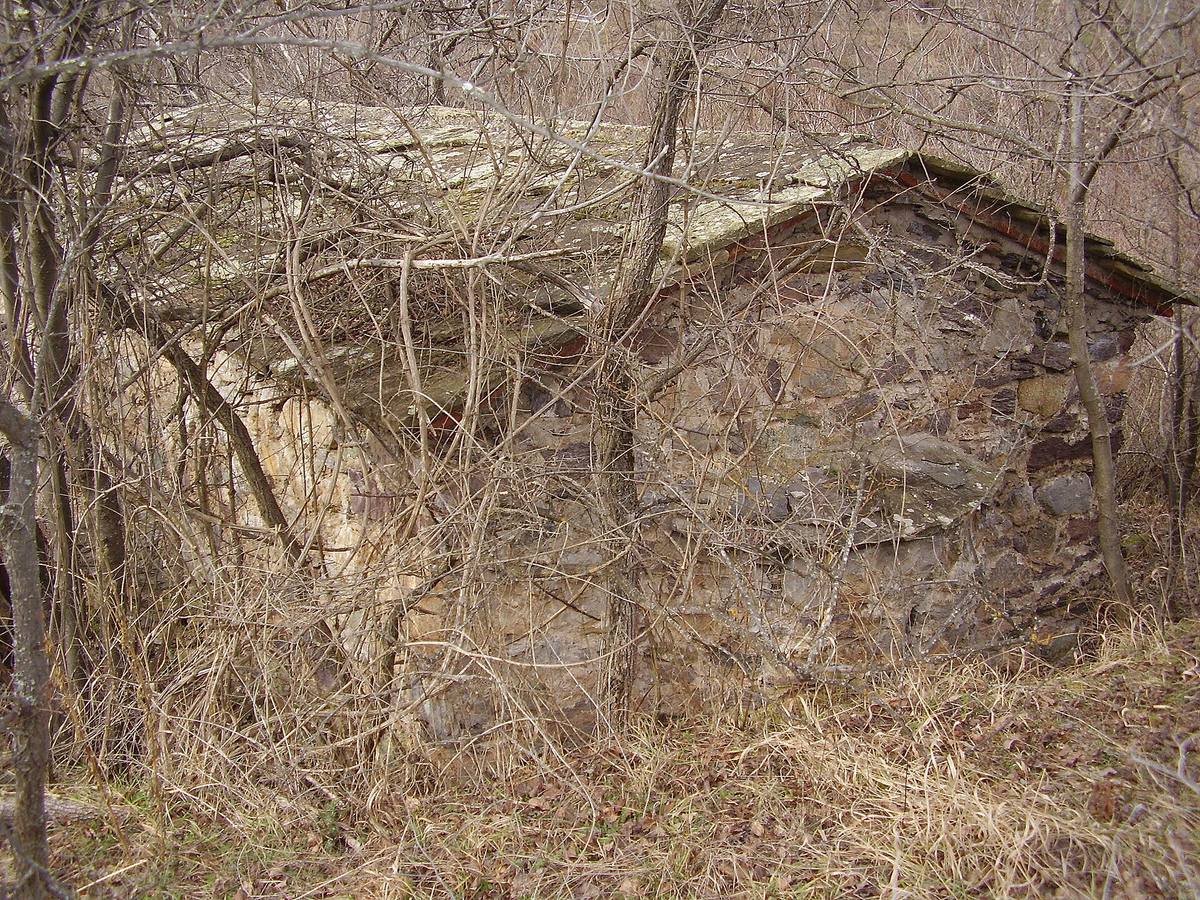
↗The building has one nave and no narthex. Exterior photographs show rubble masonry, mortar joints, a low roof, and a projecting apse. Some walls stand close to the level of the surrounding ground. Vegetation in the photographs from 2009 makes walking around the church difficult, but those images do not establish the condition of the approach today.
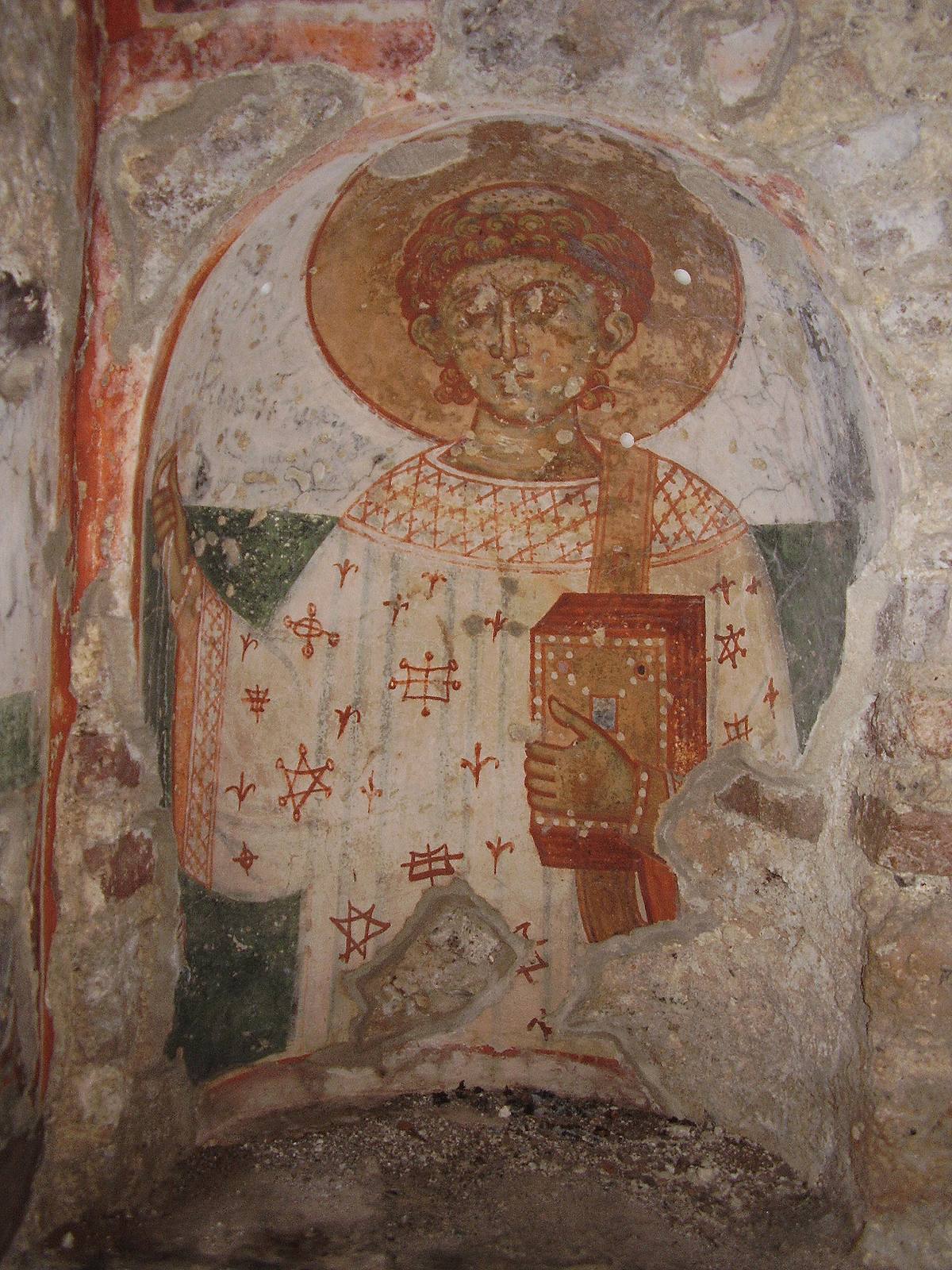
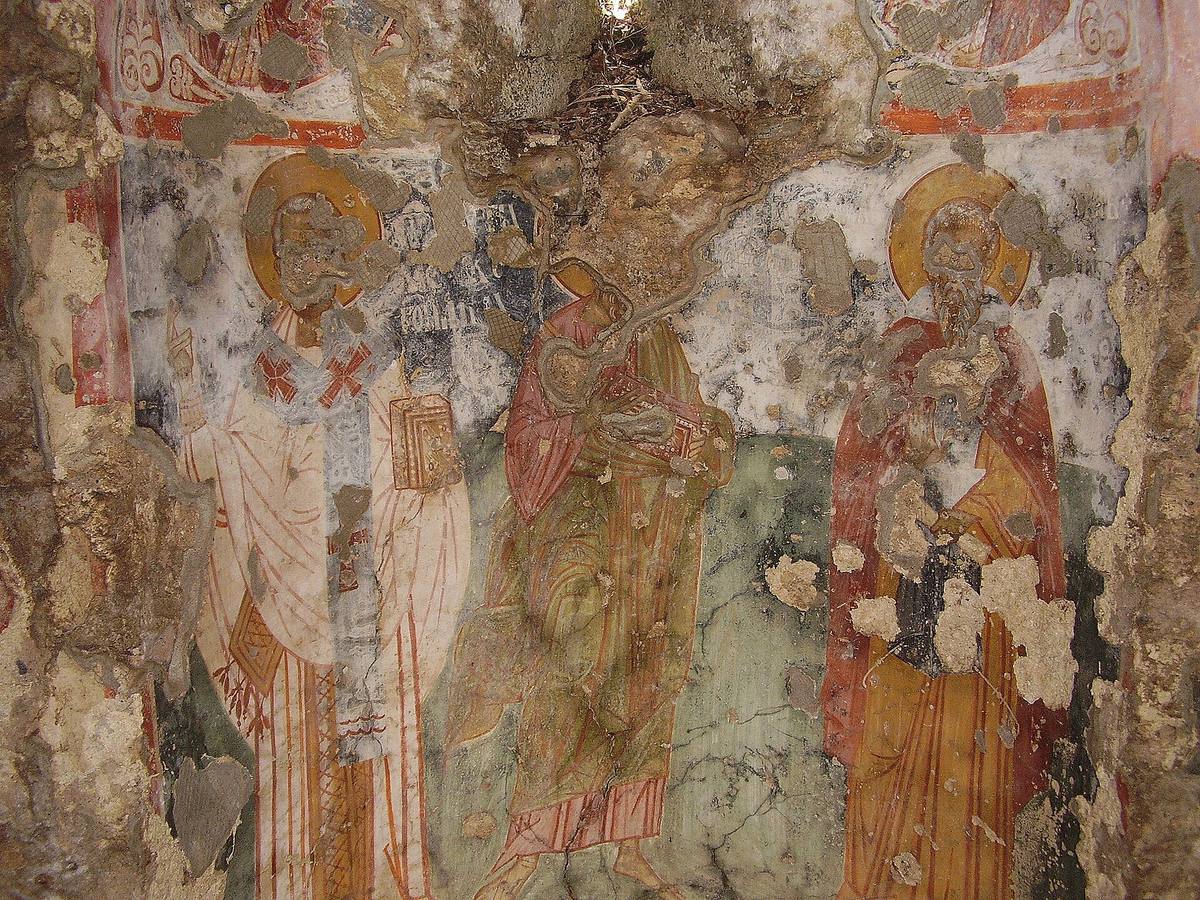
The paintings survive in separate patches. The gallery shows figures with halos, traces of lettering, and areas of missing plaster. One detail depicts a bishop holding a book in a niche; another contains several standing figures. The damage is part of the monument’s visible history, but photographs alone cannot reconstruct every scene.
Why the inscription “Yovan” matters
↗Mitov notes the image of St. John of Rila and the form of his name, “Yovan,” which may be unfamiliar to modern readers. St. John the Theologian’s name is rendered in the same way. Mitov relates this form to local speech, emphasizing Vukovo’s proximity to Skrino, traditionally identified as the birthplace of St. John of Rila.
This small linguistic observation connects the paintings with local religious memory. Vukovo belongs to the same area of devotion to St. John that you can explore at Ruen Monastery. It does not, however, prove that the saint personally visited this later church.
The approach and a visit
↗Hypothesis or unconfirmed claim Eli Ivanova describes a signposted turnoff to the left of the road before Vukovo and a walk of around ten minutes along a cart track to the church. Her account was published in 2021 and updated in 2022; the signs and condition of the path have not been confirmed for today. [2]
Allow around an hour, including the walk there and back. Ask locally whether entering is possible. No official opening schedule or admission tariff was found. Assess conditions on site if the ground is wet, and avoid taking shortcuts across cultivated fields. A combined visit with St. Petka requires time for two separate sites, rather than a single stop in the village.
Photos and related images
The image could not load. Its caption and source remain available.

The image could not load. Its caption and source remain available.

The image could not load. Its caption and source remain available.

Sources
(3)
A date may refer to construction, renewal, or another stated stage. Legends are accounts recorded in sources, rather than established events. Bibliography links help locate the named author; no automatic reference is added where the match is ambiguous.
- Явор Митов. Новооткрити надписи и рисунки графити от пещерата на св. Йоан Рилски при с. Гърбино, Кюстендилско, Нумизматика, сфрагистика и епиграфика 13, НАИМ-БАН, 2017, с. 367 (за Вуково)Research publication · Bulgarian · publications.naim.bg↑1
Source address
https://www.publications.naim.bg/index.php/NSE/article/download/51/59
If a link does not open, use its title, author, and address to search, or consult another listed source.
- Ели Иванова. Село Вуково: две църкви с история от близо пет века, 09.04.2021, обновено 11.10.2022Online source · Bulgarian · drumivdumi.com↑1
Source address
https://drumivdumi.com/село-вуково-църкви/
If a link does not open, use its title, author, and address to search, or consult another listed source.
- Светозар Ангелов, авторска библиография, Софийски университет: публикацията за „Св. Никола“ във ВуковоOnline source · Bulgarian · authors.uni-sofia.bg
Source address
https://authors.uni-sofia.bg/AuthorPublications.aspx?id=53eb5a28-4862-410b-a93d-2599e44e917c
If a link does not open, use its title, author, and address to search, or consult another listed source.