59Places of worship · Boboshevo
St. Theodore Church
Medieval; construction date disputed
Your visit at a glance
- Address
- Selishte locality, approximately 2 km north of Boboshevo
- Suggested time; scope not confirmed
- about 30 minutes
- Opening hours
- No verified information found
- Admission
- No verified information found
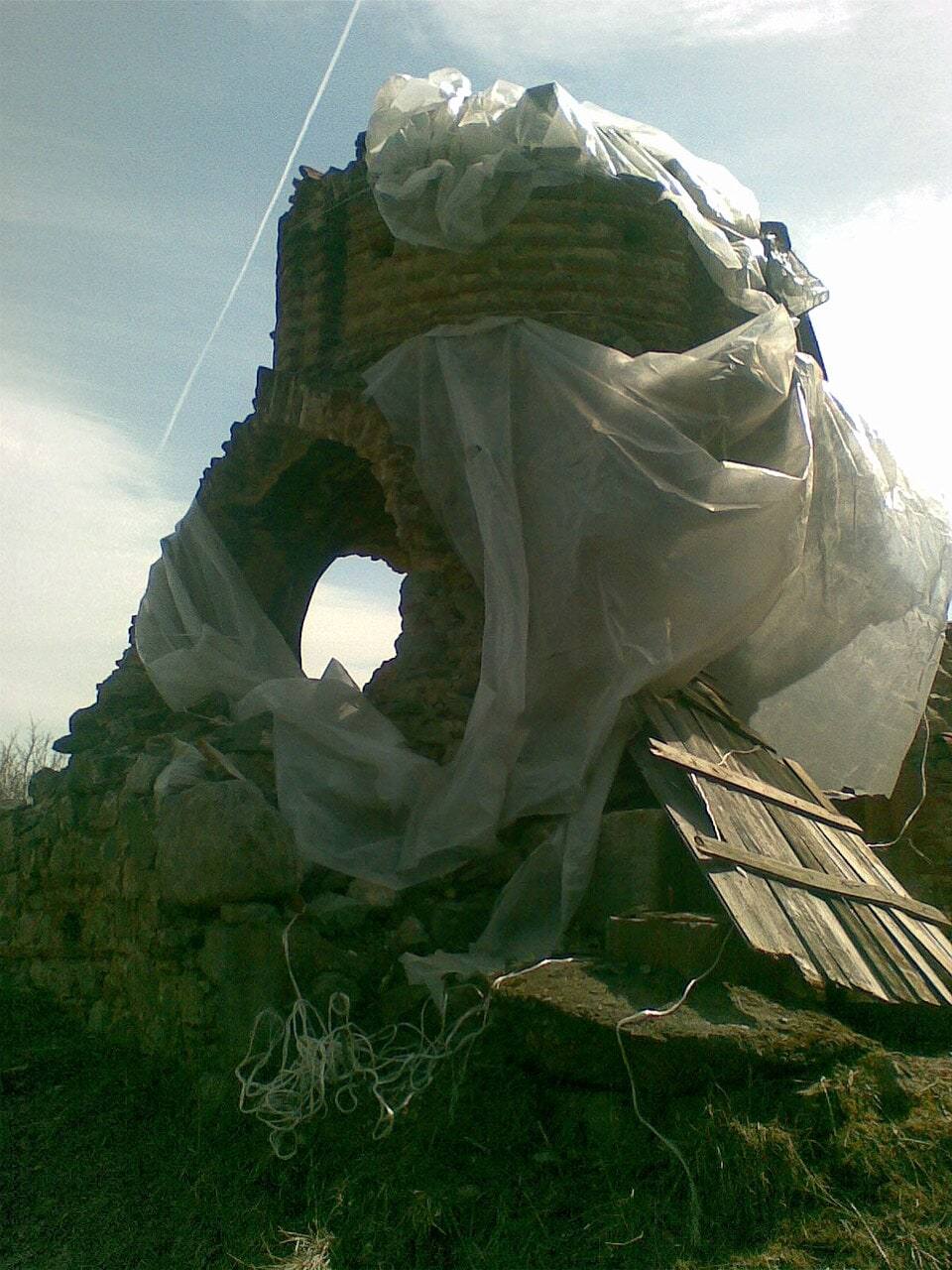
The image could not load. Its caption and source remain available.

Medieval St. Theodore stands near Boboshevo, on the Struma’s right bank. The church has a free-cross plan, and its construction date is disputed. Its later wall paintings are associated with the Kastoria artistic circle of the early 16th century; the old photographs do not establish its present condition.
Hours, admission, and directions ↓
The small church is known for both its cruciform architecture and its wall-painting fragments. Preservation is uneven. The gallery shows damaged fabric, timber supports, and remnants of a protective structure photographed in different years.
Location and disputed dating
↗St. Theodore, also known by the Bulgarian name St. Todor, stands approximately 2 km north of Boboshevo, beside the road toward Kyustendil. Tsveta Kuneva of the BAS Institute of Art Studies describes it in the online project Routes of Balkan Painters, on a page without a stated publication date.
She notes that written evidence for the church’s history has not survived. Proposed architectural dates range from the second half of the 10th century to the 13th-14th centuries. The absence of an agreed date should remain visible rather than being replaced with an arbitrary precise year.
In his own summary of a 2014 study, included in a document for an associate professorship competition in 2025, Svetozar Angelov of Sofia University assigns the building to the 12th century. This is a specific scholarly position within the wider debate.
The free cross
↗The plan has short, freely projecting arms of a cross. The dome rested on a cylindrical drum, with an apse to the east. This architecture creates small, distinct wall and vaulted surfaces across which the paintings develop.
Kuneva explains the arrangement of scenes through this architectural form. For observation, an individual fragment needs to be related to its position: dome drum, transition to the dome, vault, apse, or lower wall register.
Two painting layers
↗According to Kuneva, researchers agree on the presence of two layers that are difficult to distinguish. More recent studies assign the earlier layer to the 14th century and the later one to the early 16th. Older datings differ and have not been combined into a single certain chronology.
She associates the later painting with St. Nicholas Magaleiou in Kastoria, painted around 1505. The similarities concern iconography and artistic characteristics. The small church beside the Struma thus belongs to a wider network of Balkan painters’ workshops.
Feast scenes occupy the higher vaults, while the Passion of Christ unfolds in a separate register. The Last Supper is among the surviving subjects, visible in the 2008 photograph. Damage prevents the original cycle from being seen as a continuous narrative.
Bisserka Penkova of the BAS Institute of Art Studies discusses the image of St. John of Rila here in Art History as a Vocation (2026), p. 100. She places the second layer at the transition between the 15th and 16th centuries. She identifies St. Nicholas, St. Sava of Serbia, and St. John of Rila in the southern arm; only the halo and part of the Rila saint’s hood survive.
Photographs and condition
↗The December 2008 images show the interior beneath the protective structure. The March 2011 photograph records the ruin after the shelter’s destruction. Another exterior image has no specified capture date.
Hypothesis or unconfirmed claim These photographs aid comparison but do not necessarily show the church’s appearance in 2026. A completed new restoration, permanent access, and conditions for entering were not confirmed. Scholarly descriptions likewise do not guarantee that every painting fragment is accessible today.
Visiting
↗Approach from the Boboshevo area along the road toward Kyustendil. Allow approximately half an hour for exterior observation if access is available. Establish the current condition and custodian beforehand. Do not enter unsupported sections or touch wall paintings or supports.
No operator timetable or admission price was confirmed. This church is different from Boboshevo’s St. Demetrius Monastery and the modern Ruen Monastery. Check the name and location before following signs toward another monastic site.
Photos and related images
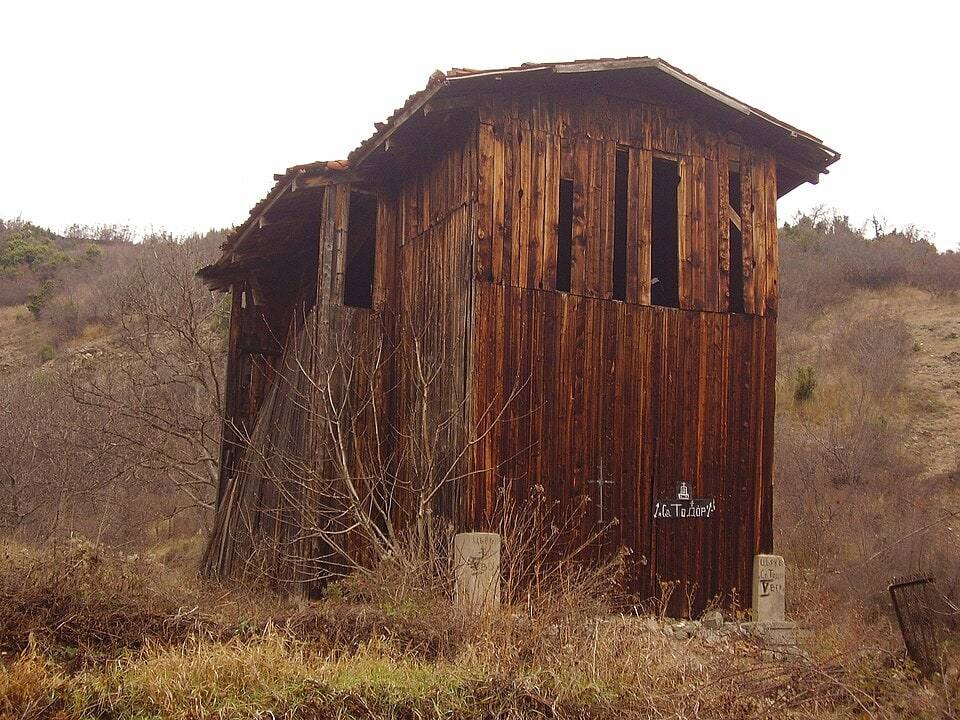
The image could not load. Its caption and source remain available.

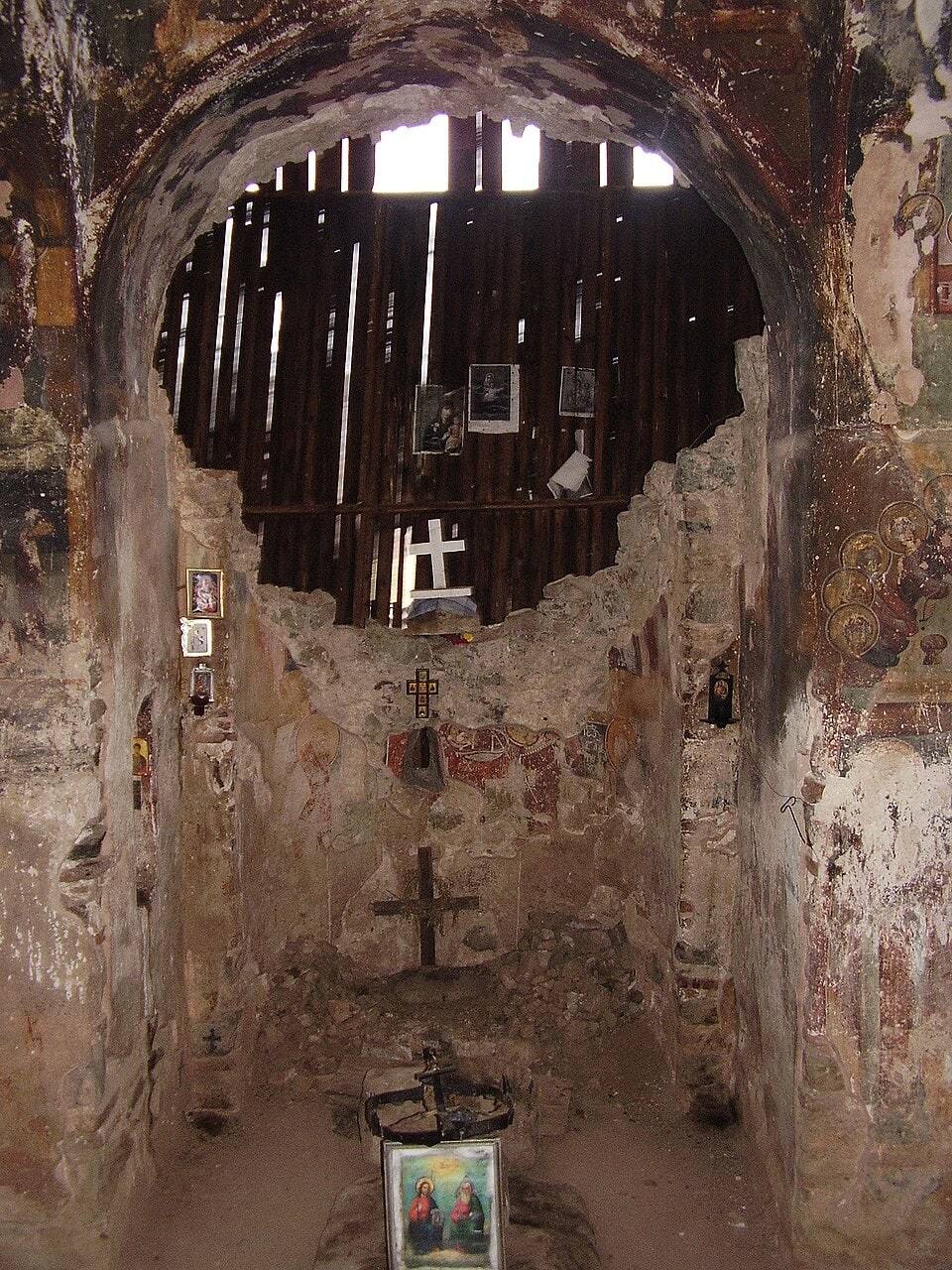
The image could not load. Its caption and source remain available.

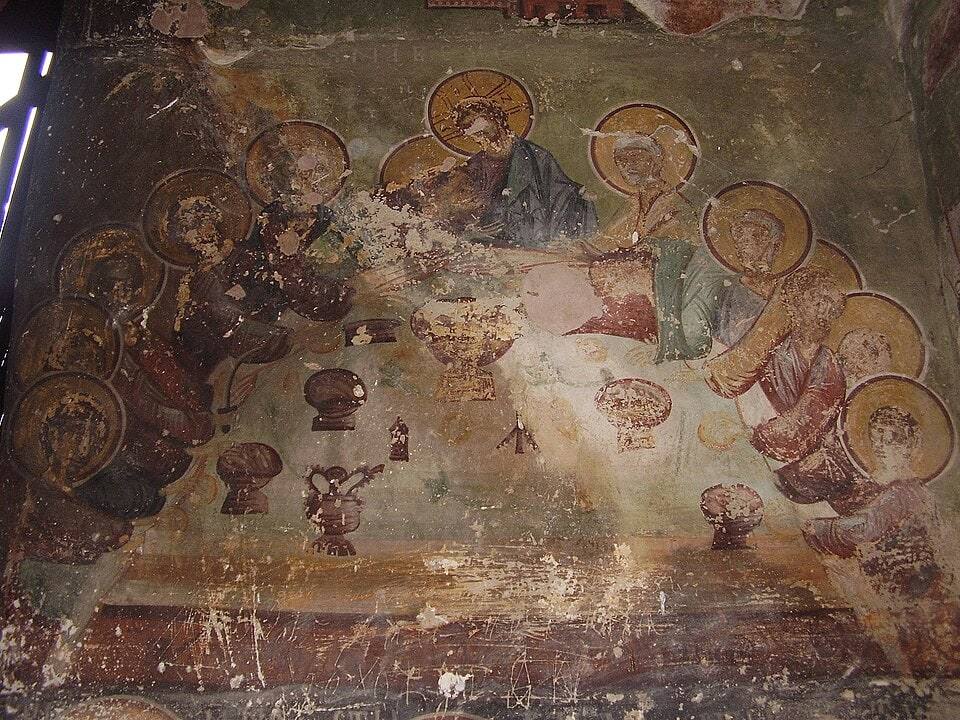
The image could not load. Its caption and source remain available.

Sources
(5)
A date may refer to construction, renewal, or another stated stage. Legends are accounts recorded in sources, rather than established events. Bibliography links help locate the named author; no automatic reference is added where the match is ambiguous.
- Цвета Кунева, Бобошево, църква „Св. Теодор“, Пътища на балканските зографи, ИИИ-БАН, онлайн страница без датаOnline source · Bulgarian · zografi.info
Source address
http://zografi.info/?page_id=274
If a link does not open, use its title, author, and address to search, or consult another listed source.
- Светозар Ангелов, резюме на Особености в стенописната украса на църквата „Св. Тодор“ край град Бобошево, Кюстендилско (Шумен, 2014, с. 757-774), резюмета за конкурс за доцент, 2025, с. 7-8PDF document · Bulgarian · eecvxrw66yt.exactdn.com
Source address
https://eecvxrw66yt.exactdn.com/wp-content/uploads/2025/05/17.publicationssummary.pdf
If a link does not open, use its title, author, and address to search, or consult another listed source.
- Бисерка Пенкова, Образите на св. Йоан Рилски в стенописите от XV-XVII век в България, Историята на изкуството като призвание, ИИИ-БАН, 2026, с. 97-111PDF document · Bulgarian · artstudies.bg
Source address
https://artstudies.bg/wp-content/uploads/books/Историята-на-изкуството-като-призвание.pdf
If a link does not open, use its title, author, and address to search, or consult another listed source.
- OpenStreetMap: way/1161713994Map record · Language not specified · openstreetmap.org
Source address
https://www.openstreetmap.org/way/1161713994
If a link does not open, use its title, author, and address to search, or consult another listed source.
- Светозар Ангелов, преподавателски профил, Софийски университетOnline source · Bulgarian · e-medievalia.uni-sofia.bg
Source address
https://e-medievalia.uni-sofia.bg/prepodavateli-predstaviane/d-r-svetozar-angelov
If a link does not open, use its title, author, and address to search, or consult another listed source.